The 10,000-steps-a-day target is one of the most famous numbers in fitness. It shows up on pedometers, smartwatches, and workplace wellness posters everywhere. But where did it actually come from — and does hitting that number really matter for your health?
The short answer: walking more is genuinely one of the best things you can do for your body, but 10,000 is a round-number goal, not a magic threshold. In this guide we’ll look at where the number came from, what the research actually says about the benefits, and — most practically — how to build up to more daily walking in a way that fits a real, busy life.
Where the 10,000-Step Number Came From
Here’s a fun piece of trivia: the 10,000-step goal didn’t come from a medical study. It originated in Japan in the 1960s, when a company marketed a pedometer called “manpo-kei” — literally “10,000-step meter.” The number was chosen because it sounded good and was easy to remember, and it stuck around for the next sixty years.
That doesn’t mean it’s useless. A catchy, concrete target gets people moving, and that is valuable in itself. But it does mean you shouldn’t treat 10,000 as a pass/fail line. Someone going from 2,000 steps to 6,000 steps a day gets a huge benefit — arguably bigger than the jump from 8,000 to 10,000. The first steps you add matter most.
The Real Benefits of Walking More
Walking is the most underrated form of exercise. It’s free, low-impact, requires no gym, and nearly anyone can do it. Research consistently links higher daily step counts with better cardiovascular health, healthier blood sugar levels, improved mood, better sleep quality, and healthier weight management over time.
Studies on step counts and longevity have found that benefits rise steeply as people go from sedentary (under 4,000 steps) to moderately active (7,000–8,000 steps), with gains continuing but leveling off at higher counts. In other words, the science supports the habit — just not the idea that 9,999 steps is failure and 10,001 is success. And better sleep is one of the most noticeable early wins; walking pairs naturally with good sleep hygiene habits for deeper rest, since daytime activity helps regulate your sleep cycle.
Is 10,000 Steps Right for Everyone?
Not necessarily, and that’s fine. Your ideal target depends on your age, fitness level, joint health, schedule, and lifestyle. An office worker who currently averages 3,000 steps shouldn’t jump straight to 10,000 — that’s a recipe for sore knees, blisters, and burnout within a week.
Older adults, people recovering from injury, and those with chronic conditions may find a lower target (5,000–7,500 steps) both realistic and highly beneficial. The right goal is one that’s a stretch from where you are now but achievable most days. This is general wellness information, not medical advice — if you have a health condition or haven’t been active in a while, check with your doctor before ramping up.
How to Start: Build Up Gradually
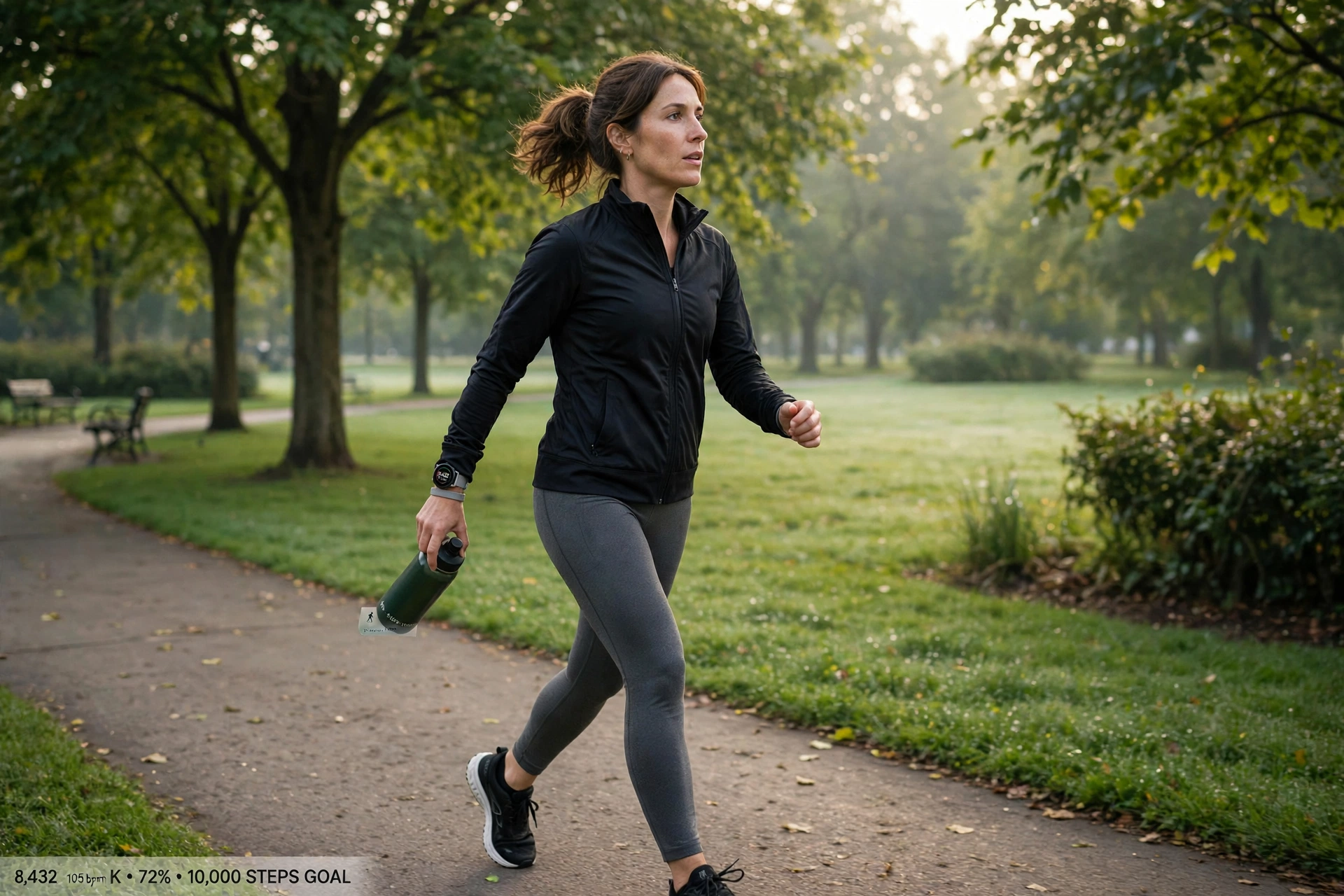
The biggest mistake beginners make is doing too much on day one. Start by measuring your baseline: wear a tracker or carry your phone for three normal days and note your average. Then add 500–1,000 steps per day each week until you reach your target.
For most people, 1,000 steps takes roughly 8–10 minutes of walking, so adding 1,000 daily steps is just one short extra walk. That gradual ramp lets your feet, joints, and routine adapt without drama. Within a month or two, a target that once seemed impossible becomes your new normal — and you did it without a single miserable, exhausting day.
Fitting Walks Into a Busy Workday
“I don’t have time” is the number-one reason people don’t walk more, so the solution is to attach walking to things you already do. Take phone calls while walking instead of sitting. Park farther from the entrance. Get off the bus one stop early. Use the farthest restroom in the building.
The lunch walk is the highest-value habit of all: even 15–20 minutes after eating aids digestion and resets your afternoon focus. If you work from home, a “fake commute” — a short walk before and after work — creates a boundary between work mode and evening mode. These micro-walks add up surprisingly fast: three 10-minute walks spread through the day equal about 3,000–4,000 steps without ever feeling like exercise.
Tracking: Keep It Simple
You don’t need an expensive smartwatch. Your phone’s built-in health app counts steps reasonably well, and basic pedometers cost very little. The point of tracking isn’t precision — it’s awareness and momentum. Seeing your count climb is motivating, and noticing a low-count day prompts a quick evening walk instead of a shrug.
Pick one metric and check it once a day, not obsessively. Many people find a simple weekly average more useful than a daily pass/fail, because it smooths out the inevitable low days (rainy days, sick days, deadline days) without guilt. If you enjoy structure, our beginner strength-training plan for home complements daily walking perfectly — walking builds the aerobic base, strength work builds the muscle that protects your joints.
Footwear Basics: Protect Your Feet
You don’t need special gear to start walking, but your shoes matter more than anything else. Walk in supportive, well-fitting shoes with decent cushioning — not worn-out sneakers, flat unsupportive shoes, or brand-new shoes on a long walk. Blisters and foot pain are the top reasons walking habits die in week two.
If you develop persistent foot, knee, or hip pain, don’t push through it — scale back and, if it continues, get it checked. Replace walking shoes roughly every 500–800 kilometers (or when the tread and cushioning visibly wear down). Moisture-wicking socks are a small upgrade that prevents a lot of blister misery.
Staying Consistent Through Bad Weather and Busy Weeks
Consistency beats intensity. Have a bad-weather plan before you need one: a mall, an indoor track, a treadmill, or simply walking in light rain with a decent jacket. “I walk every day, and rain just changes where” is the mindset that keeps streaks alive.
For brutal weeks, lower the bar instead of skipping entirely. A 10-minute walk still counts — it keeps the habit loop intact, which is what actually matters long-term. Habit research is clear: missing once is fine; missing twice starts a new habit of not walking. Make the minimum so small you can do it on your worst day.
Make It Enjoyable Enough to Keep
The best walking routine is the one you’ll still be doing in six months. Pair walks with podcasts, audiobooks, music, or a walking buddy. Explore different routes to keep things interesting — novelty is motivating. Some people love the meditative aspect of a quiet morning walk; others need the social pull of a regular walking partner.
Consider tying walking to something you look forward to: your favorite podcast only gets played on walks, or a weekend “adventure walk” exploring a new neighborhood or trail. When walking becomes the vehicle for something you enjoy rather than a chore you endure, the step count takes care of itself.
Frequently Asked Questions
Is 10,000 steps really necessary, or is less okay?
Less is absolutely okay. Research shows major health benefits kick in well below 10,000 steps — the jump from sedentary to 7,000–8,000 steps captures most of the gains. Treat 10,000 as an aspirational target, not a requirement.
How long does it take to walk 10,000 steps?
For most adults, 10,000 steps is roughly 7–8 kilometers (4–5 miles) and takes about 1.5 hours of total walking — but that includes all the incidental steps in your normal day, not one continuous walk.
Can I split my walking into several short walks?
Yes — and for most people that’s actually better. Multiple short walks through the day provide the same step-count benefits as one long walk, with bonus effects on blood sugar and afternoon energy. Three 10-minute walks beat zero 30-minute walks every time.