
Everyone knows someone who always seems to pay half of what you paid for the same flight. They aren’t lucky — they just book differently. Airline pricing moves constantly, rewards flexibility, and punishes last-minute panic booking. The twelve strategies below are the ones savvy travelers use most often. None require special skills, and several take less than five minutes to set up.
The key is consistency: small habits applied every time you book add up to hundreds saved over a year of travel. Work through this list before your next trip and you’ll never book the same way again.
1. Be Flexible With Your Dates — the Single Biggest Saver
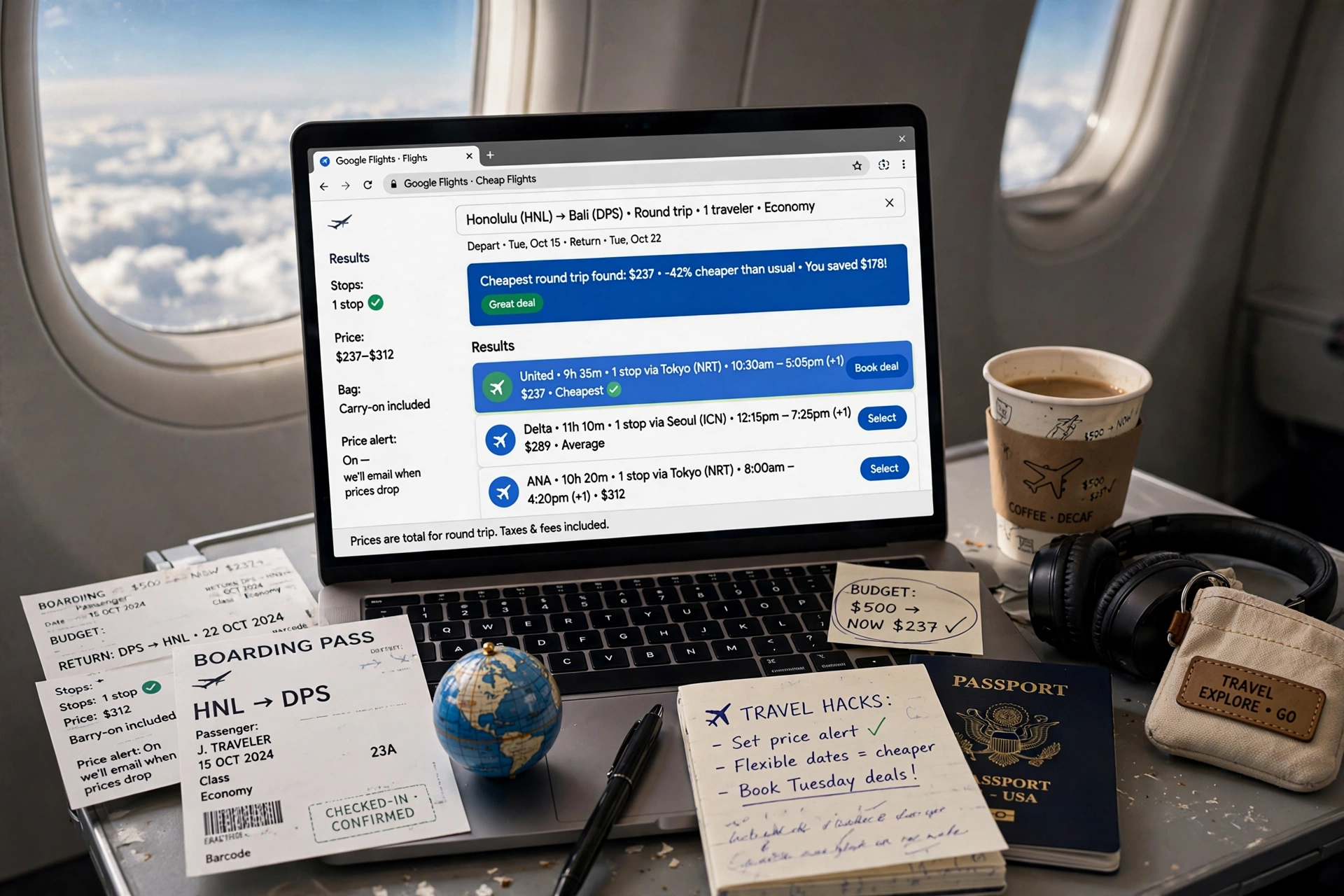
Flying Tuesday or Wednesday is often noticeably cheaper than Friday or Sunday, because business travelers and weekend vacationers crowd the expensive days. Shifting departure by even a day or two can change the price dramatically on the same route. Use the flexible-dates view on fare search engines to see a month of prices at a glance and spot the cheapest travel days instantly.
2. Set Fare Alerts and Let Prices Come to You
Fare alerts track a route and notify you when the price drops or hits a typical low — replacing daily price-checking guesswork with data. Set alerts for every route you might fly, even before your dates are firm. You’ll learn what “normal” looks like for a route, so a genuine dip is obvious and you can book with confidence. It pairs well with our broader budget travel habits that save money on every trip.
3. Ignore the Incognito Mode Myth
You’ve heard that searching in incognito mode gets cheaper prices because airlines track you and raise fares. There’s no solid evidence behind it. Fare changes between searches come from normal price movement, cached results, or seats selling out at a fare level — not browser spying. Don’t waste energy on private windows; the real savings come from timing and flexibility, not browser tricks.
4. Check Nearby Airports Before You Commit
Many cities have multiple airports with sharply different prices, especially where secondary airports serve budget airlines. Always compare every airport within reasonable reach. Just factor in ground transport honestly — a fare that’s fifty dollars cheaper loses its appeal if it costs forty dollars and two hours to reach the airport. When the gap is large, and it often is, the alternative airport wins.
5. Learn the Booking Window for Your Trip Type
Domestic flights tend to price best a few weeks to two months ahead; international flights often reward booking a few months out. Booking the same week is the expensive zone (airlines know you’re desperate), while booking extremely early can mean discounted fare buckets aren’t loaded yet. For peak-season travel — holidays, school breaks — book as early as you can commit, since cheap seats sell out first and prices only climb.
6. Don’t Overlook Budget Airlines
Low-cost carriers undercut legacy airlines by unbundling: the base fare covers the seat, and bags, seat selection, and food cost extra. Travel light and skip the add-ons, and the total stays far below traditional prices. Read the fare rules first — baggage fees and strict carry-on limits can erase savings if you’re unprepared. Our guide to packing two weeks in a carry-on helps you dodge those fees entirely.
7. Keep an Eye Out for Mistake Fares
Occasionally airlines publish fares with obvious errors — a missing zero, a wrong currency conversion — and premium routes sell for a fraction of normal price for a brief window. Deal-tracking newsletters flag these. If you spot one, book directly and fast, don’t call the airline to ask about it, and hold off on non-refundable hotels until the ticket is confirmed. Airlines sometimes honor them, sometimes cancel — keep connecting plans flexible for a day or two.
8. Consider Connecting Flights Instead of Nonstop
Nonstop flights command a premium because everyone prefers them. Accept one short connection at a well-run hub and you can often save meaningfully, particularly internationally. Build in a comfortable layover rather than the minimum to cut misconnection risk. On short domestic hops the savings are modest, but on long-haul routes the nonstop vs. one-stop gap can be substantial — always compare both.
9. Mix and Match One-Way Tickets
You don’t have to buy a round trip from one airline. Two one-way tickets — possibly on different carriers — is sometimes cheaper than any round trip, especially when one direction is served well by a budget airline. It also enables open-jaw itineraries (fly into one city, home from another), saving money and backtracking. Just note: separate tickets mean no automatic rebooking if your first flight is delayed.
10. Use Points and Miles Strategically
Travel rewards are worth real money if treated that way. Even one or two trips a year can generate useful points through a rewards card used for everyday spending — provided you pay the balance in full monthly. Interest charges wipe out rewards instantly. Redeeming points for flights usually beats cash back or merchandise on per-point value, and airline loyalty programs are free, so join every one you fly.
11. Travel in Shoulder Season
Every destination has a shoulder season — the weeks on either side of peak — where prices drop, crowds thin, and weather stays pleasant. Europe in late April or early October, the Caribbean in late spring: these windows offer some of travel’s best value. If your dates are even partially flexible, aim for the edges of peak season rather than its center and you’ll pay less for flights and hotels alike.
12. Use Price Prediction Tools as a Second Opinion
Several fare tools estimate whether prices on your route are likely to rise or fall, based on historical data. Treat these as a helpful second opinion, not gospel — they can’t predict flash sales or demand spikes. The winning formula combines everything above: set alerts early, know your route’s typical price, stay flexible on dates and airports, and book when the data says the price is good rather than when panic says it might rise.
Frequently Asked Questions
How far in advance should I book?
Domestic: a few weeks to two months ahead. International: a few months. Peak holidays: as early as you can commit. Use fare alerts rather than a fixed countdown.
Are budget airlines really cheaper after fees?
Often yes, if you travel light and skip add-ons. Always compare the all-in total, not the headline fare.
Does incognito mode lower flight prices?
No reliable evidence says so. Price changes come from normal fare movement and seats selling out, not tracking.