Clutter is not just a mess — it is a low-grade mental tax. Researchers have found that people in cluttered homes report higher stress levels and have a harder time focusing. Yet most decluttering advice fails for the same reason diets fail: it asks for a heroic weekend overhaul instead of small, sustainable steps.
Learning how to declutter your home room by room changes the psychology completely. Instead of “fix the entire house,” your goal becomes “finish the kitchen counter today.” Small wins build momentum, and momentum finishes houses. This guide gives you a method, a room-by-room plan, and the maintenance habits that keep clutter from creeping back.
1. The Method: The 4-Box System
Every decluttering session starts the same way: bring four boxes or bags into the room and label them Keep, Donate, Trash, and Relocate. Every single item you touch goes into exactly one box — no “decide later” pile, because that pile is just clutter with a permission slip.
Work in small zones, not whole rooms. “The kitchen junk drawer” is a session; “the kitchen” is a project. Set a timer for 20 to 30 minutes and stop when it rings. You will be amazed how much a focused half hour clears, and — more importantly — you will come back tomorrow instead of dreading it.
For the Keep box items, every object needs a home. “Keep” without a designated spot is how clutter regenerates. As you sort, ask the only question that matters: would I buy this again today? If not, it belongs in Donate or Trash.
2. Start Where You Will See It: The Living Room
Begin with the room you spend the most time in, because visible progress fuels everything else. Clear every flat surface first — coffee table, shelves, TV stand. Flat surfaces are clutter magnets; clearing them gives an instant sense of order.
Then go through the easy wins: dead remotes and cables for devices you no longer own, magazines older than a month, decorative items you do not actually like, and the “drawer of random” that every living room seems to grow. Be honest about furniture too — if a chair has been a clothes rack for a year, it is not a chair.
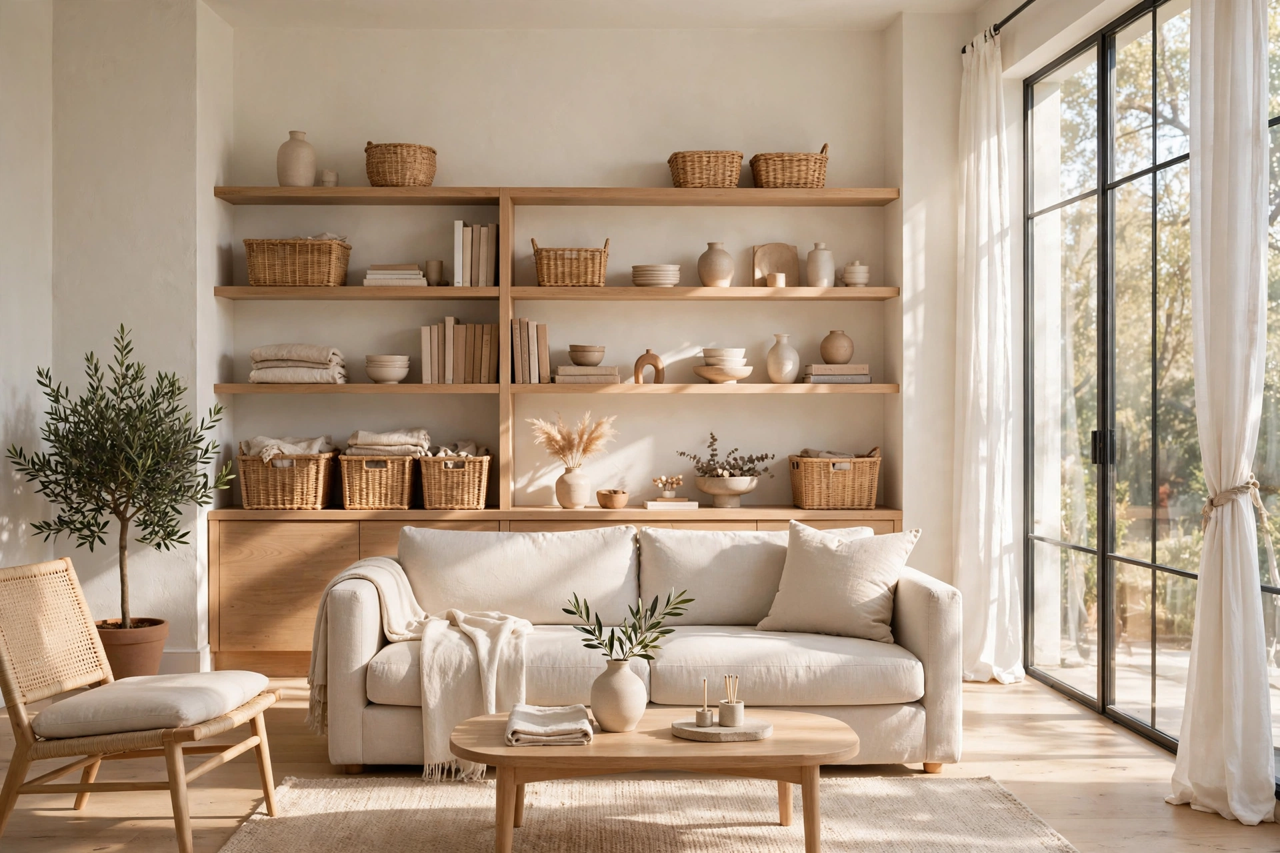
Once decluttered, a room deserves to look intentional. This is the fun part: a few well-chosen pieces make the space feel finished rather than empty. Timeless decor accents can add warmth and character to your newly clear surfaces without reintroducing clutter.
3. The Kitchen: The Highest-Impact Room
Kitchens accumulate duplicates quietly: three spatulas, two cheese graters, a bread maker used once in 2022. Pull everything out of one cabinet at a time and keep only what you use monthly. Duplicate utensils, chipped mugs, expired spices, and novelty gadgets that never earned their counter space all go.
Attack the pantry next. Check expiration dates ruthlessly — spices lose potency after a year, canned goods have limits too. Decant what you use often into clear containers so you can see stock at a glance; visibility is the enemy of both clutter and food waste.
Countertops should hold only daily-use items: the coffee maker, the knife block, maybe a fruit bowl. Everything else lives in a cabinet. A clear counter does not just look better — it makes cooking faster and cleaning trivial.
4. Bedrooms, Bathrooms, and the Closet Problem
Bedrooms should be calm by design. Clear nightstands down to a lamp, a book, and water. Under-bed storage is fine for seasonal items, but if you have not opened a box in a year, its contents are donate candidates. Bedding: two sets per bed is plenty.
Closets deserve their own session. Try everything on, and be honest: clothes that do not fit, flatter, or get worn are just taking up decisions. (If a full wardrobe overhaul appeals to you, a capsule approach pairs perfectly with decluttering.) Donate wearable clothes promptly — bags that sit in the hallway for a month become clutter again.
Bathrooms are small but dense with expired products: half-used lotions, old makeup, medicines past their date, and hotel toiletries from 2019. Empty every drawer onto the counter, toss ruthlessly, and keep only what you use weekly. One in, one out applies to toiletries too.
5. Paper, Digital Clutter, and the Hard Categories
Paper is the sneakiest clutter because it feels important. Sort mail daily at the door — recycle junk immediately, file action items in one tray. Scan or photograph anything you need to keep (warranties, receipts, kids’ artwork) and shred the originals. A single small filing box handles the rest.
Sentimental items get special rules, not exemptions. Limit keepsakes to one memory box per person; if it does not fit, something less meaningful leaves. Photograph bulky sentimental items — the memory lives in the photo, not the object.
Do not forget digital clutter: 10,000 unsorted photos, a desktop of files, 200 unread newsletters. An hour a week on digital decluttering — unsubscribe ruthlessly, archive old files — clears the mental load you carry into every workday.
6. Keep It That Way: Maintenance Habits
Decluttering is a project; staying decluttered is a system. The two-minute rule handles most of it: if a task takes under two minutes — hang the coat, file the paper, wipe the counter — do it now. Clutter is almost always a pile of deferred two-minute tasks.
Do a 10-minute nightly reset: everyone in the house returns things to their homes. It is astonishing how a house stays tidy when the reset is daily instead of a dreaded weekend event. And apply one-in-one-out to shopping: a new shirt means an old one leaves.
The payoff is real and measurable — people consistently report sleeping better and feeling calmer in tidy spaces. The link between environment and mental wellbeing runs deeper than most of us expect, and a calm home is one of the cheapest forms of self-care there is.
Conclusion and Quick FAQ
You do not need a perfect home — you need a home that works for you. Use the 4-box method, work room by room in short sessions, and install the tiny maintenance habits that keep clutter from returning. Six weeks of steady small sessions beats one exhausting weekend every time.
Where should I start decluttering first? Start with the room you use most — usually the living room or kitchen. Visible daily progress keeps you motivated through the harder rooms.
How do I declutter sentimental items? Give them a bounded container — one memory box per person. Photograph bulky items and keep the photo. The memory is what matters, not the object.
How long does it take to declutter a whole house? With 30-minute daily sessions, most homes take 4 to 6 weeks. Whole-weekend blitzes feel productive but usually burn people out halfway through.