
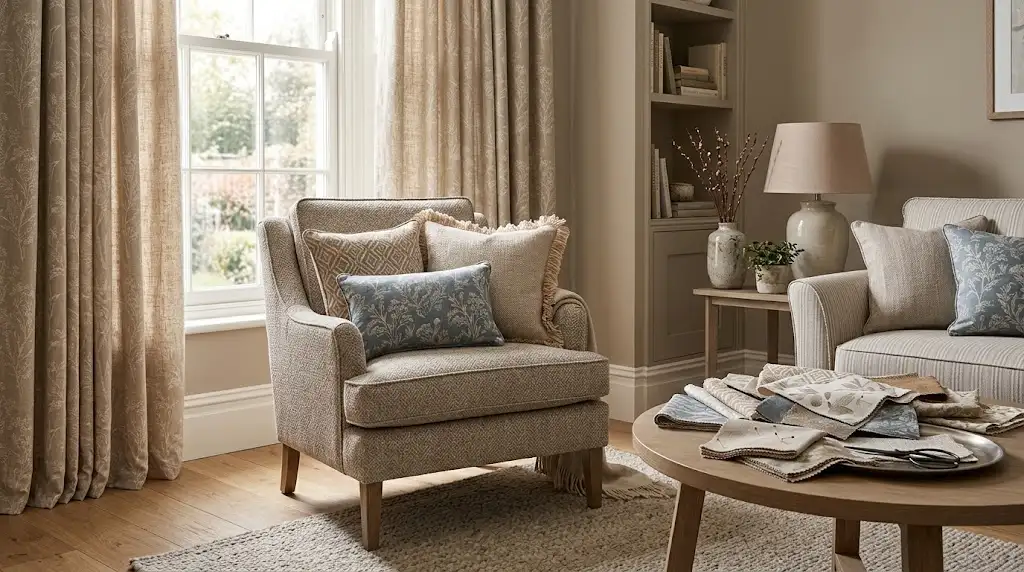
Whether you are refreshing one chair or coordinating an entire room, understanding fabric construction, pattern scale, color, and intended use can make the selection process much easier.
What Is Magnolia Home Fashions Fabric?
Magnolia Home Fashions is a decorative textile line associated with Covington Fabrics. Its collections are designed for interior applications where pattern, texture, color, and performance all matter.
The range includes both printed fabrics and woven textures. Depending on the specific pattern, fiber content, construction, and performance specifications, individual fabrics can be suited to different applications. This makes it important to evaluate the individual fabric rather than assuming that every Magnolia Home Fashions textile has identical characteristics.
The collection includes many different visual directions, including traditional, transitional, contemporary, botanical, geometric, plaid, stripe, damask, floral, and textured designs.
Why Magnolia Home Fashions Fabric Stands Out
The appeal of Magnolia Home Fashions fabric comes largely from its combination of decorative variety and practical interior-design applications. A fabric can introduce color into a neutral room, add texture to plain furniture, or create visual continuity between different elements.
Instead of selecting furniture, curtains, and accessories independently, a coordinated textile palette can help make a room feel more intentional.
- Wide pattern variety: Options range from understated textures to expressive prints.
- Multiple color directions: Collections include neutrals, blues, greens, warm earth tones, and richer accent shades.
- Interior versatility: Depending on the specific fabric, textiles can be used for upholstery, cushions, drapery, bedding, and decorative accents.
- Different construction types: Both printed and woven materials are available.
- Coordinating possibilities: Related colorways and patterns can help create a unified decorating scheme.
Popular Magnolia Home Fashions Fabric Styles
One of the strongest features of the collection is its variety. Different decorating projects call for different visual effects, and pattern selection can dramatically change how a room feels.
Floral and Botanical Patterns
Floral and botanical fabrics can soften a room while introducing natural visual movement. Smaller botanical prints may work well for cushions, curtains, and accent pieces, while larger-scale patterns can create a stronger focal point on a chair or upholstered furniture.
Geometric Designs
Geometric fabrics provide a more structured appearance. Quatrefoil, lattice, trellis, and other repeating motifs can complement contemporary, transitional, or classic interiors depending on their scale and color palette.
Stripes and Checks
Stripes and checks are particularly useful when you want a recognizable pattern without overwhelming the room. A stripe can emphasize direction, while a check can create a more relaxed or traditional character.
Textured and Woven Fabrics
Woven fabrics can contribute visual depth even when their colors are relatively restrained. Texture is especially useful in rooms where you want interest without introducing another strong printed pattern.
Magnolia Home Fashions Fabric for Upholstery
Upholstery is one of the most important applications to consider when selecting decorative fabric. A beautiful pattern is only part of the decision; the fabric also needs to be appropriate for the furniture and expected level of use.
Before ordering upholstery fabric, check the specific product’s fiber content, width, durability information, cleaning instructions, and other manufacturer or retailer specifications.
For a frequently used sofa or chair, performance characteristics should receive as much attention as appearance. For a decorative occasional chair, footstool, or accent piece, visual impact may play a larger role.
Using Magnolia Fabric for Curtains and Window Treatments
Window treatments offer another opportunity to use Magnolia Home Fashions fabric. Curtains can introduce a pattern into an otherwise simple room or reinforce colors that already appear in furniture and accessories.
When choosing fabric for curtains, consider the pattern repeat, fabric width, desired fullness, window size, and how the design will appear when the material is gathered.
Large patterns can become especially interesting on broad curtain panels, while smaller designs may provide a quieter background.
Accent Pillows and Decorative Accessories
If you like a particular Magnolia pattern but do not want to commit to a large upholstered item, accent pillows can provide a lower-commitment way to introduce it.
A patterned pillow can become the bridge between a sofa, rug, curtains, and wall colors. Multiple fabrics can also be combined, provided they share at least one visual connection such as color, scale, or design character.
Other decorative projects may include bench cushions, ottomans, fabric accents, and selected bedding applications, depending on the specifications of the individual textile.
How to Choose the Right Magnolia Home Fashions Fabric
Choosing the right fabric becomes easier when you evaluate the project before falling in love with a particular pattern.
1. Start With the Room
Look at the colors, furniture, flooring, lighting, and architectural details already present. The best fabric does not necessarily need to match everything. Instead, it should work within the room’s existing visual language.
2. Decide How Much Pattern You Want
A large-scale print can become the focal point of a room. A small repeat or subtle woven texture can work more quietly as a supporting element.
3. Consider Color Temperature
Warm neutrals, cool blues, earthy greens, and deeper accent colors can create very different atmospheres. Compare fabric samples with the actual finishes in your room whenever possible.
4. Check the Fabric Specifications
Never choose a fabric solely from an online photograph. Individual products can differ in fiber content, width, durability, care requirements, pattern repeat, and recommended applications.
5. Order a Sample When Available
A fabric sample makes it easier to judge texture and color under your own lighting. It also helps you understand how a pattern looks beside existing furniture and finishes.
Magnolia Fabric and Neutral Interior Design
Neutral interiors do not have to be visually flat. Magnolia Home Fashions fabric can add interest through subtle patterns, tonal variations, and woven textures without requiring a dramatic change in wall or furniture colors.
For example, a neutral sofa can be paired with patterned cushions, textured curtains, or a coordinating accent chair. This creates layers while preserving a calm overall palette.
This approach can also make it easier to update a room later because smaller textile elements can be changed without replacing major furniture.
Using Bold Patterns Without Overcrowding a Room
Bold fabric works best when it has room to breathe. If one large piece already carries a strong pattern, surrounding it with simpler textures and quieter colors can create balance.
One useful approach is to establish a hierarchy:
- Choose one primary pattern.
- Add one or two supporting patterns with different scales.
- Use solid or subtly textured fabrics between them.
- Repeat selected colors throughout the room.
- Avoid giving every surface equal visual weight.
This allows decorative fabrics to make an impression without making the entire room feel visually busy.
Pattern Scale Matters More Than Many People Expect
Two fabrics can use similar colors but produce completely different results because their pattern scales are different.
A small repeating motif may feel delicate and understated. A large botanical or geometric print can become a dominant feature. When combining fabrics, varying the scale is often more effective than choosing several patterns that are equally large.
Always consider the size of the furniture or window treatment as well. A pattern that looks excellent on a small swatch may appear very different when repeated across a large sofa or curtain panel.
Magnolia Home Fashions Fabric for Different Decorating Styles
Traditional Interiors
Traditional rooms can benefit from florals, checks, damasks, classic stripes, and richly detailed motifs. Fabrics with established decorative patterns can reinforce the room’s timeless character.
Transitional Interiors
Transitional rooms provide an opportunity to combine classic pattern language with simpler contemporary forms. Neutral backgrounds, restrained geometric designs, and balanced color combinations can work particularly well.
Modern Interiors
In modern spaces, fabric can soften clean architectural lines. A restrained geometric, textured weave, or carefully selected botanical print can add warmth without compromising the room’s simplicity.
Rustic and Casual Interiors
Checks, stripes, natural-looking textures, and relaxed patterns can support casual decorating schemes. These materials can help create a comfortable atmosphere without making the space feel overly formal.
How to Coordinate Multiple Magnolia Fabrics
Using several fabrics from a related collection can make coordination easier, but successful combinations still require attention to scale and balance.
Start with a dominant fabric. Then select supporting textiles that share one or more characteristics with it. The connection might be a repeated color, similar texture, complementary pattern, or shared design style.
For example, a large botanical pattern could become the main fabric, while a smaller geometric design and a simple textured solid provide support. The result is layered rather than repetitive.
Fabric Care and Maintenance
Care requirements vary by individual Magnolia Home Fashions fabric. Some textiles may have specific cleaning codes or professional-care recommendations, while others may have different instructions based on their fiber content and construction.
Always follow the care instructions supplied for the specific fabric you purchase. Avoid applying a general cleaning method simply because another fabric in the same collection has a similar appearance.
Proper maintenance is particularly important for upholstery and frequently handled textiles because incorrect cleaning can affect color, texture, or fabric performance.
Why Fabric Samples Are Important
Online images are useful for narrowing down options, but they cannot fully reproduce the experience of seeing a textile in person.
A sample allows you to examine:
- Actual color and undertones
- Surface texture
- Pattern scale
- Print clarity
- How the fabric reacts to your room’s lighting
- How it coordinates with furniture and other materials
For an expensive upholstery or window-treatment project, sampling before ordering a larger quantity can prevent costly design mistakes.
Magnolia Home Fashions Fabric vs. Generic Decorative Fabric
The main advantage of choosing a recognized decorative collection is the ability to shop within an established design vocabulary. Instead of searching through unrelated fabrics, you can explore coordinated patterns, colors, and textures within a broader collection.
However, the brand name alone should never replace product-level evaluation. The correct fabric depends on your project’s requirements, including intended use, durability, cleaning, dimensions, and appearance.
Creating a Cohesive Room With Fabric
Fabric can connect different parts of a room more effectively than many decorative accessories. A color appearing in a curtain can be repeated subtly in cushions. A geometric shape from upholstery can be echoed in a smaller accent. A neutral woven texture can help transition between patterned elements.
The goal is not to make every textile identical. Instead, repeating selected visual characteristics creates cohesion while allowing individual pieces to retain their personality.
Common Mistakes When Buying Home Décor Fabric
- Choosing from a photo alone: Screen colors can differ from the actual textile.
- Ignoring pattern repeat: Large repeats can require more fabric than expected.
- Forgetting fabric width: Yardage requirements depend partly on the width of the textile.
- Skipping durability information: High-use furniture requires appropriate performance characteristics.
- Ignoring care instructions: Cleaning requirements should fit your lifestyle.
- Using too many competing patterns: A room needs visual hierarchy.
- Failing to test the fabric in the room: Lighting and surrounding colors can change its appearance.
How Magnolia Home Fashions Fits Into Today’s Interior Trends
Interior design trends continue to move between minimalism, layered comfort, natural-looking materials, traditional references, and more personalized spaces. Decorative fabric remains useful across these changing preferences because textiles can be introduced or replaced without completely redesigning a room.
That flexibility makes fabric particularly valuable for homeowners who want to refresh an existing interior gradually.
Instead of replacing an entire room, you can change selected cushions, curtains, a chair, or another textile element and create a noticeably different visual direction.
Frequently Asked Questions About Magnolia Home Fashions Fabric
What is Magnolia Home Fashions fabric used for?
Depending on the individual fabric, Magnolia Home Fashions textiles can be used for upholstery, drapery, cushions, bedding, and other decorative interior applications. Always check the specifications of the particular fabric before selecting it for a project.
Is Magnolia Home Fashions fabric available in different patterns?
Yes. The collection includes numerous design styles, including florals, botanical motifs, stripes, checks, geometric patterns, traditional designs, transitional styles, and textured materials.
Can Magnolia Home Fashions fabric be used for upholstery?
Many fabrics in the collection are intended for upholstery or multi-purpose decorative applications, but suitability varies by product. Check the individual fabric’s performance specifications before upholstering furniture.
Should I order a fabric sample first?
For a major project, ordering a sample is a sensible step. It lets you evaluate the real color, texture, scale, and relationship with your existing interior before purchasing larger quantities.
How do I choose between a printed and woven fabric?
Choose based on the visual effect and practical requirements of the project. Printed fabrics can create strong decorative patterns, while woven fabrics can introduce texture and a more understated visual effect.
Is Magnolia Home Fashions fabric suitable for every room?
There are fabrics suitable for many interior applications, but the appropriate choice depends on the specific product and room. Consider moisture, traffic, sunlight, cleaning requirements, and intended use before making a selection.
Final Thoughts
Magnolia Home Fashions fabric offers a broad design vocabulary for homeowners and professionals looking to add pattern, texture, color, and personality to interior spaces. From upholstery and window treatments to cushions and decorative accents, the right textile can change the character of a room without requiring a complete redesign.
The most successful choice is not simply the prettiest fabric. It is the textile whose pattern, scale, color, construction, performance, and care requirements match the project.
Take time to compare samples, consider how the fabric will be used, and build a balanced combination of patterns and textures. With that approach, decorative fabric becomes more than an accessory—it becomes one of the tools that gives an interior its identity.