
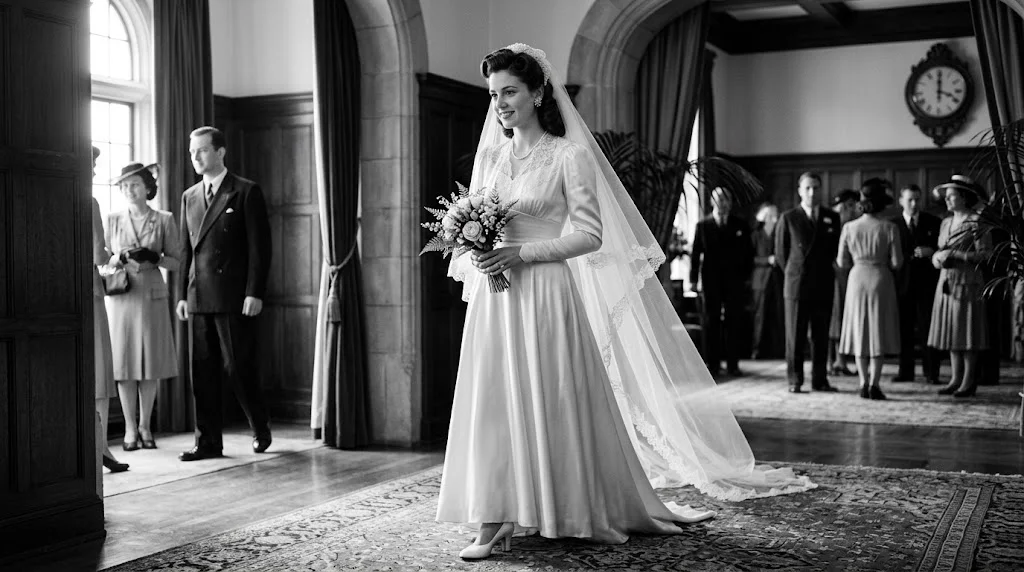
That combination of elegance and resourcefulness is what makes 1940s wedding dresses so interesting today. Their designs offer a distinctive alternative to both earlier 1930s glamour and the fuller silhouettes that became increasingly popular after the war.
What Did Wedding Dresses Look Like in the 1940s?
Many 1940s wedding dresses featured long skirts, defined waists, fitted bodices, sleeves, and relatively structured silhouettes. Necklines varied considerably, with V-necks, rounded necklines, square necklines, and sweetheart-inspired shapes appearing across the decade.
Early- and mid-1940s bridal fashion was strongly influenced by wartime conditions. Dresses could be relatively simple, with restrained decoration and practical construction. At the same time, brides who had access to more luxurious materials could still wear elaborate gowns with trains, lace, embroidery, veils, and other traditional bridal details.
This makes it difficult to define one universal 1940s wedding-dress style. The decade contained considerable variation in both design and availability.
How World War II Changed 1940s Wedding Dresses
World War II had a major effect on clothing production and textile availability. In countries affected by wartime restrictions, fabrics and other materials were subject to shortages, rationing, or controlled distribution.
Fashion therefore became more resource-conscious. Utility clothing in Britain, for example, reflected government restrictions on textile use, while designers and home sewers found creative ways to maintain style within material limitations.
Wedding clothing was not completely separated from these realities. Some brides wore existing dresses, altered garments, borrowed clothing, or simpler gowns rather than commissioning an elaborate new dress.
This practical side of bridal fashion is one of the most important differences between romantic modern interpretations of the 1940s and the actual experiences of many women during the decade.
1940s Wedding Dress Silhouettes
Fitted Bodices
Fitted bodices helped establish a defined waist and gave many wedding dresses a polished, structured appearance. The upper part of the dress could be tailored closely to the body while the skirt provided additional movement.
Long Skirts
Floor-length and ankle-length bridal dresses were common, although exact proportions varied. The skirt could be relatively narrow or more generous depending on the year, available fabric, and individual design.
Defined Waistlines
A clearly defined waist was an important element of many 1940s women’s garments, including bridal clothing. Belts, seams, pleats, or carefully shaped bodices could emphasize the waist without requiring excessive ornamentation.
Structured Shoulders
The broader, more structured shoulder line associated with 1940s fashion could also influence bridal designs. This helped create a distinctive silhouette that differed from the softer, more fluid lines of some 1930s clothing.
1940s Wedding Dress Sleeves
Sleeves were particularly important in 1940s bridal fashion. Long sleeves could provide an elegant and modest appearance while also working naturally with the decade’s overall tailored aesthetic.
Some dresses featured pointed sleeve ends, fitted sleeves, lace inserts, sheer sections, or other decorative details around the wrist. Shorter sleeves were also possible, especially in less formal or warmer-weather designs.
For brides looking to recreate a vintage-inspired look today, sleeve construction is one of the easiest ways to communicate the character of a 1940s wedding dress.
Popular Necklines in 1940s Bridal Fashion
1940s wedding dresses did not follow one single neckline trend. Several styles appeared throughout the decade.
- V-necklines: Elegant and elongating, often paired with fitted sleeves.
- Round necklines: A restrained option that worked well with lace and decorative inserts.
- Square necklines: Added structure and could create a more formal appearance.
- Sweetheart-inspired necklines: Offered a softer romantic character.
- High necklines: Particularly suitable for modest and traditional bridal designs.
The neckline was often balanced by the sleeves, bodice construction, and veil rather than treated as an isolated design feature.
Fabrics Used in 1940s Wedding Dresses
Fabric choice varied significantly according to location, availability, personal circumstances, and the bride’s budget.
Silk, satin, lace, rayon, crepe, cotton, and other textiles could appear in wedding clothing. During wartime, however, access to particular materials could be restricted or expensive.
Rayon became an important alternative textile during periods when certain natural fibers were difficult to obtain. Some brides and dressmakers also repurposed existing materials rather than purchasing new luxury fabric.
For readers interested in the broader history of textiles and clothing, the history of 1760s rural fashion provides a useful contrast in how fabric availability, construction, and everyday practicality influenced earlier clothing.
Lace in 1940s Wedding Dresses
Lace could add romantic detail to a wedding dress without requiring the entire garment to be made from an elaborate decorative textile. It might appear around the neckline, sleeves, bodice, cuffs, or other selected areas.
Lace inserts were especially effective when paired with relatively simple silhouettes because they provided visual interest without overwhelming the overall shape of the gown.
1940s Wedding Dresses and Veils
The veil remained an important part of traditional bridal styling. Veil length and construction varied, from relatively short head coverings to long veils extending behind the bride.
Veils could be attached to different types of headpieces, and some brides used floral or decorative elements around the hair rather than relying on a large elaborate headpiece.
The veil also helped transform a relatively simple dress into a distinctly bridal ensemble, which was particularly useful when material or financial limitations affected the gown itself.
1940s Bridal Hairstyles and Headpieces
Hair played a major role in the overall appearance of a 1940s bride. Structured waves, rolls, pinned-up hairstyles, and carefully arranged hair could create a polished silhouette around the face.
Headpieces, veils, flowers, and other accessories were often selected to complement the hairstyle rather than compete with it.
A vintage-inspired bride today can reproduce much of the decade’s character through hairstyle and accessories even when wearing a modern interpretation of the dress.
Gloves and Accessories for 1940s Brides
Gloves could add formality to a wedding ensemble, particularly when paired with short-sleeved or sleeveless dresses. Jewelry, brooches, handbags, veils, and hair accessories also helped personalize bridal clothing.
Accessories were especially useful when the wedding dress itself was relatively simple. A carefully selected veil or pair of gloves could create a more formal appearance without requiring extensive decoration on the gown.
1940s Bridal Shoes
Shoes in the 1940s reflected the decade’s broader movement toward practical footwear. Wartime material shortages affected leather and other traditional shoe materials, encouraging the use of alternatives.
Bridal footwear could include practical pumps, peep-toe styles, wedges, or other period-appropriate shoes depending on the bride’s circumstances and location.
When recreating a 1940s wedding outfit, the shoes should complement the dress rather than look like a modern addition disconnected from the rest of the ensemble.
Simple Wartime Wedding Dresses
Not every 1940s bride had an elaborate wedding gown. Wartime circumstances encouraged practical decisions, and some women chose clothing that could be worn again after the ceremony.
A simple dress could still appear elegant when combined with a veil, carefully styled hair, gloves, flowers, or jewelry.
This is one of the most appealing aspects of 1940s bridal fashion: elegance did not always depend on extravagance.
Wedding Suits and Alternative Bridal Clothing
Some women chose suits or other smart garments instead of a traditional wedding gown. This could make practical sense when clothing budgets and textile availability were limited.
A tailored suit also reflected the broader influence of menswear-inspired silhouettes on 1940s women’s fashion.
For modern vintage weddings, a bridal suit can therefore provide a historically inspired alternative to the conventional full-length gown.
Repurposed Fabrics and Resourceful Brides
Resourcefulness was an important part of wartime life, and clothing was no exception. Existing garments could be altered, family textiles could be reused, and unusual materials could sometimes be transformed into wedding clothing.
One particularly memorable example involved surplus military parachute material being transformed into wedding dresses during and after the war. Such stories demonstrate how scarcity could encourage creativity rather than completely eliminating bridal fashion.
1940s Wedding Dresses in Britain and the United States
Although Britain and the United States shared many broad fashion influences, wartime conditions were not identical in both countries.
Britain experienced severe restrictions on textiles and clothing, while the United States had its own rationing system and production circumstances. As a result, the exact appearance and availability of wedding clothing could vary significantly.
Regional differences also mattered. Urban brides with access to department stores, professional dressmakers, or family resources could have different options from women living in smaller communities.
Early 1940s vs. Late 1940s Wedding Dresses
Early 1940s
Early-decade bridal fashion retained many elements inherited from the 1930s, but wartime conditions increasingly encouraged simpler construction and restrained material use.
Mid-1940s
During the middle of the decade, practical considerations remained particularly important. Structured shoulders, defined waists, long sleeves, and relatively streamlined skirts reflected the broader fashion environment.
Late 1940s
As the war ended, fashion gradually moved toward greater ornamentation and more generous silhouettes. The arrival of Christian Dior’s 1947 New Look marked a major postwar shift toward fuller skirts and a more dramatically emphasized waist.
This transition is important when dating a vintage wedding dress because a 1940s gown from 1941 can look considerably different from one produced near the end of the decade.
Princess Elizabeth’s 1947 Wedding Dress
Princess Elizabeth’s 1947 wedding to Philip Mountbatten became one of the decade’s most internationally recognized royal weddings.
Her bridal gown was designed by Norman Hartnell and became especially memorable for its embroidered floral decoration and long train. The wedding took place in a period when Britain was still dealing with postwar austerity, making the event and its clothing particularly significant within the cultural history of the period.
The dress demonstrated that ceremonial fashion could remain highly elaborate even while ordinary consumers continued to experience material restrictions.
How 1940s Wedding Dresses Differ From 1930s Styles
1930s fashion often emphasized fluid lines, bias cuts, and a more elongated appearance. By contrast, 1940s clothing generally became more structured, with stronger shoulders and a more tailored waist.
Wedding dresses followed some of these broader changes, although bridal fashion naturally retained romantic elements from earlier decades.
This makes a comparison between the two eras particularly useful when identifying vintage wedding garments.
How 1940s Wedding Dresses Differ From 1950s Bridal Fashion
The difference between late-1940s and 1950s wedding dresses can be especially subtle because postwar fashion changed rapidly.
The New Look helped popularize fuller skirts, strongly defined waists, and a more traditionally romantic silhouette. As the 1950s progressed, bridal gowns increasingly embraced volume and decorative femininity.
A late-1940s gown may therefore represent a transitional point between wartime practicality and the more extravagant postwar bridal aesthetic.
Why 1940s Wedding Dresses Remain Popular Today
Vintage-inspired bridal fashion continues to attract people who want something more distinctive than a conventional contemporary gown.
The 1940s offer several appealing characteristics:
- Elegant long silhouettes
- Beautifully structured sleeves
- Defined waistlines
- Classic necklines
- Romantic veils
- Timeless accessories
- A strong connection to historical storytelling
Modern designers can reinterpret these details without reproducing every historical restriction. This allows today’s brides to borrow the visual language of the 1940s while using contemporary fabrics, construction, and comfort features.
How to Create a 1940s-Inspired Wedding Look Today
You do not need an exact vintage gown to achieve a convincing 1940s-inspired bridal look.
- Choose a long or midi-length structured silhouette.
- Look for a clearly defined waist.
- Consider long or fitted sleeves.
- Select a classic neckline such as V-neck or sweetheart-inspired.
- Add a veil or period-inspired headpiece.
- Use vintage-style jewelry sparingly.
- Choose shoes with an appropriate historical shape.
- Finish the look with a 1940s-inspired hairstyle.
The key is consistency. When the dress, hair, shoes, and accessories all belong to the same visual period, the overall effect feels intentional rather than costume-like.
Choosing Fabric for a Modern 1940s-Inspired Wedding Dress
Fabric can dramatically change the appearance of a vintage-inspired gown. Satin can create a formal sheen, crepe can produce a softer drape, while lace can add traditional bridal detail.
If you are designing a custom wedding dress, consider both appearance and movement. A historically inspired dress should still be comfortable enough for walking, sitting, dancing, and spending several hours at a wedding celebration.
For a broader look at how decorative textiles can influence design, explore Magnolia Home Fashions fabric and its approach to patterns, textures, and interior textiles.
How to Combine Vintage and Modern Bridal Fashion
A successful modern interpretation does not have to reproduce every historical detail. Instead, select a few recognizable elements and combine them with contemporary construction.
For example, a modern gown could feature a 1940s-inspired fitted bodice and long sleeves while using modern lightweight fabric. A contemporary veil can echo vintage proportions while offering improved comfort.
This approach preserves the historical inspiration without turning the wedding outfit into a strict reproduction.
1940s Fashion and the Evolution of Style
Wedding dresses cannot be separated completely from the broader fashion history of the decade. Women’s clothing changed in response to wartime work, material shortages, social conditions, popular culture, and the eventual return of postwar consumer fashion.
If you enjoy exploring how fashion changes across different historical periods, the 1760s rural fashion guide provides an earlier point of comparison, while the latest fashion trends guide provides a modern contrast.
1940s Fashion Vocabulary and Historical Research
Historical fashion research often involves unfamiliar terminology. Understanding period-specific clothing terms can make vintage photographs, sewing patterns, advertisements, and fashion archives much easier to interpret.
For readers interested in fashion terminology and wordplay, our guide to the Cassini of Fashion crossword offers another way to explore fashion-related language.
Frequently Asked Questions About 1940s Fashion Wedding Dresses
What were typical 1940s wedding dresses like?
Many featured long skirts, defined waists, fitted bodices, sleeves, and structured silhouettes. However, styles varied considerably depending on the year, country, available materials, and the bride’s circumstances.
Did brides wear white wedding dresses in the 1940s?
Yes. White and light-colored bridal gowns remained important, although not every bride wore a traditional white wedding dress. Some women chose suits, existing dresses, or other practical alternatives.
What fabrics were used for 1940s wedding dresses?
Silk, satin, lace, rayon, crepe, cotton, and other fabrics could be used. Wartime shortages and regional conditions affected what was available to individual brides.
Did 1940s wedding dresses have sleeves?
Yes. Long and fitted sleeves were especially compatible with the structured style of the decade, although shorter sleeves and sleeveless designs also existed.
What did brides wear with 1940s wedding dresses?
Common accessories could include veils, gloves, jewelry, flowers, headpieces, and period-appropriate shoes. Hairstyles were also an important part of the complete bridal look.
Were 1940s wedding dresses simple?
Some were very simple, particularly during wartime, while others were highly elaborate. The decade included both practical gowns and luxurious ceremonial dresses.
How can I make a modern wedding dress look 1940s-inspired?
Focus on a defined waist, structured silhouette, classic neckline, sleeves, vintage-inspired hairstyle, and appropriate accessories. Combining several consistent period details usually creates a stronger result than adding too many unrelated vintage elements.
Final Thoughts on 1940s Fashion Wedding Dresses
1940s fashion wedding dresses represent much more than a nostalgic bridal aesthetic. They reveal how fashion responded to war, shortages, changing social expectations, and the gradual transition into the postwar world.
The decade’s bridal clothing could be restrained or glamorous, practical or highly ceremonial, depending on the bride and her circumstances. That variety is precisely what makes 1940s wedding fashion so compelling.
For modern brides, the era offers an especially rich source of inspiration: structured silhouettes, elegant sleeves, graceful veils, defined waists, refined accessories, and timeless romantic details can all be adapted without copying the past exactly.
Whether you are researching an authentic vintage gown, planning a historical wedding, or simply looking for an elegant alternative to contemporary bridal trends, the 1940s provide a distinctive style vocabulary that continues to influence fashion today.