
What Did Peasants Wear in the 1760s?
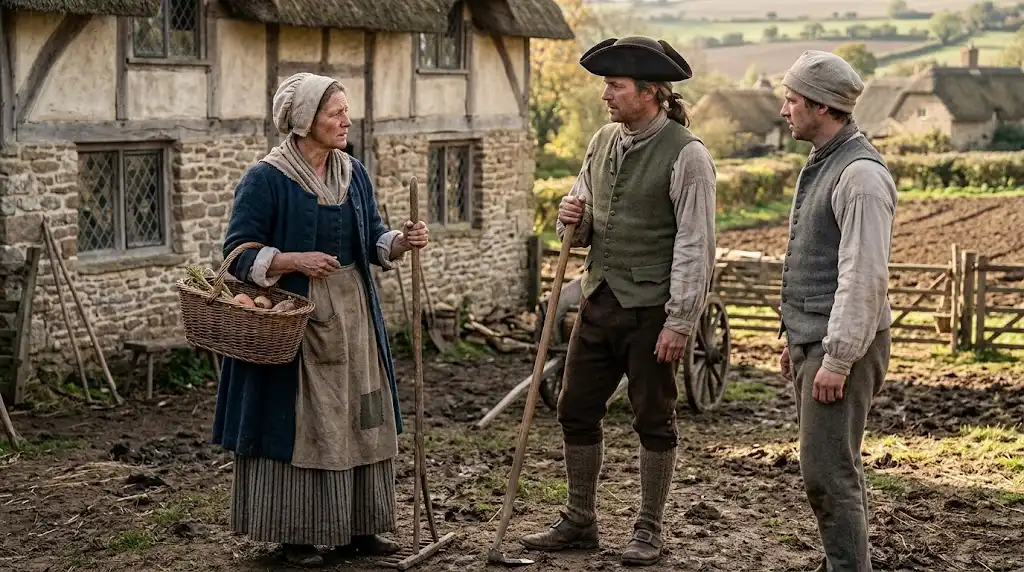
Everyday rural clothing in the 1760s was typically built around relatively simple garments that could withstand repeated use. Working men commonly wore shirts, waistcoats, breeches, stockings, coats or jackets, and practical footwear, although the exact combination varied considerably by region and social position.
Women commonly wore a shift or other undergarment beneath a bodice or stays and a skirt, petticoat, apron, and practical outer garments when necessary. A cap, kerchief, or other head covering could also form part of everyday dress.
Children generally wore clothing that was adapted from adult styles, although garments were often simpler and designed with practicality in mind. Hand-me-downs, alterations, and repairs were important ways households extended the useful life of clothing.
Why Was 1760s Peasant Clothing So Practical?
Rural clothing had to cope with demanding daily activities. Agricultural work could involve walking long distances, carrying tools or produce, working outdoors in changing weather, and repeatedly exposing garments to dirt and physical wear.
As a result, clothing was valued for qualities such as:
- Durability
- Ease of movement
- Warmth
- Protection from weather and dirt
- Ease of washing or repair
- Availability of local materials
- Ability to be reused or altered
Practicality did not mean that rural people had no interest in appearance. Clothing could communicate age, occupation, marital status, regional identity, economic circumstances, and participation in particular community traditions.
Common Fabrics in 1760s Rural Clothing
Textiles available to rural households varied substantially across Europe and other regions. Wool and linen were especially important historical fibers, while hemp and other locally available fibers could also be used depending on location.
Wool was valuable because it offered warmth and could be made into a variety of fabrics. It was particularly useful for outer garments, waistcoats, skirts, petticoats, coats, and other clothing intended for cooler conditions.
Linen was commonly associated with shirts, shifts, aprons, caps, and other garments that benefited from a washable plant-based fiber.
Hemp could also be used in textile production in regions where it was cultivated and processed. The exact balance of fibers depended on geography, local production, trade, household resources, and the period’s textile economy.
It is therefore misleading to imagine every rural household wearing identical undyed homespun clothing. Some people produced textiles at home, while others purchased cloth or garments through local and regional markets.
Women’s Peasant Fashion in the 1760s
Women’s rural clothing was usually layered and adaptable. A typical outfit could include an undergarment, bodice or fitted upper garment, skirt or petticoat, apron, stockings, footwear, and some form of head covering.
Aprons
Aprons were particularly useful because they could protect the clothing underneath from dirt, food, dust, and other sources of wear. They were practical garments rather than merely decorative accessories.
Skirts and Petticoats
Multiple skirts or petticoats could provide warmth and structure. Their appearance varied according to local traditions, available textiles, and the wearer’s economic circumstances.
Head Coverings
Caps, kerchiefs, and other head coverings were common elements of women’s historical dress in many rural communities. They could help keep hair controlled and protected during work while also fitting contemporary standards of modesty and appearance.
Men’s Peasant Fashion in the 1760s
Men’s rural clothing commonly emphasized mobility and durability. Shirts formed an important foundation of the wardrobe, while breeches, waistcoats, jackets, coats, stockings, and practical footwear could be added according to weather, occupation, and circumstances.
Breeches were typically worn below the knee during this period, with stockings covering the lower leg. Waistcoats were an important part of men’s dress and could be made from fabrics that ranged from relatively plain materials to more attractive or expensive textiles depending on the wearer’s means.
For outdoor labor, practicality mattered greatly. Clothing needed to tolerate repeated movement and exposure to working conditions, while garments used for church, markets, festivals, or other social occasions could be somewhat more carefully maintained.
Colors in 1760s Rural Clothing
The idea that all rural clothing in the 1760s was simply brown, gray, or undyed is too simplistic. Color availability depended on local textile production, dyeing practices, household resources, and access to markets.
Natural and muted shades were certainly common in practical clothing, but rural people could also wear colored textiles. The distinction between elite and working-class clothing was not simply a matter of bright versus dull colors. Fabric quality, construction, decoration, accessories, and the quantity of clothing owned could all communicate economic position.
This is one reason historical paintings and surviving garments should be interpreted within their specific regional and social context rather than treated as evidence of a single universal “peasant costume.”
Footwear and Accessories
Footwear was an important practical consideration for people whose daily lives often involved walking and outdoor work. Leather shoes were widely used, although styles and construction differed according to region and economic status.
Accessories could include belts, buckles, hats, caps, kerchiefs, aprons, bags, and other useful items. These objects could be both functional and expressive.
A well-maintained accessory might also remain useful for years, making repair and reuse an important part of historical clothing culture.
How Rural Clothing Reflected Social Class
Clothing in the 1760s was closely connected to social identity. Wealthier people generally had greater access to expensive fabrics, fashionable silhouettes, skilled tailoring, and decorative details. Rural workers had fewer resources, but that did not mean their clothing lacked meaning.
Clothing could distinguish a person from another community or region and could indicate whether an individual was working, attending church, participating in a celebration, or appearing in another formal social setting.
Economic status could also be visible through the condition and quantity of clothing. Having several outfits, better-quality fabric, or garments made specifically for particular occasions required resources that were not equally available to everyone.
Workwear vs. Sunday or Festive Dress
One of the most important distinctions when examining 1760s rural fashion is the difference between everyday work clothing and clothing reserved for social or religious occasions.
Work garments were exposed to dirt, weather, tools, animals, and repeated physical activity. They therefore needed to be practical and relatively easy to repair.
Clothing worn for church, weddings, festivals, markets, or important community events could receive more attention. A household might preserve its better garments for occasions when appearance carried greater social importance.
How Rural Households Maintained Their Clothing
Clothing was valuable household property. People did not simply discard a garment because it developed minor damage or became less fashionable.
Common strategies for extending clothing’s life included:
- Repairing tears and worn areas
- Reusing fabric from older garments
- Adjusting garments for changing body sizes
- Passing clothing between family members
- Repurposing worn garments for work
- Maintaining better clothing for special occasions
This culture of repair and reuse is one reason historical rural clothing can be interesting when viewed through the modern conversation around durability and responsible consumption.
Regional Differences in Peasant 1760s Fashion
There was no single European peasant costume in the 1760s. Rural clothing differed substantially from one region to another.
Climate influenced fabric weight and layering. Local agriculture affected the materials that households could produce. Trade networks influenced which textiles could be purchased. Regional customs influenced silhouettes, decoration, headwear, and accessories.
Even within the same country, rural communities could have different clothing traditions. A better way to understand 1760s fashion is therefore to think about regional rural dress rather than assuming that every peasant dressed according to one standardized style.
Peasant Fashion and the Broader 18th-Century Fashion World
Rural clothing existed alongside rapidly changing urban and elite fashion. The 18th century saw significant developments in textile production, trade, consumer culture, and fashionable dress.
However, fashionable trends did not reach every household in the same way or at the same speed. Rural people could adopt particular styles, fabrics, or accessories when these became accessible, while retaining older garments because they remained useful.
This created a fascinating mixture of tradition and change. A garment could contain elements of current fashion while still being constructed according to local practical traditions.
What Makes 1760s Peasant Fashion Interesting Today?
Historical rural fashion continues to attract attention because it offers an alternative to the image of fashion as constant novelty. The clothing demonstrates how garments can be shaped by practical needs, local resources, craftsmanship, and long-term use.
Modern interest in natural fibers, durable construction, repair, capsule wardrobes, and slower consumption has encouraged renewed interest in historical approaches to clothing. However, modern interpretations should avoid romanticizing poverty or assuming that historical rural life was simple or comfortable.
The real lesson is more nuanced: people with limited resources often had to make clothing last because replacing it was costly. Their approach to maintenance and reuse emerged from necessity rather than from a modern lifestyle trend.
Peasant 1760s Fashion in Modern Historical Costuming
Historical reenactors, costume designers, museums, filmmakers, and fashion enthusiasts often draw inspiration from 18th-century rural dress. Accurate recreations generally require more than choosing a rustic-looking shirt and skirt.
Important considerations include the historical period, region, fabric type, garment construction, layering, footwear, headwear, and social status represented by the costume.
For anyone recreating the look, researching a specific community or region is usually more reliable than using a generalized “peasant” aesthetic. Historical clothing references can reveal substantial differences between rural groups.
How 1760s Rural Fashion Differs From Later Historical Styles
The 1760s belong to a distinctive period of 18th-century fashion. Clothing should not automatically be combined with styles from the early 1700s or the 19th century simply because they appear similarly rustic.
Silhouettes, garment construction, textiles, hairstyles, accessories, and fashionable proportions changed over time. A historically convincing costume therefore needs to consider the specific decade as well as the location and social group.
For comparison, ZenithNote also covers other historical fashion subjects, including 1940s fashion and wedding dresses, showing how clothing styles can change dramatically across different historical periods.
Peasant Fashion and the Modern Interest in Natural Fabrics
Linen, wool, and other natural fibers are often associated with historical clothing because they were important materials before the widespread dominance of modern synthetic textiles.
Modern fashion consumers may appreciate these materials for their texture, breathability, durability, or visual character. Yet historical textile use should not be reduced to a modern sustainability narrative. The people who wore these fabrics had practical reasons for choosing them, and the environmental conditions surrounding textile production were very different from those of today’s global fashion industry.
Still, historical clothing provides a useful reminder that fabric selection, garment longevity, and repair have always been important parts of clothing culture.
Frequently Asked Questions About Peasant 1760s Fashion
What did peasants wear in the 1760s?
Rural clothing varied by region and economic status, but common garments included shirts, skirts or petticoats, bodices, waistcoats, breeches, aprons, stockings, coats, caps, kerchiefs, and practical footwear.
What fabrics were used for peasant clothing in the 1760s?
Wool and linen were important historical textiles, while hemp and other locally available fibers could also be used. Textile availability varied significantly by region and household resources.
Was 1760s peasant clothing always plain?
No. Although practical and relatively simple clothing was common, rural people could use colored fabrics, decorative details, better-quality textiles, and special garments when their resources and local traditions allowed.
Did peasants make their own clothes?
Many rural households participated in some part of textile production or clothing construction, but practices varied. People could also obtain cloth or finished garments through local markets and trade networks.
What did women wear in the 1760s?
Women’s clothing commonly involved layered garments such as shifts, bodices or stays, skirts or petticoats, aprons, stockings, footwear, and head coverings, with considerable regional variation.
What did men wear in the 1760s?
Men commonly wore shirts, waistcoats, breeches, stockings, coats or jackets, and practical shoes. The precise combination depended on region, occupation, wealth, weather, and occasion.
Why was peasant clothing durable?
Clothing represented a significant household resource, while rural work placed substantial demands on garments. Repair, reuse, alteration, and careful maintenance therefore helped clothing remain useful for longer.
Final Thoughts
Peasant 1760s fashion was shaped by a combination of practicality, local tradition, available materials, occupation, climate, and social identity. Rural clothing was not a single standardized costume, but a diverse collection of regional approaches to dressing and working in the 18th century.
The most interesting feature of this clothing is perhaps its relationship with everyday life. Shirts, skirts, breeches, aprons, waistcoats, woolen outerwear, head coverings, and sturdy footwear all served purposes beyond appearance. They protected the wearer, supported physical work, reflected local traditions, and could be repaired or adapted as circumstances changed.
Today, historical interest in 1760s rural clothing offers an opportunity to understand fashion from a broader perspective—one in which durability, craftsmanship, resourcefulness, and social identity were just as important as changing trends.
For more historical fashion inspiration, explore ZenithNote’s coverage of 18th-century rural apparel, 1940s fashion, modern fashion trends, and fashion-related culture and terminology.