
If you sit at a desk all day, you probably know the feeling: a stiff neck by mid-afternoon, an aching lower back, shoulders that creep up toward your ears. Poor posture does not happen overnight. It builds slowly, hour after hour, as your body adapts to the position you hold most.
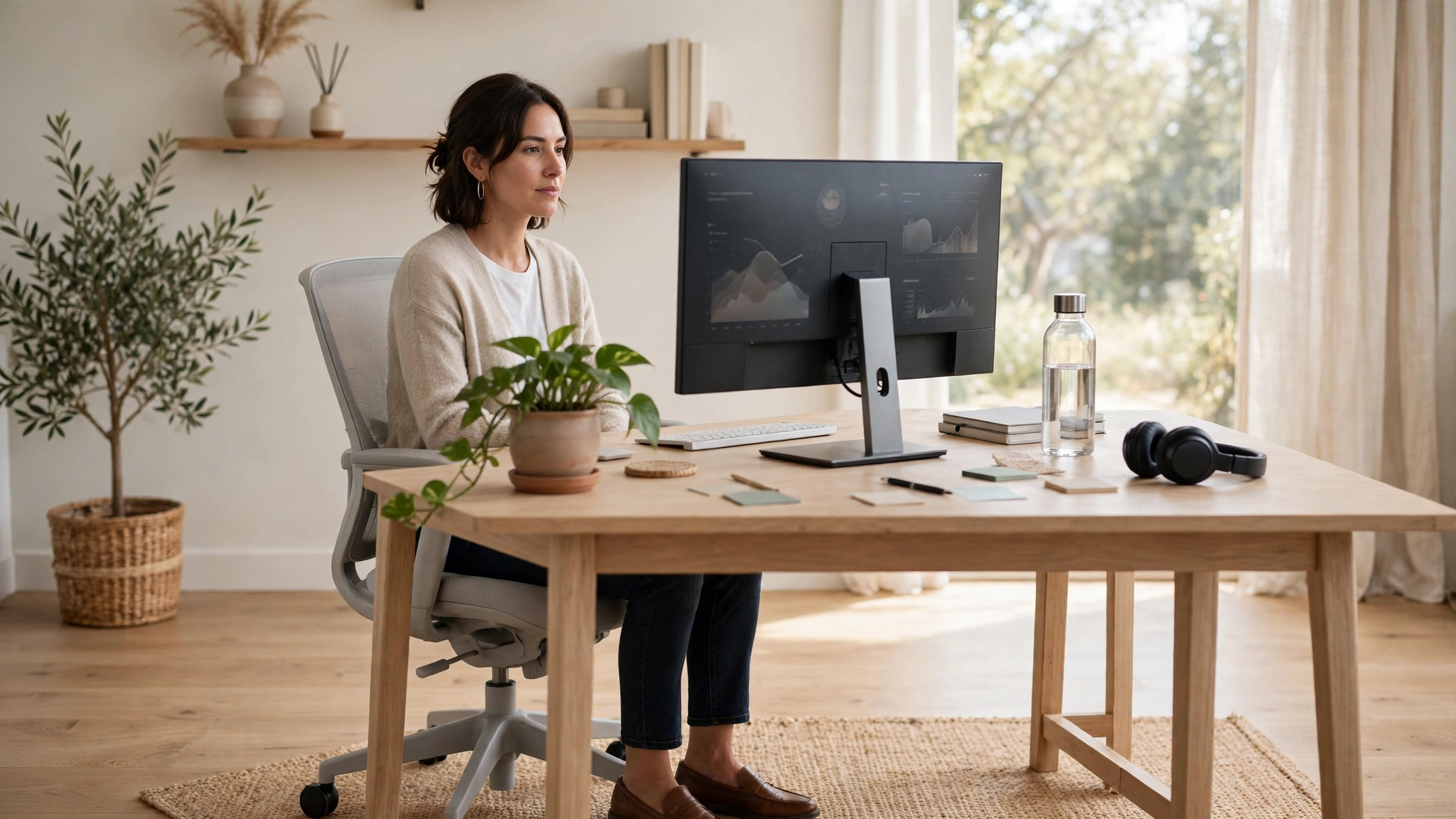
The good news is that posture is trainable. You do not need expensive equipment or a complete lifestyle overhaul. Small changes to how you sit, a few minutes of movement during the day, and a desk setup that supports your body can make a real difference within a few weeks.
Why Sitting All Day Hurts Your Posture
When you sit for hours, your muscles settle into whatever position you hold. Slouch forward and your chest muscles tighten while the muscles in your upper back weaken. Let your head drift in front of your shoulders and your neck has to work harder to hold it up — the head is heavy, and every inch it moves forward adds strain.
Over time, this pattern becomes your default. Your body gets good at slouching and worse at sitting tall, which is why simply “sitting up straight” feels exhausting after a few minutes. The fix is not willpower alone. It is a mix of better setup, regular movement, and strengthening the muscles that hold you upright.
Set Up Your Desk for Good Posture
Most posture problems start with the desk, not the person. Before you buy anything, check these four things:
Your chair. Sit back so your lower back touches the chair. Your knees should be roughly level with your hips, or slightly lower, with your feet flat on the floor. If your feet dangle, use a footrest or a sturdy box. A small rolled towel behind your lower back can support its natural curve if your chair has no lumbar support.
Your screen. The top of your monitor should be at or just below eye level, about an arm’s length away. If you work on a laptop, raise it on a stand or a stack of books and use a separate keyboard — looking down at a laptop screen all day is one of the fastest ways to develop neck pain.
Your keyboard and mouse. Your elbows should rest at roughly a right angle, close to your body. If your shoulders rise when you type, your desk is too high or your chair is too low. Keep the mouse close so you are not reaching for it.
Your phone. Holding a phone between your ear and shoulder is a classic posture wrecker. Use a headset or speakerphone for long calls.
A well-arranged workspace makes good posture the easy option instead of a constant effort. If you are putting together a home workspace, this guide to setting up a budget home office walks through the same ergonomic basics alongside affordable gear choices.
5 Simple Exercises to Fix Your Posture at Your Desk
You can do all of these at your desk, in work clothes, in under five minutes. Aim for one short round in the morning and one in the afternoon.
1. Chin tucks. Sit tall, look straight ahead, and gently pull your chin straight back, as if you were making a double chin. Hold for five seconds, then release. Repeat ten times. This strengthens the deep neck muscles that keep your head over your shoulders.
2. Shoulder blade squeezes. Let your arms hang at your sides, then squeeze your shoulder blades together and slightly down, as if you were trying to hold a pencil between them. Hold for five seconds and release. Repeat ten times.
3. Seated chest opener. Clasp your hands behind your back and gently straighten your arms, lifting your chest. Hold for 15 seconds and breathe normally. This counters the rounded-shoulder position of typing.
4. Seated spinal twist. Sit tall, place your right hand on the outside of your left knee, and gently twist your upper body to the left. Hold for 15 seconds, then switch sides. Keep the movement slow and comfortable.
5. Standing back stretch. Stand up, place your hands on your lower back, and gently lean backward a few inches. Hold for five seconds. Repeat three times. Do this every time you get up — it is the opposite of the seated slouch.
These moves work best alongside general strength work. Building a stronger core and upper back gives your body the support it needs to hold good posture without thinking about it, and a simple beginner strength training plan at home is a practical place to start.
Build Movement Into Your Workday
No sitting position is healthy for eight uninterrupted hours, even a perfect one. Your body needs movement, so build it into the day rather than relying on willpower at 5 p.m.
- Stand up every 30 to 60 minutes. Set a quiet reminder. Even a minute of standing and stretching resets your posture.
- Walk during calls. Take phone calls on your feet when you can, and walk to a colleague instead of sending a message.
- Use breaks for short walks. A ten-minute walk at lunch adds up fast, and regular walking supports the same muscles that keep you upright — here is a realistic way to work toward walking 10,000 steps a day without rearranging your schedule.
- Change position on purpose. If you have a standing desk or a high counter, alternate between sitting and standing through the day.
The goal is not a step count or a streak. It is simply to stop your body from spending the whole day in one shape.
Habits That Keep Your Posture Improving
Desk setup and exercises fix the workday, but a few everyday habits protect the progress:
- Watch your phone posture. Holding your phone at chest height instead of in your lap keeps your neck in a far better position. This “text neck” habit undoes a lot of good desk work.
- Sleep on your side or back. A pillow that keeps your neck level with your spine helps, and sleeping on your stomach tends to twist the neck.
- Lift properly. When you pick things up, bend your knees and keep the load close to your body instead of rounding your back.
- Be patient. Posture changes slowly. Most people notice less stiffness within two to three weeks of consistent small changes, and real habit change takes longer. That is normal — you are retraining years of habit, not flipping a switch.
If you have sharp pain, numbness, or tingling in your arms or legs, or pain that does not improve after a few weeks, see a doctor or physiotherapist. These tips are general guidance for the usual desk-related stiffness, not a substitute for medical advice.
Frequently Asked Questions
How long does it take to fix bad posture from sitting?
Most people feel less stiffness within two to three weeks of fixing their desk setup and doing short daily exercises. Noticeable, lasting change in how you naturally sit usually takes a few months of consistency.
Can I fix my posture without a standing desk?
Yes. A standing desk is optional. A well-adjusted chair, a screen at eye level, regular movement breaks, and a few minutes of daily exercises will do far more than an expensive desk used badly.
Is it bad to sit with crossed legs?
Crossing your legs occasionally is fine, but sitting crossed for hours can tilt your pelvis and strain one side of your lower back. Keep both feet on the floor for most of the day.
Should I wear a posture corrector brace?
A brace can remind you to sit tall, but it does not strengthen the muscles that hold you upright, and relying on one can make those muscles lazier. Exercises and setup changes are the better long-term fix.
Final Thoughts
Improving your posture while sitting at a desk all day comes down to three things: a setup that supports you, a few minutes of movement and exercise, and regular breaks from sitting. None of them is difficult on its own. Together, repeated daily, they undo the slow slouch that desk work creates — and your neck and back will notice the difference before your mirror does.