
You do not need a gym membership, a rack of equipment, or any athletic background to start strength training. All you need is your body weight, a few square feet of floor, and a plan simple enough that you will actually follow it. Done right, even 20 to 30 minutes a few times a week builds real, visible strength within a month or two.
The reason strength training for beginners works so well is simple: when you have never trained, almost any resistance stimulus triggers fast improvement. Your muscles, joints, and nervous system adapt quickly. This guide gives you a no-equipment-needed foundation, form cues that prevent injury, and a 4-week schedule that turns a good intention into a durable habit.
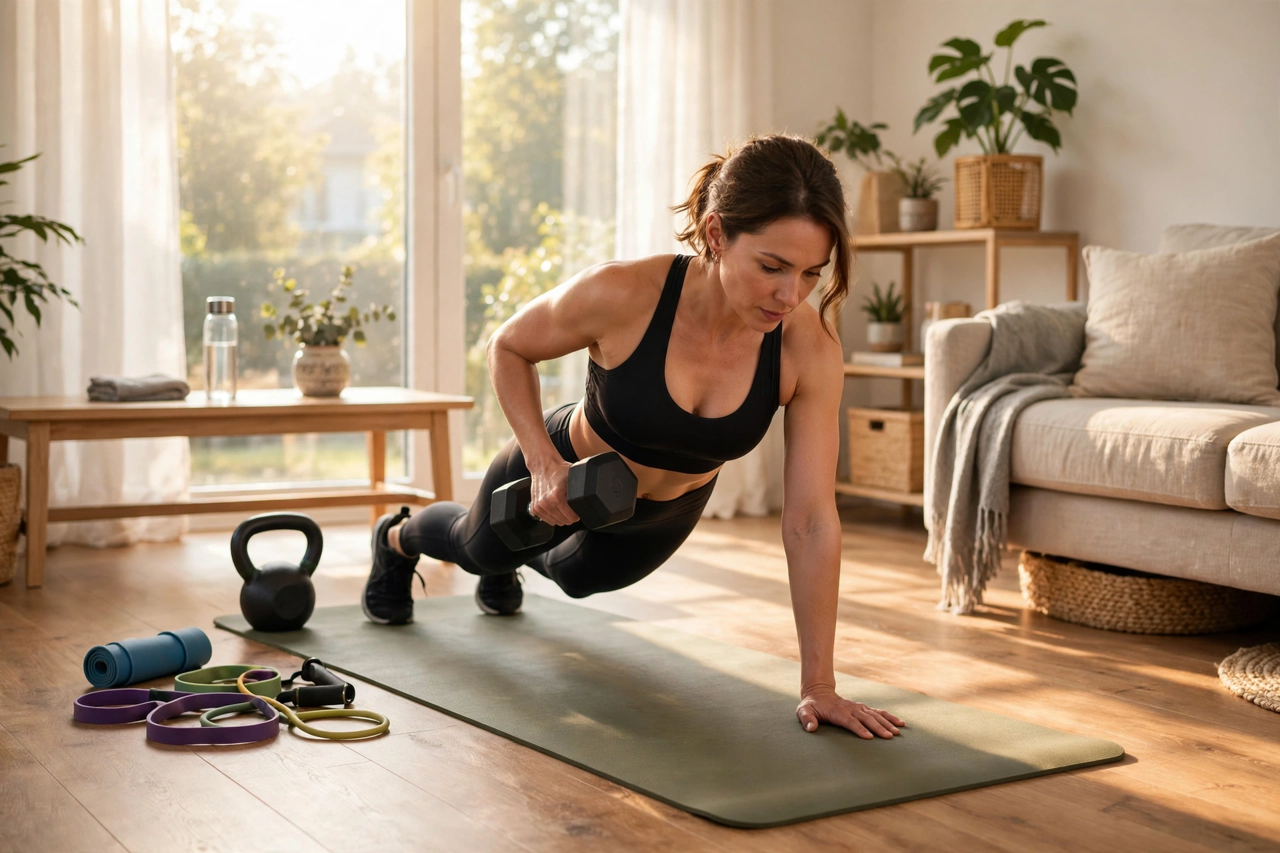
1. Why Start With Bodyweight Strength Training
Strength training is not about getting bulky — it is about getting capable. Stronger muscles protect your joints, improve your posture, raise your bone density, and make everyday life easier, from carrying groceries to climbing stairs. It also burns more calories over time than cardio alone, because muscle tissue raises your resting metabolism.
Starting at home removes the two biggest beginner killers: cost and embarrassment. No commute, no waiting for equipment, no feeling watched. A bodyweight program also teaches you to control your own body before you add external weight, which is exactly the foundation good coaches build first.
You need almost nothing to begin. A yoga mat or rug, a sturdy chair or step, and comfortable clothes are enough. If you later want more resistance, a pair of adjustable dumbbells or a set of resistance bands costs less than two months of most gym memberships.
2. The Five Fundamental Moves (and How to Do Them Right)
Every good beginner program is built on a handful of fundamental patterns. Master these five and you have a full-body workout.
Squats build your legs and glutes. Stand with feet shoulder-width apart, push your hips back as if sitting into a chair, and keep your chest up and knees tracking over your toes. Go as deep as you can with good form — thighs parallel to the floor is a great target, but any controlled depth counts.
Push-ups train your chest, shoulders, and triceps. Start with your hands under your shoulders, body in a straight line from head to heels, and lower your chest toward the floor. Beginners can do them from the knees or against a wall — these still build real strength.
Glute bridges wake up your backside, which matters for anyone who sits all day. Lie on your back, feet flat on the floor, and lift your hips until your body forms a straight line from shoulders to knees. Squeeze at the top for a full second.
Planks build core stability without a single crunch. Hold a straight-body position on your forearms and toes, bracing your abs like someone is about to tap your stomach. Thirty seconds of a perfect plank beats two minutes of a sagging one.
Reverse lunges train each leg independently and are kinder on the knees than forward lunges. Step one foot back, lower until both knees are near 90 degrees, and push through your front heel to return. Use a chair or wall for balance at first if needed.
3. Your 4-Week Beginner Workout Plan
Train three days per week — Monday, Wednesday, Friday works well — with rest days between. On rest days, walk or stretch; movement aids recovery. Each session should take 20 to 30 minutes including a warm-up of arm circles, leg swings, and a minute of marching in place.
Weeks 1–2: Learn the movements. Do 2 rounds of: 10 squats, 8 knee or wall push-ups, 10 glute bridges, 20-second plank, 8 reverse lunges per leg. Rest 60 to 90 seconds between rounds. Focus entirely on form; if something feels wrong in a joint (not the muscle), stop and check your technique.
Weeks 3–4: Add volume. Do 3 rounds of: 15 squats, 10 push-ups (try full ones), 12 glute bridges, 30-second plank, 10 reverse lunges per leg. Rest 60 seconds between rounds. By the end of week 4 you should notice the first round feels noticeably easier than it did in week 1.
Track every session in a notebook or phone note: rounds, reps, and how it felt. Seeing the numbers improve is the single best motivation trick in fitness. And on rest days, prioritize sleep — good sleep hygiene directly controls how much muscle you recover and rebuild.
4. Form First: The Three Rules That Prevent Injury
Rule one: never train through sharp or joint pain. Muscle burn and soreness are normal; pain in knees, shoulders, or the lower back is a signal to stop and reassess. Beginners hurt themselves almost exclusively by pushing through warning signals or copying advanced exercises from videos.
Rule two: breathe properly. The rule is simple — exhale on the effort (pushing up, standing up), inhale on the way down. Holding your breath spikes your blood pressure and makes the movement harder than it needs to be.
Rule three: progress gradually. When you can complete all rounds with good form and one rep left in the tank, it is time to make things slightly harder — one more round, a slower lowering phase, or a harder push-up variation. Jumps in difficulty cause plateaus and injuries; small steps compound into big strength.
5. Eating to Support Your New Training
You do not need supplements or a complicated diet to build beginner strength, but muscles do need protein to rebuild. Aim to include a palm-sized portion of protein at each meal — eggs, chicken, lentils, yogurt, fish, or tofu all work. Most beginners eat enough protein already without realizing it.
Do not train on an empty stomach if it makes you dizzy; a banana or a small snack an hour before works well. Drink water before, during, and after — even mild dehydration drops your performance noticeably. Keep the rest of your diet steady and varied; supporting your gut health also helps your body absorb the nutrients your training demands.
Conclusion and Quick FAQ
Strength training for beginners is about consistency, not intensity. Three short home sessions a week, five fundamental moves, and gradual progress will take you further in four weeks than any extreme program you quit in five days. Start today with week one — your future self will thank you.
How many days a week should a beginner do strength training? Three non-consecutive days is ideal. Muscles grow during rest, not during the workout, so recovery days are part of the program, not laziness.
Can I build muscle with bodyweight exercises alone? Yes — especially as a beginner. You can progress for months by adding reps, slowing the tempo, and advancing variations before you ever need weights.
How long before I see results? Most beginners feel stronger within 2 to 3 weeks and see visible changes in 6 to 8 weeks, provided they train consistently and eat enough protein.