

Richmond, Virginia is one of those rare American cities that manages to be deeply historic, genuinely outdoorsy, and refreshingly creative all at once. As Virginia’s capital and the former capital of the Confederacy, it carries its history openly — but it is not a city stuck in the past. The top places to visit in Richmond VA range from a Thomas Jefferson-designed capitol to a free botanical garden, from civil-war museums to a riverside with real whitewater rapids running through downtown. Here is a practical guide to the best things to do in Richmond.
Virginia State Capitol and Capitol Square
Start where Richmond’s story as a capital city begins. The Virginia State Capitol, designed by Thomas Jefferson and completed in 1788, is one of the most important historic buildings in the United States — and one of the oldest capitols still in continuous legislative use. Free guided tours run daily and walk you through the rotunda, the House and Senate chambers, and the famous Houdon statue of George Washington, the only statue of Washington sculpted from life.
The surrounding Capitol Square is worth an hour on its own: landscaped grounds, monuments to Virginia’s complicated history, and wide views over the city. It is a gentle, free introduction before you head into the heavier history elsewhere in town.
The American Civil War Museum
No list of the top places to visit in Richmond VA would be complete without the American Civil War Museum. Housed in the former Tredegar Iron Works — the foundry that armed the Confederacy — this museum takes an unusually honest, three-perspective approach to the war, presenting Union, Confederate, and African American viewpoints side by side. The artifacts are exceptional, from uniforms and weapons to the tools of enslaved laborers.
Plan for two to three hours. Afterwards, walk the grounds of the iron works ruins along the river — it is one of the most atmospheric spots in the city.
Maymont
Maymont is a 100-acre estate gifted to the public in 1925, and it remains one of Richmond’s most beloved free attractions. The grounds include a Romanesque mansion (tourable, with original furnishings), formal Italian and Japanese gardens, an arboretum, and native Virginia wildlife exhibits featuring bald eagles, bison, and black bears.
Arrive in the morning for the best light; spring azaleas and fall foliage are the two best seasons to visit.
Lewis Ginter Botanical Garden
For plant lovers, Lewis Ginter Botanical Garden is a highlight among the top places to visit in Richmond VA. This 50-acre garden holds a stunning domed conservatory, a rose garden, and an Asian Valley garden. The conservatory — with tropical orchids, palms, and seasonal displays — is worth the trip even in winter. Check the event calendar before you go: holiday light displays and flower festivals are worth planning around.
Hollywood Cemetery
Hollywood Cemetery sits on a hill above the James River and is far more than a graveyard — it is a sculpture park, a history walk, and a beautiful viewpoint. Two U.S. presidents (James Monroe and John Tyler) are buried here, along with Confederate president Jefferson Davis and thousands of Civil War soldiers. The pyramid monument to the Confederate dead and the ornate Victorian mausoleums make it one of the most photographed spots in Richmond.
Visit in late afternoon for soft light over the river. Pick up the walking map at the entrance so you do not miss the notable graves.
Canal Walk and the James River
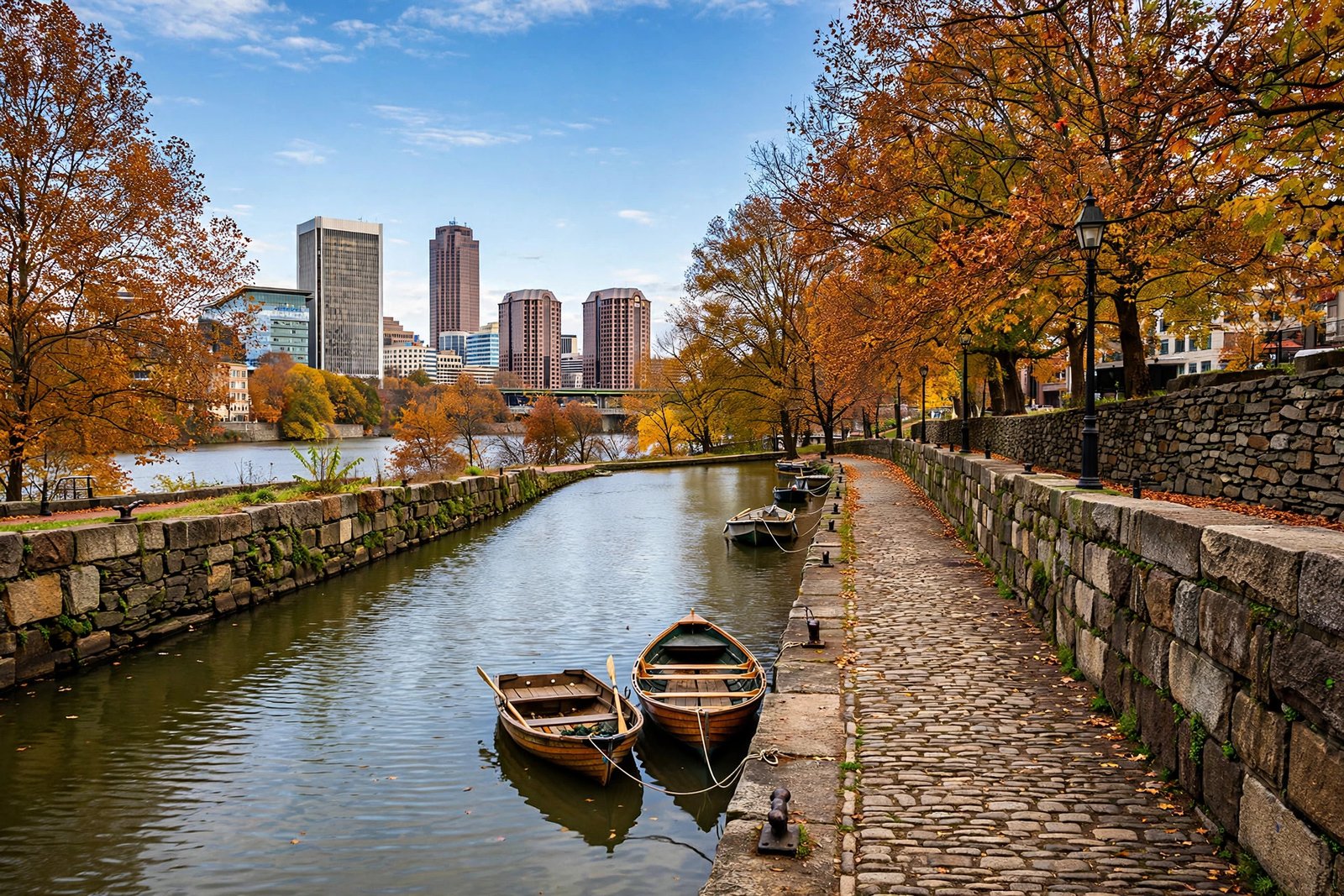
Richmond is the only major American city with Class III and IV whitewater rapids running straight through its downtown, and the Canal Walk is the best way to experience the James River up close. This paved waterfront path follows the old canal system, passing canal boat landings, public art installations, and the site of the historic Great Shiplock.
The 40-minute canal boat cruise is a relaxing way to learn the river’s history. If you are more active, cross the footbridge to the Pipeline Walkway, where you can stand just above the rapids, or rent a kayak for the flatwater sections upstream.
Belle Isle and James River Park System
Speaking of the river: Belle Isle is a 54-acre island in the middle of the James, reachable by a pedestrian bridge, with rocky outcrops perfect for sunbathing, swimming holes, and views of the city skyline. The wider James River Park System covers over 550 acres of trails along both banks — locals mountain bike, trail-run, and rock-climb here daily.
Fair warning: the river current is genuinely dangerous after rain. Swim only in calm, designated spots, and never underestimate the James.
Carytown
Carytown is Richmond’s “Mile of Style” — nine blocks of independent shops, restaurants, and theaters in the city’s most walkable neighborhood. It is the antidote to chain-store tourism: vintage clothing stores, independent bookshops, record shops, and the historic Byrd Theatre, a 1928 movie palace that still shows second-run films for a few dollars with a Wurlitzer organ performance before Saturday night shows.
Even if you do not shop, come for the people-watching and a meal — Carytown’s cafes and bakeries are some of the best in the city.
Virginia Museum of Fine Arts (VMFA)
The Virginia Museum of Fine Arts is one of the top free art museums in the United States, with a collection spanning 6,000 years: African art, European masters, American art, and the largest public collection of Fabergé eggs outside Russia. General admission is free (special exhibitions are ticketed), and the museum’s sculpture garden and restaurant make it easy to spend a half day.
Pair it with a walk around the museum’s garden — the Chihuly glass installation in the reflecting pool is a Richmond landmark in its own right.
Church Hill and St. John’s Church
Church Hill is Richmond’s oldest neighborhood, famous as the site where Patrick Henry delivered his “Give me liberty or give me death!” speech at St. John’s Episcopal Church in 1775. The church offers guided tours. The surrounding streets are lined with some of the city’s most beautiful 18th and 19th-century homes.
Come for sunset: Church Hill sits on a bluff with sweeping views of downtown Richmond and the river valley, and Libby Hill Park’s overlook is the city’s best free view.
Richmond’s Food Scene
Richmond has quietly become one of the South’s best food cities, mixing Southern comfort food with serious creativity: farm-to-table restaurants in Jackson Ward, Vietnamese and Ethiopian spots, and over 30 craft breweries in Scott’s Addition. Do not leave without trying Virginia oysters and a proper Southern breakfast — biscuits and gravy, country ham, grits.
Day Trips from Richmond
Richmond’s location makes it a smart base. Washington, D.C. is about a two-hour drive or train ride — the national museums and monuments make an easy long day trip. Colonial Williamsburg and Jamestown are about an hour southeast, Shenandoah National Park’s Skyline Drive is under two hours northwest, and Virginia Beach is two hours east if you want the coast.
Practical Tips for Visiting Richmond VA
- Best time to visit: April–June and September–October have the best weather. Fall foliage in Richmond is genuinely spectacular — it pairs well with a broader fall trip along the East Coast.
- How many days: Two to three full days cover the highlights comfortably; four if you add a day trip.
- Getting around: Downtown, Shockoe Bottom, and the riverfront are walkable. You will want a car (or rideshares) for Maymont, Lewis Ginter, and the VMFA.
- Budget: Many of Richmond’s best attractions — the Capitol, Maymont grounds, the VMFA, Belle Isle — are free, which makes it one of the best-value city trips in the USA.
FAQ
- Is Richmond VA worth visiting? Yes. It offers major historic sites, excellent free museums and gardens, real outdoor adventure on the James River, and a strong food scene — all without the crowds or prices of bigger East Coast cities.
- What is Richmond VA most famous for? Its role as Virginia’s capital and the former Confederate capital, the Virginia State Capitol designed by Thomas Jefferson, the James River rapids through downtown, and the Virginia Museum of Fine Arts.
- How far is Richmond from Washington, D.C.? About 100 miles — roughly two hours by car or Amtrak, making it an easy day trip or a combined itinerary.
Whether you come for the history, the river, the gardens, or the food, few cities pack this much variety into such a walkable package — and that is exactly why the top places to visit in Richmond VA deserve a spot on your travel list.