
Why Washington, DC Is Ideal for History and Culture
Washington, DC is different from many American tourist destinations because history is embedded throughout the city rather than concentrated in a single museum district. Monuments, memorials, government buildings, historic neighborhoods, museums, churches, and cultural institutions are spread across the capital.
The National Mall is the natural starting point. It brings together major memorials and museums and stretches between the U.S. Capitol and the Lincoln Memorial. The area also provides access to many Smithsonian museums, several of which offer free general admission.
20 Places to Visit in Washington, DC for History and Culture
1. National Mall
The National Mall is the heart of Washington, DC sightseeing. This expansive civic landscape connects some of the country’s most recognizable monuments, memorials, museums, and public spaces.
Visitors can walk between landmarks while taking in views of the Washington Monument, Lincoln Memorial, U.S. Capitol, and other major sites. The National Park Service manages numerous units and cultural resources throughout the National Mall and Memorial Parks area.
Because many attractions are within walking distance, the Mall is an excellent place to begin a history-focused itinerary.
2. Lincoln Memorial
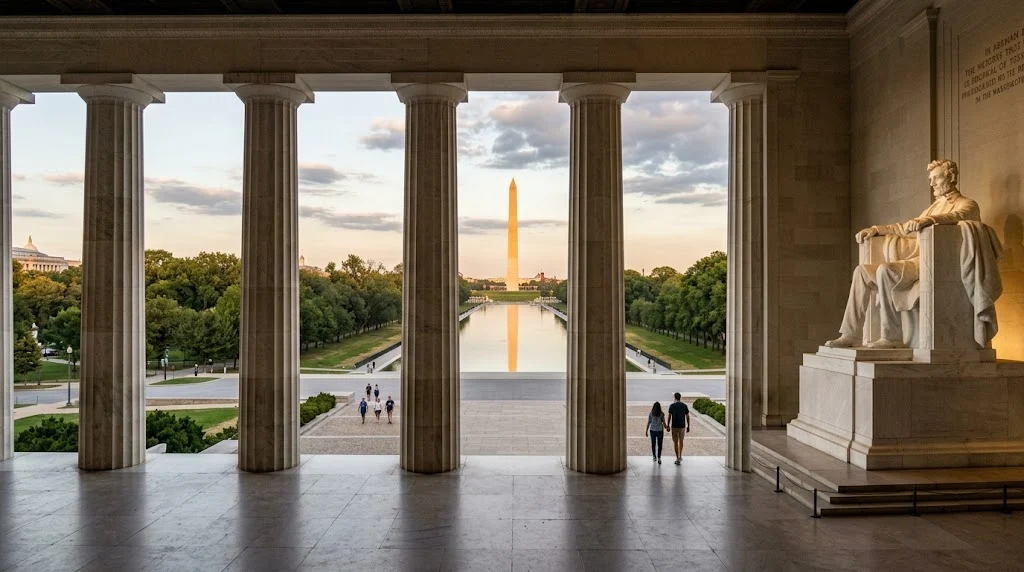
The Lincoln Memorial is one of Washington’s most recognizable landmarks and a powerful place to reflect on Abraham Lincoln’s presidency and the nation’s struggle over slavery and the Civil War.
The monument also has an important connection to the civil rights movement. Martin Luther King Jr. delivered his famous “I Have a Dream” speech from the steps of the memorial in 1963.
Visit early in the morning or around sunset if you want a quieter atmosphere and memorable views across the Reflecting Pool.
3. Washington Monument
The Washington Monument dominates the National Mall skyline and honors George Washington, the first president of the United States.
The obelisk provides one of the capital’s most recognizable architectural views. Travelers interested in visiting the interior should check current National Park Service information before planning because access procedures and availability can change.
The monument is also an important reference point for navigating between the Lincoln Memorial area and the eastern portion of the Mall.
4. U.S. Capitol
The U.S. Capitol is one of the most important buildings in American government and an essential stop for travelers interested in political history.
The Capitol complex includes the historic Capitol Building, grounds, and visitor facilities. A visit offers insight into the legislative branch and the architectural traditions associated with the American republic.
Because tours and security procedures can vary, check official visitor information before arriving.
5. National Museum of American History
The National Museum of American History is one of the best places to explore the country’s material and cultural history. Its collections cover a broad range of subjects, allowing visitors to see how American society, technology, entertainment, politics, and everyday life have changed over time.
The museum is located on the National Mall and currently offers free admission without general admission tickets.
It is particularly useful for visitors who want historical context after seeing Washington’s monuments.
6. National Museum of African American History and Culture
The National Museum of African American History and Culture explores African American history, culture, achievements, and experiences within the broader story of the United States.
Its location on the National Mall makes it easy to incorporate into a broader museum day. The Smithsonian currently lists free timed-entry passes for this museum, so travelers should check availability before visiting.
Allow several hours if you want to explore the museum thoughtfully rather than rushing through its galleries.
7. Smithsonian National Museum of Natural History
Although it focuses primarily on the natural world, the National Museum of Natural History is an important part of Washington’s cultural landscape and one of the city’s most accessible museum experiences.
The museum’s collections cover animals, human origins, minerals, fossils, and other aspects of the natural world. Admission is free, and the museum is generally open seven days a week except December 25.
8. National Air and Space Museum
The National Air and Space Museum explores the history of aviation and space exploration. Its subject matter makes it particularly appealing to families, students, and travelers interested in science and technological achievement.
The museum is located on the National Mall, and the Smithsonian currently lists free timed-entry passes for the DC location.
Check current visitor requirements before your trip because entry procedures can change.
9. Smithsonian Castle
The Smithsonian Institution Building, commonly called the Smithsonian Castle, is one of the most recognizable historic buildings on the National Mall. It opened in 1855 and was the Smithsonian’s first building.
The red sandstone architecture makes the building easy to identify, while its history makes it worthwhile even for visitors who are not planning a full museum day.
Because the Castle has undergone periods of renovation and changing visitor access, verify its current status before visiting.
10. National Archives Museum
The National Archives Museum is an essential stop for travelers interested in the documents that shaped the United States. Visitors can see original records associated with the nation’s founding and constitutional history.
The museum provides a valuable complement to the monuments because it allows visitors to move from large-scale memorials to the actual documents and records behind important moments in American history.
11. Library of Congress
The Library of Congress is one of Washington’s most impressive cultural institutions. Its historic architecture, reading rooms, exhibitions, and extensive collections make it a rewarding destination for visitors interested in literature, knowledge, architecture, and American intellectual history.
The Thomas Jefferson Building is particularly notable for its ornate interiors and decorative details. Visitors should check current reservation and entry requirements before planning a visit.
12. Ford’s Theatre
Ford’s Theatre is a National Historic Site associated with one of the most consequential events in American history: the assassination of President Abraham Lincoln in April 1865.
Today, visitors can learn about Lincoln’s presidency, the events surrounding his assassination, and the historical context of the period. The National Park Service includes Ford’s Theatre among the significant cultural resources within the National Mall and Memorial Parks system.
13. Martin Luther King Jr. Memorial
The Martin Luther King Jr. Memorial honors the civil rights leader and his role in the struggle for racial equality in the United States.
The memorial’s location near the Tidal Basin also places it within easy reach of several other major monuments. It is an important stop for travelers interested in American civil rights history and the continuing influence of King’s work.
14. Jefferson Memorial
The Jefferson Memorial sits beside the Tidal Basin and honors Thomas Jefferson, the principal author of the Declaration of Independence and the third U.S. president.
The neoclassical design and location beside the water make it particularly striking during spring when the surrounding cherry trees are in bloom. It also provides a quieter setting for visitors who want to combine architecture with historical reflection.
15. Korean War Veterans Memorial
The Korean War Veterans Memorial commemorates members of the U.S. armed forces who served during the Korean War.
The memorial’s design creates a distinctive experience compared with more traditional monument architecture. It is located within the National Mall area and can easily be combined with visits to the Lincoln Memorial and Vietnam Veterans Memorial.
16. Vietnam Veterans Memorial
The Vietnam Veterans Memorial is one of Washington’s most emotionally powerful sites. Its simple, reflective design centers on the names of service members who died or remain missing from the Vietnam War.
The memorial encourages quiet reflection rather than conventional sightseeing. Give yourself enough time to walk along the wall and understand the scale of the names represented there.
17. National Portrait Gallery
The National Portrait Gallery offers a different way to experience American history through portraiture. Its collections connect notable individuals with the political, cultural, and social history of the United States.
The museum shares the historic building with the Smithsonian American Art Museum and is located away from the main concentration of museums on the National Mall. The Smithsonian currently lists free admission.
18. Georgetown Historic District
Georgetown provides a change of pace from the monumental architecture of the National Mall. Its historic streets, row houses, waterfront, shops, restaurants, and preserved architecture offer a more neighborhood-oriented view of Washington.
A walking tour is one of the best ways to experience Georgetown because the area’s character comes from its streetscape as much as its individual attractions.
19. National Museum of the American Indian
The National Museum of the American Indian presents Native histories, cultures, art, and perspectives. It is located near the eastern end of the National Mall and can be combined with other Smithsonian museums during a walking itinerary.
The museum is free to enter, according to the Smithsonian’s current visitor information.
Its collections provide an important perspective that complements the traditional political and military narratives found elsewhere in the capital.
20. National Museum of Women in the Arts
The National Museum of Women in the Arts provides another perspective on Washington’s cultural scene, focusing on the achievements and contributions of women artists.
Its location in downtown Washington makes it easy to combine with the National Portrait Gallery, Chinatown, and other central attractions.
Best Areas to Explore Washington, DC’s History and Culture
National Mall
Choose the National Mall if your priority is monuments, memorials, and major Smithsonian museums. It is the most concentrated area for first-time visitors.
Downtown DC
Downtown provides access to the National Archives, Ford’s Theatre, museums, restaurants, theaters, and historic government buildings.
Capitol Hill
Capitol Hill is ideal for visitors interested in the U.S. Capitol, congressional history, architecture, and nearby cultural attractions.
Georgetown
Georgetown is better suited to travelers who want historic streets, waterfront scenery, shopping, dining, and architecture alongside their cultural sightseeing.
How Many Days Do You Need in Washington, DC?
A two-day visit can cover many of the major landmarks, but three to four days provides a much better experience for travelers interested in both history and culture.
Two days: Focus on the National Mall, major memorials, and two or three museums.
Three days: Add the Capitol area, National Archives, Ford’s Theatre, and Georgetown.
Four or more days: Explore additional museums, historic neighborhoods, cultural institutions, and attractions at a slower pace.
Trying to visit every Smithsonian museum in one trip is rarely practical. The Smithsonian itself provides maps and planning resources for its museums around the National Mall and nearby neighborhoods.
Tips for Visiting Historical and Cultural Sites in Washington, DC
- Wear comfortable shoes: Major attractions can be surprisingly far apart on foot.
- Use Metro when practical: Public transportation can make it easier to move between the Mall and surrounding neighborhoods.
- Check entry requirements: Some attractions use timed-entry systems or reservations.
- Start early: Popular museums and memorials can become busy later in the day.
- Group nearby attractions: Plan your itinerary by neighborhood to reduce unnecessary travel.
- Allow time for security: Museums and government-related attractions may have screening procedures.
- Check official websites: Hours, access procedures, temporary closures, and reservation requirements can change.
The Smithsonian recommends using nearby Metro stations when visiting museums around the National Mall, and notes that parking is limited.
When Is the Best Time to Visit Washington, DC?
Washington, DC can be visited throughout the year, but spring and fall are particularly attractive for travelers who want comfortable conditions for walking between outdoor landmarks.
Spring is famous for cherry blossoms around the Tidal Basin, while fall brings cooler temperatures and colorful foliage. Summer can be hot and humid but offers long daylight hours. Winter tends to be quieter and can work well for museum-focused itineraries.
If you are specifically considering a colder-season trip, our guide to Washington DC in winter can help you explore seasonal itinerary ideas.
Sample 3-Day Washington, DC History Itinerary
Day 1: National Mall
Start with the Washington Monument and walk toward the Lincoln Memorial, visiting the World War II Memorial, Vietnam Veterans Memorial, Korean War Veterans Memorial, and Martin Luther King Jr. Memorial along the way.
Spend the afternoon at one or two Smithsonian museums rather than trying to see everything.
Day 2: American History and Government
Visit the U.S. Capitol area, followed by the National Archives and Ford’s Theatre. Finish the day with a museum such as the National Museum of American History or National Museum of African American History and Culture.
Day 3: Culture and Historic Neighborhoods
Explore the Library of Congress and Capitol Hill before heading toward Georgetown. Spend the afternoon walking through Georgetown’s historic streets and along the waterfront.
Frequently Asked Questions
What are the most historical places to visit in Washington, DC?
The National Mall, Lincoln Memorial, U.S. Capitol, National Archives, Ford’s Theatre, Washington Monument, and major war memorials are among the city’s most important historical attractions.
What cultural attractions should I visit in Washington, DC?
The Smithsonian museums, Library of Congress, National Portrait Gallery, National Museum of the American Indian, National Museum of African American History and Culture, and Georgetown are excellent choices for a culture-focused itinerary.
Are Washington, DC museums free?
Many Smithsonian museums in Washington, DC offer free admission. However, some attractions use timed-entry passes or other visitor requirements, so check the official museum information before your visit.
Can I see Washington, DC’s main historical sites in two days?
Yes, but you will need to prioritize. Two days are enough for major monuments and a few museums, while three or more days allow a more relaxed combination of museums, memorials, historic neighborhoods, and cultural attractions.
What is the best area to stay for sightseeing?
Downtown, Penn Quarter, Capitol Hill, and areas close to the National Mall can be convenient for sightseeing. The best choice depends on your budget, preferred transportation, and whether museums, nightlife, or historic neighborhoods are your priority.
Final Thoughts
Washington, DC is much more than the political capital of the United States. Its monuments, museums, memorials, historic neighborhoods, and cultural institutions tell stories about American government, conflict, civil rights, art, science, and everyday life.
This list of places to visit in Washington DC with historical and cultural sites gives you a starting point for building a balanced itinerary. Rather than rushing through every attraction, choose a combination of major landmarks, museums, and neighborhoods that matches your interests.
For a first visit, prioritize the National Mall and its memorials, then add several Smithsonian museums and at least one destination outside the Mall, such as Georgetown, Ford’s Theatre, or the Library of Congress. That combination will give you a much richer understanding of Washington, DC and its place in American history.