
Few financial decisions shape your life as much as where you live. Rent keeps showing up in your bank statement as money gone forever — or so the saying goes. But buying ties you to a mortgage, maintenance bills, and a property you cannot leave quickly. So which is actually smarter? The honest answer is that neither renting nor buying wins every time. The right choice depends on your timeline, your finances, and the life you plan to live over the next five to ten years.
The Real Cost Comparison: Beyond the Monthly Payment
The biggest mistake in the renting vs buying debate is comparing rent to the mortgage payment. The mortgage is only one part of what an owner pays.
The true monthly cost of renting: rent + renter’s insurance + (often) some utilities. That is basically it. When the water heater dies, you call the landlord.
The true monthly cost of owning: mortgage payment (principal + interest) + property taxes + homeowner’s insurance + maintenance + HOA fees if any + utilities. Maintenance alone averages about 1% of the home’s value per year — on a $300,000 home, that is $3,000 a year, or $250 a month, in repairs you cannot predict.
The 5% Rule, Explained in Plain Terms
Here is a simple rule of thumb used by financial planners: unrecoverable costs of owning a home — property taxes, maintenance, and the cost of capital tied up in the house — run roughly 5% of the home’s value each year. Mortgage interest is also unrecoverable in the early years.
Apply it: a $400,000 home costs about $20,000 per year in money you never get back ($400,000 × 5%). That is $1,667 a month — before a single dollar of principal is paid down. If comparable rent in the same area is $1,800 a month, renting is close to break-even financially. If comparable rent is $1,200, renting wins on pure numbers. If comparable rent is $2,400, buying starts to look attractive.
The 5% rule is not exact, but it stops the most common error: assuming every mortgage dollar builds wealth. In the early years of a mortgage, most of your payment is interest — unrecoverable, just like rent.
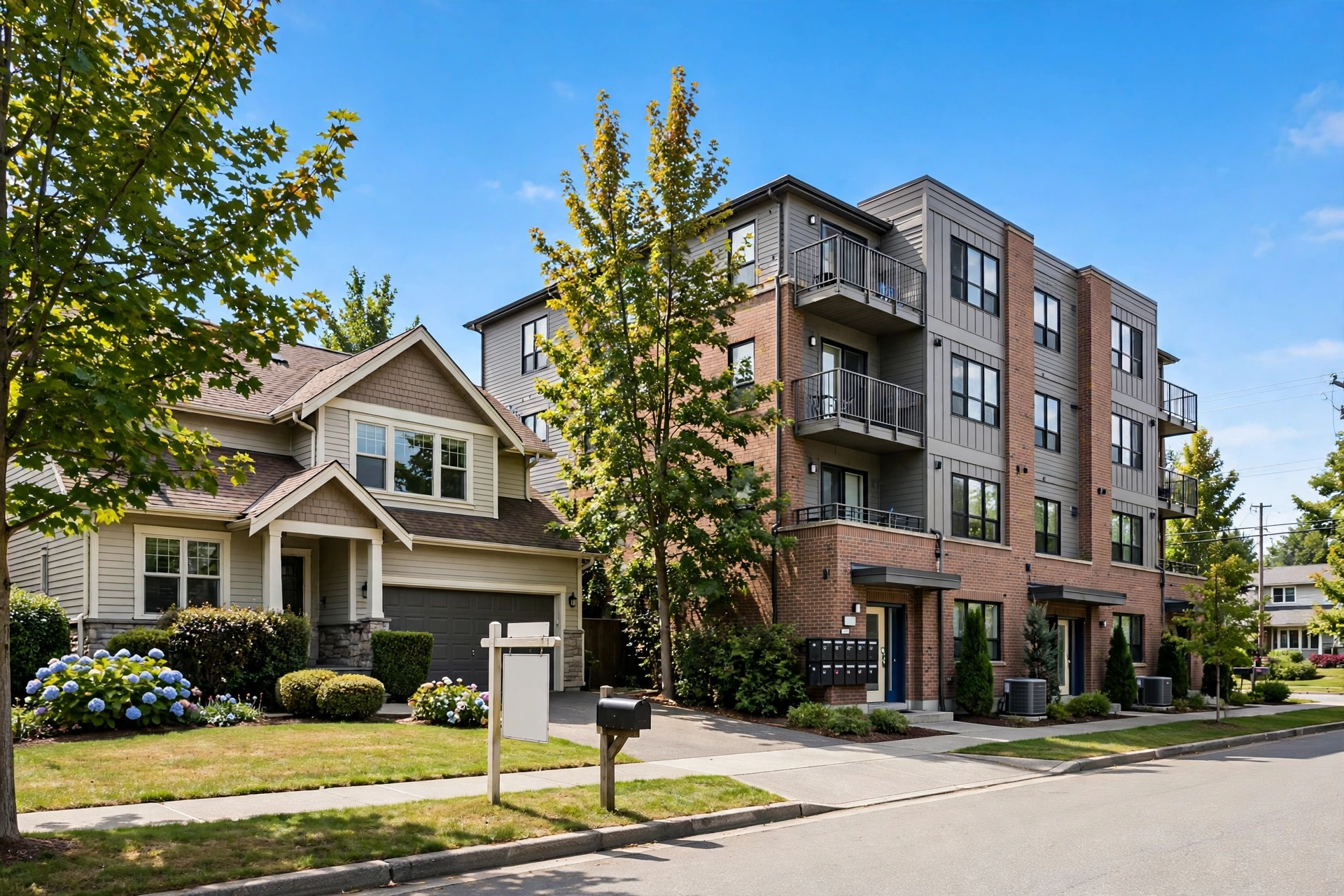
Flexibility vs Stability: The Lifestyle Trade-Off
Money is only half the equation. The other half is how you want to live.
Renting buys flexibility. A new job in another city? A relationship change? A neighborhood you have fallen out of love with? Renters can leave when the lease ends, usually with 30 to 60 days’ notice. Selling a home takes months, costs 6–10% of the sale price in agent commissions and closing costs, and can force you to sell at a loss if the market dips at the wrong moment.
Buying buys stability. Your housing cost is locked (with a fixed-rate mortgage) while rents rise around you. Nobody can decline to renew your lease. You can paint the walls, remodel the kitchen, and build a home exactly the way you want it. For families with school-age children, that stability has real value beyond dollars.
Ask yourself which you need more right now: the freedom to move, or the security of staying put.
When Renting Wins
Renting is the smarter choice when:
– You will move within 3–5 years. Buying and selling costs eat roughly 8–10% of a home’s value. You need several years of appreciation and principal paydown to recover that. Short stays almost always favor renting.
– Your career or income is uncertain. A mortgage is a fixed obligation. If your income might drop or you might relocate for work, the flexibility of a lease is worth a lot.
– You live in a high-price market. In cities where home prices are 25–30 times annual rent, buying rarely makes financial sense. Renting a modern apartment living setup in such a market can give you the lifestyle at a fraction of the ownership cost.
– You would rather invest the difference. The down payment and the monthly savings from renting can be invested. Over decades, stock market returns have often beaten home appreciation. This only works if you actually invest the difference — most people do not, so be honest with yourself.
– You value your time. Landscaping, repairs, and maintenance consume weekends. Renting outsources all of it.
When Buying Wins
Buying is the smarter choice when:
– You plan to stay 7+ years. Time heals the transaction costs. The longer you stay, the more each mortgage payment shifts from interest toward principal — toward equity you keep.
– Your income is stable and growing. A fixed mortgage payment gets easier over time as your income rises, while rent keeps climbing.
– You want forced savings. Many people struggle to invest consistently. A mortgage forces a monthly payment that builds equity — it is a disciplined savings plan disguised as a bill.
– You want control over your space. Renovations, gardens, pets without pet deposits, a workshop in the garage — ownership means the space is truly yours.
– You see it as a long-term asset. A home bought wisely and held for decades becomes a major store of wealth, and for some it is the first step toward broader real estate investment — a rental property later, or equity to leverage for the next opportunity.
Lifestyle Factors Most Guides Skip
Beyond the spreadsheet, weigh these practical questions:
– Commute: Can you afford to buy where you want to live, or would buying push you an hour from work? A long commute costs money and years of your life.
– Schools: If you have children or plan to, school quality often decides the neighborhood — and ownership locks in access to it.
– Space needs: A growing family, a home office, or a hobby that needs room can tip the scales toward buying, where you choose the layout.
– Community ties: Buying roots you in a neighborhood. If you love where you are and see yourself there for a decade, ownership deepens that.
Also consider the transition itself. Whether you rent or buy, moving is the moment to travel light — sorting and decluttering your home before you pack saves money on movers and starts the new chapter clean.
A Simple Decision Checklist
Work through these questions honestly. If most answers point one way, you have your answer.
1. Will I stay in this area for at least 5–7 years? (Yes → buying; No → renting)
2. Is my income stable enough for a fixed monthly obligation 25–30% of my income? (Yes → buying; No → renting)
3. Do I have 20% down plus a 6-month emergency fund beyond it? (Yes → buying; No → renting for now)
4. Is the price-to-rent ratio in my area below 20? (Yes → buying; No → renting)
5. Do I value the ability to relocate quickly more than the security of staying? (Yes → renting; No → buying)
6. Am I ready for maintenance costs and the work of homeownership? (Yes → buying; No → renting)
Four or more answers in one direction is a clear signal. A split result means either choice is defensible — in which case, choose the one that fits the life you want, not the one strangers say is “throwing money away.”
Conclusion
Renting is not throwing money away — it is buying flexibility, predictability, and freedom from maintenance. Buying is not automatically the smart move — it is a long-term commitment that pays off when your timeline, finances, and lifestyle align. Run the real numbers with the 5% rule, be honest about how long you will stay, and choose the option that serves the life you are actually building. That is the only right answer in the renting vs buying debate.