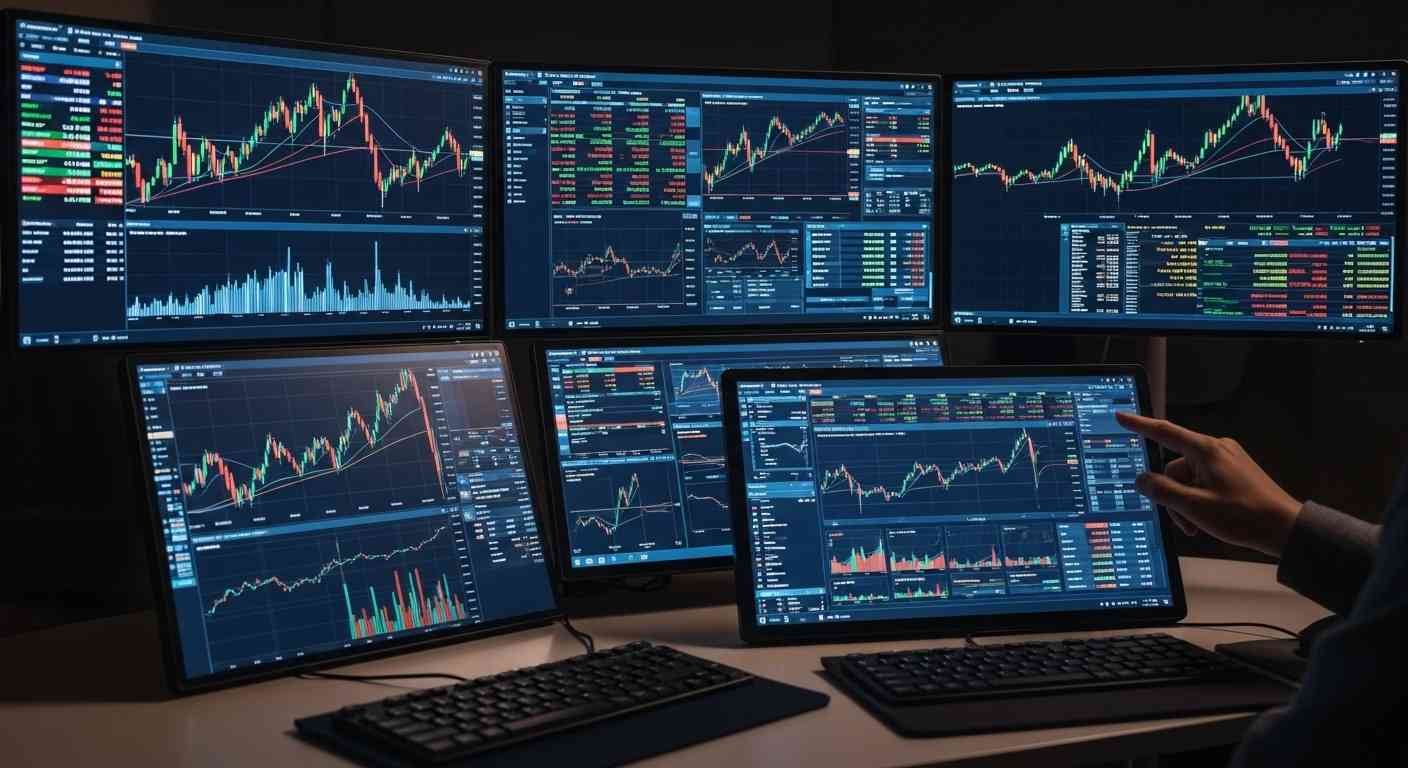
Data has become one of the most important assets for modern businesses. Retailers, suppliers, manufacturers, and technology-driven organizations increasingly rely on data to understand customers, manage inventory, forecast demand, and improve everyday operations.
What Is Zhuoxin Data Technology?
Zhuoxin Data Technology operates in the information technology and data-services sector. Its documented business activities include data processing and storage, big-data collection and application, cloud services, software development, system integration, and technology services.
The company is also associated with digital retail and supply-chain technology. Its platform-oriented approach is designed to connect businesses with data and technology that can help improve the management of physical retail operations.
Rather than viewing data as a standalone asset, the company’s business model illustrates how data can become part of a larger operational system connecting retailers, brands, sales personnel, suppliers, and technology platforms.
How Zhuoxin Data Technology Supports Digital Transformation
Digital transformation is not simply about moving paper records onto computers. It involves redesigning how organizations collect information, communicate, analyze performance, and make decisions.
Data technology can play an important role in this process by bringing information from different business activities into systems where it can be analyzed and acted upon.
Key Areas of Digital Transformation
- Data collection and processing
- Cloud-based information management
- Artificial intelligence and machine learning
- Retail inventory management
- Demand forecasting
- Supply-chain coordination
- Business intelligence and analytics
- Digital communication between brands and retailers
The value of these capabilities depends on implementation. Technology creates the greatest benefit when it is connected to specific business processes and measurable objectives.
Zhuoxin and the Digital Retail Industry
Physical retail businesses generate large amounts of operational information. Sales transactions, inventory levels, product availability, store activity, customer demand, and supplier relationships can all produce data that businesses can use for decision-making.
Zhuoxin’s retail-focused technology is associated with connecting brands and physical retail channels. A regional investment organization described the company’s platform as a service model connecting brand owners with sales personnel and retail stores, with a focus on improving offline distribution and retail efficiency.
This type of platform can help reduce some of the information gaps that exist between brands and small or medium-sized retail outlets.
AI and Data Analytics in Retail
Artificial intelligence can make large datasets more useful by identifying patterns, classifying information, and supporting predictions. In retail environments, AI can be applied to areas such as demand forecasting, inventory analysis, image recognition, product monitoring, and customer behavior analysis.
Public information about Zhuoxin’s retail platform describes the use of AI image recognition to analyze photographs of product shelves. This approach can provide brands with information about how products are displayed at retail locations without requiring every store visit to be performed manually.
AI should not be treated as a replacement for business judgment. Its usefulness depends on the quality of the underlying data, the accuracy of the model, and the way employees use the resulting information.
Inventory Management and Demand Forecasting
Inventory is one of the most important areas where data technology can influence retail performance. Too much inventory can tie up working capital, while insufficient inventory can lead to missed sales and dissatisfied customers.
Data-driven inventory systems can combine historical sales information, product activity, store-level performance, and other variables to help businesses make better stocking decisions.
Demand forecasting can provide another layer of support. Instead of relying exclusively on intuition, retailers and suppliers can use historical and current data to estimate potential demand and adjust purchasing or distribution decisions accordingly.
Potential Benefits of Data-Driven Inventory Systems
- Better visibility into product availability
- More informed replenishment decisions
- Improved coordination between suppliers and retailers
- Earlier identification of slow-moving products
- More consistent use of sales data
- Greater visibility across multiple retail locations
The Role of Cloud Technology
Cloud infrastructure allows organizations to store, process, and access data without relying exclusively on local hardware. For distributed retail businesses, cloud technology can be particularly useful because information may need to move between stores, suppliers, sales teams, and central management systems.
Zhuoxin’s registered business activities include cloud platform, cloud infrastructure, and cloud software services. This places cloud technology within the wider set of capabilities associated with the company.
Cloud-based systems can also make it easier to scale technology as the number of users, stores, transactions, or data sources increases.
Connecting Brands With Retail Channels
One of the challenges in physical retail is maintaining visibility between a brand and thousands of individual stores. Traditional field-sales models can require significant time and resources to collect information manually.
A connected digital platform can help centralize information and create more direct communication between brands, distributors, sales representatives, and retailers.
Zhuoxin’s retail-oriented platform has been described as a system designed to connect brand owners with sales personnel and physical retail stores. Its technology approach therefore illustrates how data platforms can support the relationship between manufacturers, distributors, and the final retail channel.
Data Visualization and Business Intelligence
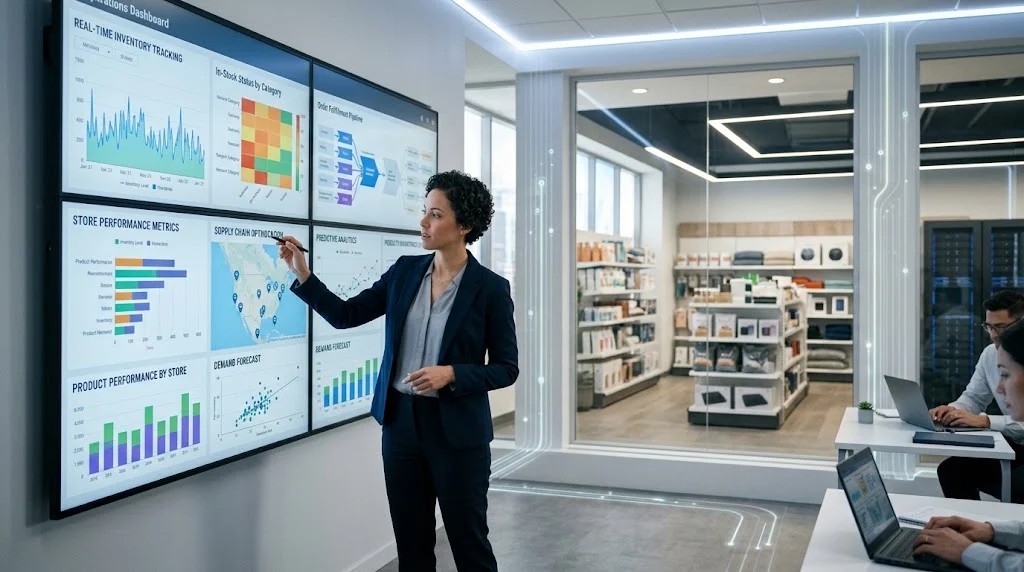
Raw data is rarely useful to decision-makers without context. Business intelligence tools transform information into dashboards, reports, trends, comparisons, and other visual formats that managers can understand more easily.
For a retail business, useful dashboards might show sales by location, inventory movement, product performance, replenishment requirements, or channel activity.
The objective is not simply to produce more reports. Effective business intelligence should help decision-makers answer practical questions and take appropriate action.
Businesses interested in the wider role of data-driven digital strategies can also explore data-driven approaches to optimizing business revenue streams.
Why Data Quality Matters
Advanced analytics cannot compensate for consistently poor data. If information is incomplete, duplicated, outdated, or incorrectly entered, the resulting analysis may be misleading.
Organizations implementing data technology should therefore establish processes for data validation, standardization, access control, storage, and ongoing maintenance.
Data quality is particularly important in retail because information can come from many locations and systems. Store-level records, supplier information, product catalogs, sales transactions, and customer data may all need to work together.
Data Security and Privacy Considerations
Greater reliance on data creates greater responsibility for protecting it. Retail and enterprise systems can contain commercially sensitive information, operational records, customer information, and supplier data.
Organizations should consider authentication, authorization, encryption, monitoring, backups, data retention, and incident-response procedures when implementing technology platforms.
Privacy requirements may also differ depending on the type of data collected and the markets in which a company operates. Technology providers and their customers should establish clear rules for data access and handling.
Zhuoxin Data Technology and Innovation
Innovation in data technology is increasingly connected to artificial intelligence, machine learning, cloud computing, computer vision, and automation. Zhuoxin’s documented business activities include several of these technology areas.
Its development of retail-oriented AI image recognition illustrates one practical application of these technologies. Instead of treating AI as an abstract concept, image-based analysis can be applied to a specific operational problem: understanding product placement and retail execution.
This application-focused approach is important because successful enterprise innovation usually comes from solving measurable problems rather than adopting technology simply because it is new.
What Businesses Can Learn From Zhuoxin’s Technology Model
The broader lessons from Zhuoxin Data Technology extend beyond one company or platform.
Connect Data With Real Operations
Data becomes more valuable when it is connected to the processes that generate business outcomes. Retail data, for example, becomes useful when it can influence stocking, distribution, merchandising, or sales decisions.
Use AI for Specific Problems
AI should be introduced where it can solve a clearly defined problem. Image recognition, forecasting, classification, and anomaly detection are examples of applications that can be measured and evaluated.
Build Scalable Infrastructure
Businesses should consider how their technology will perform as data volumes, users, locations, and transactions increase. Cloud infrastructure can provide flexibility, but scalability still requires good system architecture.
Make Information Actionable
Dashboards and reports should lead to decisions. The ultimate purpose of business intelligence is not visualization itself but better understanding and action.
Challenges Facing Data Technology Companies
Data-driven technology companies operate in a competitive environment where customer expectations and technical capabilities change quickly.
Several challenges are particularly important:
- Maintaining data accuracy across multiple sources
- Protecting sensitive business information
- Keeping AI models reliable as conditions change
- Integrating new technology with existing systems
- Managing infrastructure costs as data volumes grow
- Demonstrating measurable return on technology investment
Addressing these challenges requires a combination of technical expertise, business understanding, security practices, and continuous improvement.
The Future of Data-Driven Enterprise Technology
Enterprise technology is moving toward systems that combine data collection, cloud infrastructure, artificial intelligence, automation, and real-time analytics.
For retailers, this could mean more responsive inventory systems, improved demand forecasting, automated store monitoring, and faster communication between suppliers and retail locations.
For other industries, the same principles can support predictive maintenance, operational optimization, customer analytics, fraud detection, and automated decision support.
The broader direction is clear: businesses increasingly need technology that turns large amounts of information into useful operational intelligence.
For additional perspective on the relationship between technology and innovation, see our discussion of technology and human imagination.
Is Zhuoxin Data Technology Relevant to Modern Enterprises?
Zhuoxin Data Technology is particularly relevant when viewed through the lens of retail digitization, data-driven supply-chain management, AI-assisted analysis, and connected business operations.
Its documented activities show a technology business working across data processing, cloud services, AI, software, and retail-oriented digital platforms. These capabilities reflect broader trends affecting businesses that want better visibility into their operations.
Organizations evaluating any technology provider should still independently assess the provider’s current products, security practices, technical capabilities, pricing, implementation requirements, and support arrangements before entering into a commercial relationship.
Final Thoughts
Zhuoxin Data Technology provides an interesting example of how data, artificial intelligence, cloud computing, and digital platforms can be applied to physical retail and supply-chain operations.
Its technology focus is particularly relevant to businesses looking to improve inventory visibility, connect retail channels, analyze operational information, and make more informed decisions. The company’s documented work with AI-based image recognition also demonstrates how emerging technologies can be applied to specific real-world business challenges.
Ultimately, the value of data technology is determined by what organizations can accomplish with the information it provides. When data is accurate, accessible, secure, and connected to practical decisions, it can become a powerful foundation for operational efficiency and sustainable business growth.