Mexico City rewards visitors who take it neighbourhood by neighbourhood. What places to visit in Mexico City? Start with the historic centre, then branch out to museums, parks, markets, and the canals — and allow at least three days, because the city is vast and its altitude, over 2,200 metres, makes a slower first day wise.
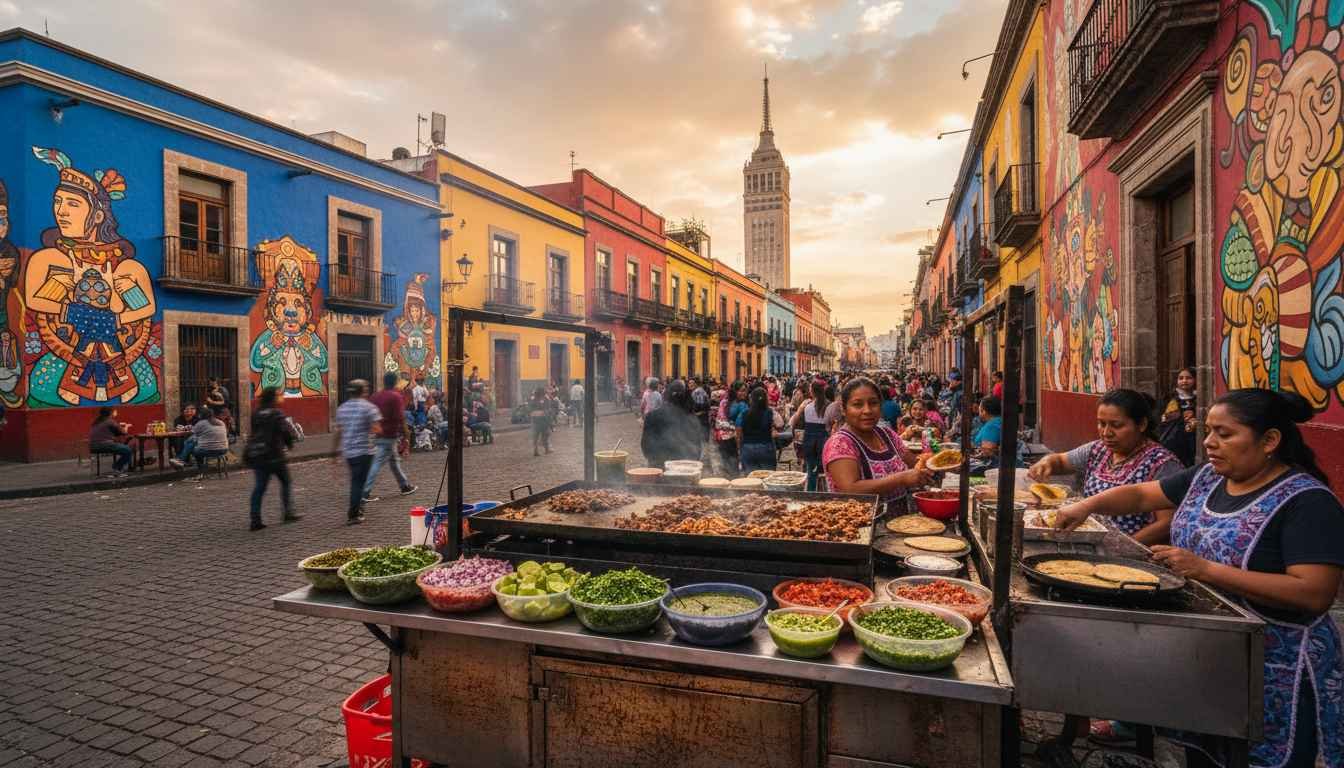
Historic Centre: Zócalo, Cathedral, and Templo Mayor
The Zócalo, one of the world’s largest public squares, anchors the historic centre. On its east side stands the National Palace, home to Diego Rivera’s sweeping murals of Mexican history; on the north, the Metropolitan Cathedral, built over three centuries on the site of an Aztec temple precinct. Beside the cathedral, the Templo Mayor museum and ruins expose the foundations of the Aztec Great Temple itself — the layers of the city, literally stacked, in a single city block.
Walk west from the Zócalo along Madero, a pedestrian street, to the Palacio de Bellas Artes, whose art deco exterior and Tiffany-glass curtain are worth seeing even if you don’t attend a performance.
Museums: Anthropology and Casa Azul
The National Museum of Anthropology, in Chapultepec Park, is Mexico’s most important museum: halls devoted to the Maya, Aztec, Olmec, and other civilisations, centred on the Aztec Sun Stone. Allow at least half a day; the museum is large, and its garden courtyards are a restful break between halls.
In Coyoacán, the Frida Kahlo Museum — the Casa Azul, the blue house where Kahlo lived — draws long queues, so book timed tickets in advance. The surrounding neighbourhood, with its plazas, markets, and cafes, is worth an afternoon on its own, and the nearby Leon Trotsky House Museum adds a further layer of history.
Chapultepec Park and Castle
Chapultepec Park is one of the largest urban parks in the world, and it holds far more than the Anthropology Museum: Chapultepec Castle, the former imperial palace on a hilltop with views across the city; the zoo; boating lakes; and museums of modern art and history. It is also where many Mexico City families spend Sundays, so expect a lively, local atmosphere at weekends.
Xochimilco Canals
South of the centre, Xochimilco’s canals are the last remnant of the lake system on which the Aztec capital was built. Colourful flat-bottomed trajineras, poled by boatmen, carry groups past floating gardens (chinampas) still farmed today. Go with a group, bring snacks, and treat it as a festive afternoon rather than a quiet nature trip — music and food vendors are part of the experience.
Markets and Neighbourhoods: Roma, Condesa, and Coyoacán
For food and daily life, head to the markets and the leafy neighbourhoods west of the centre. Mercado de la Merced is the city’s great wholesale market — vast, chaotic, and fascinating — while Mercado Roma, in the Roma Norte neighbourhood, is a polished food hall in a converted market building, good for a first taste of many stalls at once.
Roma Norte and neighbouring Condesa, with their art deco buildings, parks, cafes, and galleries, are the best areas to stay and to wander in the evening. Coyoacán, further south, offers a slower, village-like feel with its twin plazas and market.
Day Trip: Teotihuacan
An hour northeast of the city, Teotihuacan’s Avenue of the Dead runs between the Pyramids of the Sun and Moon, the remains of a city that was one of the largest in the ancient world. Go early to beat both heat and crowds, and combine it with a visit to the on-site museum, which explains the city’s murals and apartment compounds.
Practical Tips
Take the altitude seriously on day one: drink water, walk rather than run, and save strenuous sightseeing for later in your stay. Use the metro and authorised taxis or ride-hailing for longer distances, and keep valuables discreet in crowded markets and stations, as in any large city.
For trip planning, the guide on how to choose travel insurance for an international trip covers medical cover and trip protection, which matter for a city at altitude with a busy itinerary. Travellers heading further south in Latin America may also find the South America guide useful for onward planning.
FAQ
How many days do I need in Mexico City?
Three days covers the historic centre, one museum day, and a neighbourhood or Xochimilco afternoon. Five days allows Teotihuacan and a slower pace.
When is the best time to visit Mexico City?
Spring and autumn offer the most pleasant weather, with warm days and cool evenings. The rainy season runs roughly May to October, with afternoon showers rather than all-day rain.
Is Mexico City suitable for families?
Yes — Chapultepec Park and its zoo, the Anthropology Museum’s interactive halls, and Xochimilco’s boats are all popular with children, and many museums offer free or reduced entry for young visitors.