
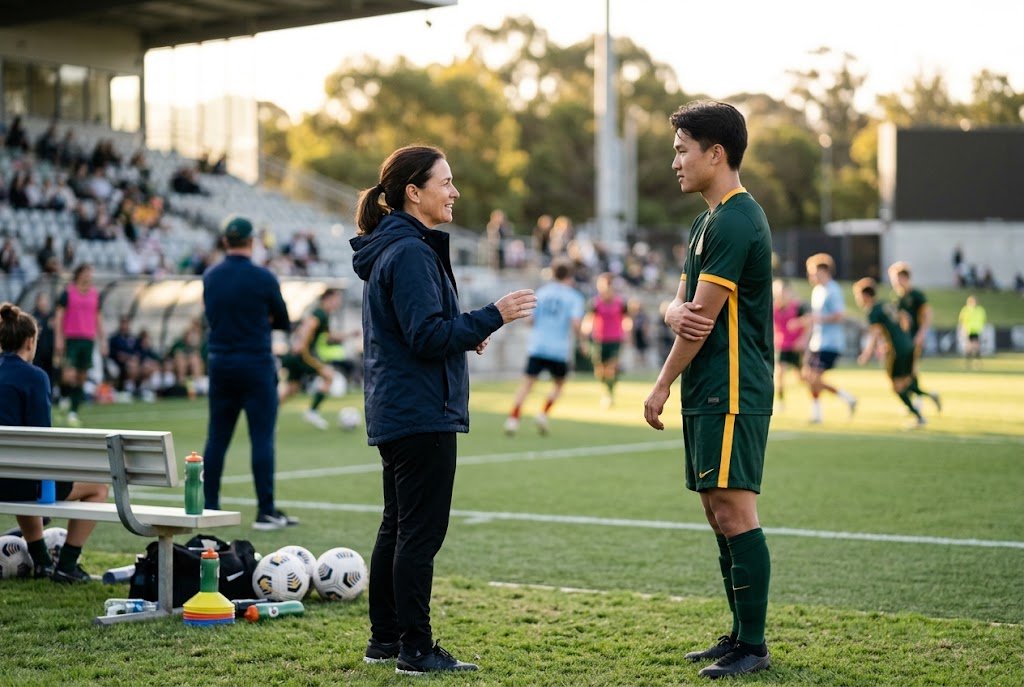
A good coach does more than teach skills, create game plans, or demand better performance. The best coaches make their players feel that they genuinely care about their growth, confidence, and future. When athletes believe a coach has their best interest at heart, they are often more willing to listen, work hard, accept feedback, and stay committed when things get difficult.
This is why the relationship between a coach and player matters so much. Coaching is not simply about telling athletes what to do. It is about building trust, communicating clearly, setting standards, and helping each player become better both on and off the field.
Research and real-world examples in college athletics also show how important supportive relationships can be. The NCAA has highlighted athletes and coaches whose relationships helped build trust, confidence, motivation, and personal growth.
Why Players Respond to Coaches They Trust
Trust changes the way athletes receive coaching.
A player who believes a coach genuinely wants them to succeed is more likely to view criticism as useful guidance instead of a personal attack. That difference can have a major effect on how an athlete responds to difficult training, mistakes, and tough decisions.
When trust is present, players can also feel more comfortable asking questions. They are less afraid of admitting that they are struggling or that they do not understand something.
That creates a healthier coaching environment where improvement becomes the goal rather than simply avoiding mistakes.
Players Notice When a Coach Genuinely Cares
A coach does not need to be soft to show care. In fact, some of the most respected coaches are demanding because they believe their players are capable of more.
The difference is usually found in the reason behind the demand.
A coach who says, “You need to improve your fitness,” can communicate something very different from a coach who explains why better fitness will help an athlete perform longer, recover faster, and contribute more effectively to the team.
Players notice that difference over time.
They recognize when high standards are connected to development rather than ego, punishment, or control.
What Does Having a Player’s Best Interest at Heart Mean?
Putting a player’s best interest first does not mean giving an athlete everything they want. It means making decisions with the player’s development and well-being in mind.
That can include:
- Giving honest and constructive feedback.
- Recognizing effort as well as results.
- Understanding that every player develops differently.
- Setting realistic but challenging goals.
- Listening when an athlete has a concern.
- Supporting players through setbacks.
- Teaching responsibility and discipline.
- Preparing athletes for life beyond sport.
Athletes are individuals, not identical pieces in a system. Effective coaching often requires understanding what motivates each player and adjusting communication accordingly.
Good Coaching Is About More Than Winning
Winning matters in competitive sports. Coaches are expected to prepare teams to compete and improve their chances of success.
But a winning record alone does not define great coaching.
A coach can help an athlete become more disciplined, confident, resilient, and responsible. Those qualities can remain valuable long after a player’s competitive career ends.
That is one reason the idea that a great coach can change a life fits naturally into this discussion. The strongest coaching relationships can influence much more than what happens during a game.
Communication Builds the Foundation of Trust
Players cannot easily trust a coach they cannot communicate with.
Good communication does not mean talking constantly. Sometimes it means knowing when to speak, when to listen, and when to give an athlete space to process what happened.
Coaches should explain expectations clearly and avoid making every conversation about mistakes. Positive feedback is important, but so is honest criticism when improvement is needed.
The American Psychological Association’s discussion of the Coaching Behavior Assessment System notes that effective coaching behaviors can include instruction, correction, rewarding performance, and appropriate feedback. The framework also emphasizes helping coaches monitor their behavior and avoid simply expressing frustration.
That balance matters. Players need to know what they are doing well, what needs to improve, and what they can do differently next time.
Players Need Different Types of Coaching
One of the biggest mistakes a coach can make is assuming that every athlete responds to the same approach.
Some players respond well to direct criticism. Others need more explanation before they understand why a change is necessary. Some athletes become motivated by competition, while others respond better to personal goals and steady encouragement.
Good coaches learn these differences.
NCAA reporting on longtime baseball coach Billy Wagner highlighted a similar principle: athletes are different, so coaches cannot always coach every player in exactly the same way.
Personalized coaching does not mean having different standards for different players. It means finding effective ways to help different athletes reach the same standards.
Trust Makes Tough Feedback Easier to Accept
Every serious athlete receives criticism.
A player may need to change a technique, improve conditioning, make better decisions, or accept a different role on the team. None of those conversations is always easy.
But difficult feedback is easier to accept when the player knows where it is coming from.
If an athlete believes the coach is trying to help, criticism can become part of the development process. If the athlete believes the coach simply wants to embarrass or control them, the same criticism may create resentment.
Trust does not eliminate difficult conversations. It makes those conversations more productive.
Support Matters When Players Struggle
Every athlete experiences difficult periods.
There can be injuries, poor performances, selection problems, academic pressure, personal challenges, or simple loss of confidence. A coach cannot solve every problem, but the way they respond can make a significant difference.
The NCAA has shared examples of athletes who describe feeling supported, heard, and encouraged by their coaches and teammates during difficult periods. In one recent example, a Michigan field hockey athlete described how the support and expectations from her coaches helped motivate her return after a serious injury.
Support does not always mean lowering expectations. Sometimes it means reminding an athlete that a setback is temporary and that the coach still believes in their ability to improve.
A Coach Should Know the Person Behind the Player
A jersey number does not tell a coach everything they need to know about an athlete.
Players have different personalities, responsibilities, fears, ambitions, and challenges. Understanding some of that context can help a coach communicate more effectively.
This does not mean a coach needs to become a player’s best friend. Professional boundaries still matter. The goal is to build a respectful relationship in which athletes feel comfortable being honest and asking for help when necessary.
NCAA examples have repeatedly shown the value athletes place on relationships in which they feel seen, heard, and supported rather than treated only as performers.
Players Often Work Harder for Coaches They Respect
Respect cannot be demanded simply because someone has the title of coach.
It is earned through consistency.
Players are more likely to respect coaches who keep their promises, apply standards fairly, prepare properly, communicate honestly, and accept responsibility for their own mistakes.
When athletes see that a coach works hard and expects the same commitment from everyone, the standard feels more credible.
This creates a culture where effort becomes normal rather than something players provide only when a coach is watching.
Accountability and Care Can Exist Together
Some people assume that a supportive coach must always be positive. That is not true.
Players need accountability. They need to understand that poor preparation has consequences and that individual choices affect teammates.
The strongest coaches combine accountability with respect.
They can tell a player, “You need to do better,” while also helping that player understand exactly how to improve. The message is not that the athlete is incapable. The message is that the athlete is capable of more.
Motivation Starts to Come From Within
The ultimate goal of coaching should not be to make athletes dependent on constant instructions or praise.
Great coaches gradually help players develop their own motivation.
Athletes begin to understand why they train, why preparation matters, and why discipline is important even when nobody is watching. That internal motivation can become especially valuable during difficult seasons.
This idea connects naturally with the principle that motivation gets you started while habit keeps you going. Coaches can provide the initial structure, but long-term development depends on athletes learning to take ownership of their progress.
Hard Work Becomes Easier to Accept When the Purpose Is Clear
Training can be uncomfortable.
Players may have to repeat the same drill, complete another conditioning session, correct the same technical mistake, or work through a frustrating period of development.
Athletes are more likely to stay committed when they understand why the work matters.
That is why the simple philosophy behind training hard, showing up, and doing your best can be so useful. A coach’s job is not only to demand effort but to help players connect today’s work with tomorrow’s performance.
What Players Can Expect From a Good Coach
A strong coaching relationship should provide a balance of challenge and support.
Players should expect their coach to:
- Set clear expectations.
- Give honest feedback.
- Treat athletes with respect.
- Explain important decisions when appropriate.
- Recognize improvement.
- Hold players accountable.
- Listen to reasonable concerns.
- Help athletes develop confidence and independence.
These expectations do not remove the competitive nature of sport. They create an environment where competition can happen without destroying trust.
What Coaches Can Do to Build Stronger Player Relationships
Building trust does not require complicated techniques. It usually comes from consistent behavior over time.
Listen before reacting
A coach who listens can often understand a problem before deciding how to address it.
Be consistent
Players should know that standards apply fairly across the team.
Explain the purpose
When players understand why a drill, rule, or decision matters, they are more likely to engage with it.
Recognize progress
Not every improvement appears on the scoreboard. Recognizing progress can reinforce good habits and keep players engaged.
Correct without humiliating
Public embarrassment rarely creates the kind of trust needed for long-term development. Correction should focus on behavior and improvement rather than attacking the person.
Prepare players for life beyond sport
Sports careers eventually change or end. Teaching discipline, communication, resilience, teamwork, and responsibility gives athletes skills they can continue using later in life.
The Best Coach-Player Relationships Are Built Over Time
Trust rarely appears after one conversation.
It develops through hundreds of small interactions: a coach keeping a promise, a player receiving honest feedback, a difficult training session handled fairly, or a conversation when an athlete is struggling.
Over time, those moments create a relationship that can survive pressure.
When players know their coach genuinely wants them to improve, they are more likely to respond positively even when the message is difficult.
Final Thoughts
Players respond to coaches who have their best interest at heart because genuine care creates trust. And trust makes it easier to communicate, accept criticism, work through setbacks, and stay committed to improvement.
A great coach does not simply demand better performance. They help athletes understand what they are capable of and give them the support and accountability needed to reach that potential.
That is why the best coaching relationships extend beyond wins and losses. They can shape confidence, discipline, character, and the way athletes approach challenges long after the final game is over.