Meal prep has a reputation problem. For many people, the phrase conjures images of bodybuilders eating identical chicken-and-rice containers five days straight, or influencers spending an entire Sunday in a spotless kitchen. Real meal prep — the kind that actually saves time and money — looks nothing like that.
At its core, meal prep simply means doing some of your cooking ahead of time so that busy weekdays run on autopilot. Done right, it cuts your grocery bill, slashes food waste, eliminates the 6 p.m. “what’s for dinner” panic, and makes healthy eating the easy default instead of the hard choice. This guide walks you through the whole thing, from your first shopping list to your first successful week.
What Meal Prep Really Is (and Isn’t)
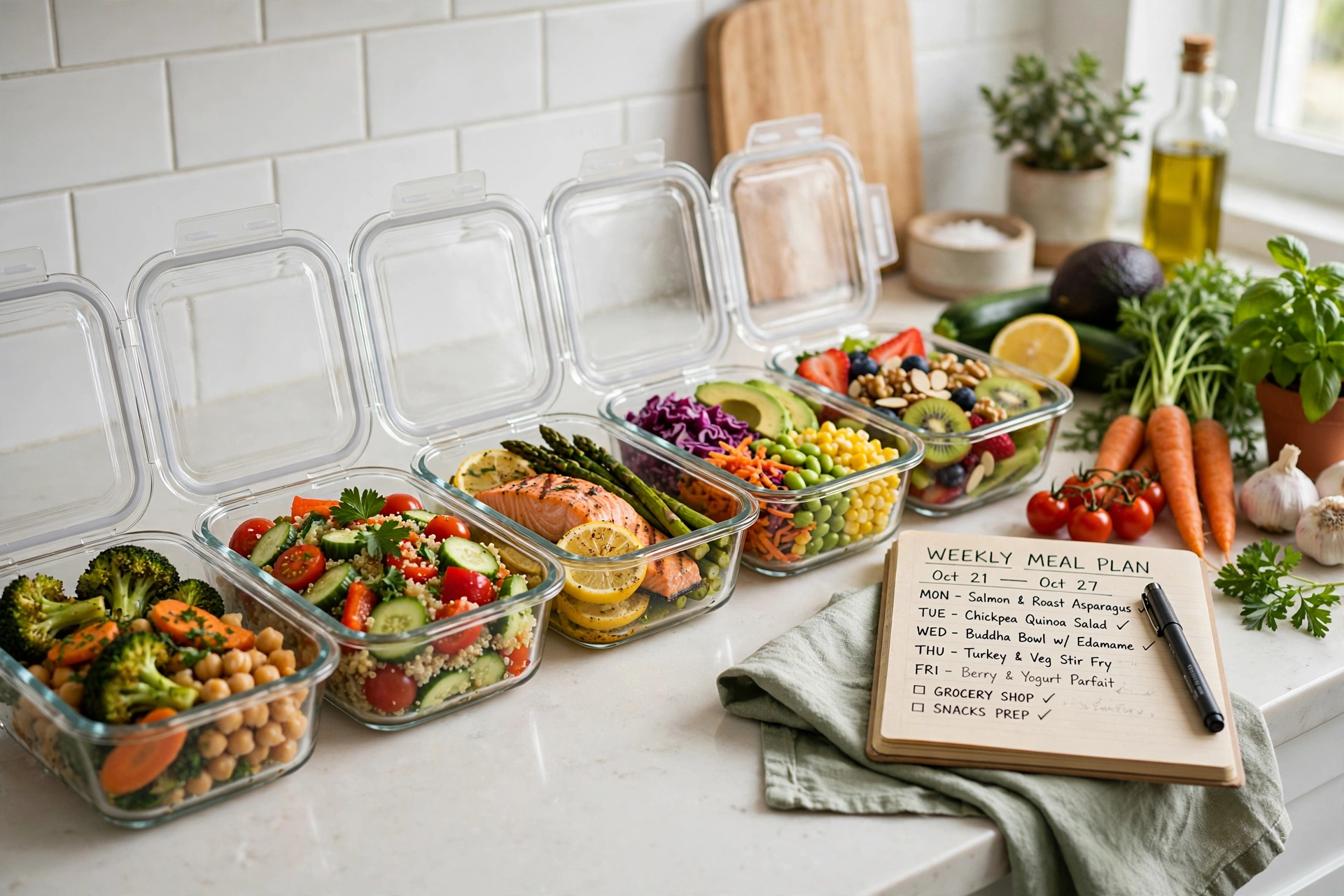
Meal prep is not eating the same meal every day unless you want to. It’s a spectrum: on one end, batch-cooking full meals; in the middle, prepping components (grains, proteins, chopped vegetables) you mix and match through the week; on the light end, simply washing and chopping produce or marinating protein the night before. All of it counts.
What it isn’t: an all-or-nothing system, a diet in disguise, or a second unpaid job. The beginners who succeed start small — prepping just lunches, or just two dinners — and expand only when the habit feels easy. There’s a reason the simplest version works: as the saying goes, if you keep good food in your fridge, you will eat good food. Meal prep is just the system that makes that true.
Why It Saves Serious Time and Money
The math is straightforward. Cooking in batches means one round of washing, chopping, and cleanup instead of five. A planned grocery list means you buy what you’ll actually use instead of impulse items that rot in the crisper drawer. And having food ready means fewer takeout orders — the single biggest leak in most food budgets.
The time savings compound too: a focused 2–3 hour prep session on the weekend can cover most of a week’s lunches and several dinners. Compare that to 45 minutes of cooking and cleanup every single weeknight. Over a month, that’s hours returned to your evenings — and a noticeably smaller grocery bill, since planned meals waste far less food.
Starter Equipment: You Need Less Than You Think
Don’t buy a bunch of gear before your first prep session. The essentials are things you probably own: a large sheet pan, one big pot, a sharp knife and cutting board, and a set of airtight containers. That’s genuinely enough to start.
If you want to invest in anything, make it good containers first — glass ones with locking lids last for years, don’t stain, and go from fridge to microwave safely. A close second is a second sheet pan, because oven space is the main bottleneck in batch cooking. Everything else (rice cooker, slow cooker, vacuum sealer) is a nice-to-have you can add later once the habit sticks.
Planning Your One Weekly Session
The session has three phases: plan (20 minutes), shop (one trip), and cook (2–3 hours). For planning, pick your meals first — start with just 3–4 recipes for the week, not seven. Choose recipes that share ingredients (a head of cauliflower can appear in two different dishes) and that use different cooking methods so you’re not waiting on the oven for everything.
Write the grocery list from the recipes, organized by store section (produce, protein, pantry, dairy). This one habit — list organized by section, and sticking to it — is where most of the money savings come from. Shop once. Then cook in parallel: get grains and proteins going first (they take longest and need least attention), then roast vegetables, then assemble while things cool.
Five Beginner-Friendly Prep Outlines
You don’t need complicated recipes. These five outlines are endlessly adaptable — swap proteins, grains, and vegetables based on what’s on sale:
- Sheet-pan chicken and vegetables: chicken thighs or breasts plus chopped sweet potato, broccoli, and bell pepper, tossed in oil and seasoning, roasted at 200°C/400°F for 25–30 minutes. Portion over rice or quinoa.
- Overnight oats (no cooking at all): oats, milk or yogurt, chia seeds, and fruit in jars. Five jars, five breakfasts, ten minutes of work.
- Big-batch chili or lentil soup: one pot, minimal chopping, feeds you for days, and freezes beautifully. Double the batch and freeze half for a future week.
- Grain-bowl components: cook a big batch of rice or farro, roast two trays of mixed vegetables, and prepare one protein. Mix and match with different sauces through the week so it never feels repetitive.
- Egg muffins: beaten eggs with diced vegetables and cheese, baked in a muffin tin for 18–20 minutes. Grab-and-go breakfasts or snacks for days.
Storage and Food-Safety Basics
Food safety is the unglamorous part that matters most. Cool cooked food within two hours (spread it on sheet pans to cool faster), then refrigerate. Most cooked meals keep safely for 3–4 days in the fridge; if you prep on Sunday, plan to eat or freeze Thursday’s portions. When in doubt, freeze it — most prepped meals freeze well for 2–3 months.
Label containers with the contents and the date — future you will thank present you. Reheat leftovers until steaming hot throughout, and only reheat once. Keep raw and cooked foods separate during prep, wash produce, and don’t let the “it smells fine” test override the calendar. These basics take almost no extra effort once they’re habit.
Avoiding Meal-Prep Burnout
The number-one reason people quit meal prep is going too big, too fast: prepping seven identical meals, spending six hours in the kitchen, and being sick of it all by Wednesday. The fix is variety and modesty. Prep components instead of finished meals so you can combine them differently. Leave two or three dinners unplanned for spontaneity, takeout, or social plans.
Rotate your recipes every couple of weeks so nothing gets stale, and give yourself permission for imperfect weeks. Prepping just lunches still saves real money and time. A sustainable 70% effort beats a heroic 100% effort that collapses after three weeks — every time. Keep your kitchen organized too; a calm workspace makes the session genuinely pleasant, and our room-by-room decluttering guide is a great weekend companion project.
The Grocery-List Template Approach
Build yourself a reusable template instead of starting from zero each week. Divide it into sections — proteins, vegetables, fruits, grains/starches, dairy/eggs, pantry/spices, snacks — and keep a running list of your household’s staples in each. Each week, you circle or highlight what you need rather than rewriting everything.
Over time, this template becomes a record of what your household actually eats, which makes planning faster and shopping cheaper. You’ll notice patterns (you always need eggs and oats; you never finish fresh herbs) and adjust. The template turns meal planning from a weekly creative exercise into a ten-minute routine — and routines are what survive busy seasons.
Frequently Asked Questions
How long does meal-prepped food last in the fridge?
Most cooked meals stay safe for 3–4 days refrigerated. Plan to eat Sunday’s prep by Wednesday or Thursday, and freeze anything meant for later in the week. Label everything with the date.
Do I have to eat the same thing every day?
No. Prepping components (grains, proteins, vegetables, sauces) instead of finished meals lets you assemble different combinations all week. Variety comes from mixing and matching, not from cooking seven different recipes.
How much time does meal prep actually take?
A typical beginner session runs 2–3 hours once a week, covering most lunches and several dinners. That replaces roughly 45 minutes of cooking and cleanup on each weeknight — a clear net saving.