
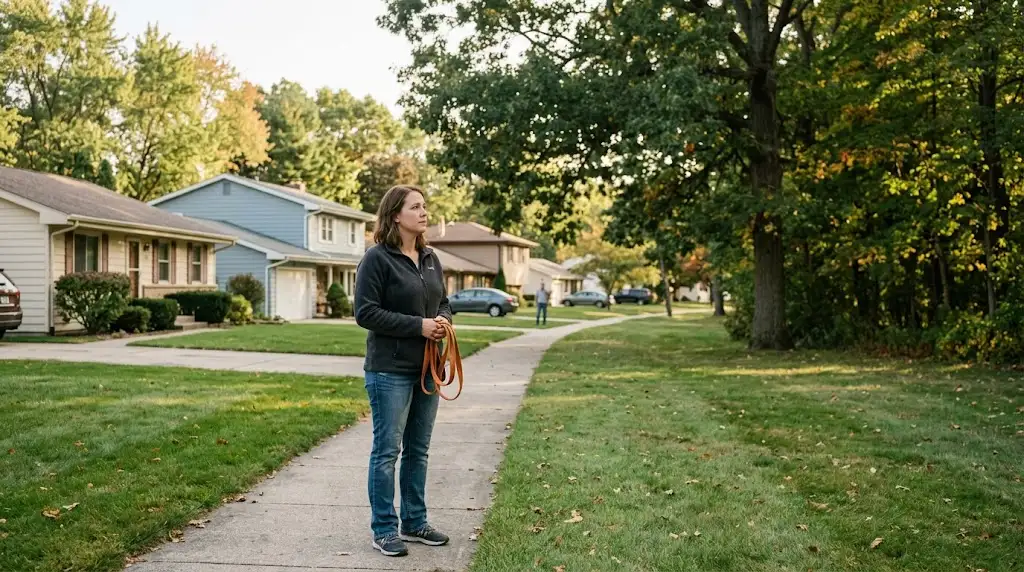
Midland pet owners can use local shelter resources, veterinary contacts, identification records, neighborhood networks, and online lost-and-found listings to support their search. This guide explains what to do immediately, how to report a missing animal, where to look in Midland County, and how to protect yourself from common lost-pet scams.
What to Do First When Your Pet Goes Missing
The first few hours can be important. Stay as calm as possible and begin with a focused search instead of assuming your pet has traveled far away. A frightened animal may hide close to home, remain quiet, or avoid approaching familiar people.
- Search the immediate area. Check your yard, garage, porch, sheds, bushes, nearby hiding places, and other sheltered areas. Ask household members and trusted neighbors to help.
- Bring a recent photograph. Use a clear image that shows your pet’s face, coloring, markings, and approximate size.
- Prepare identifying details. Write down the pet’s name, breed or type, color, age, sex, collar details, microchip information, and the location and time it was last seen.
- Contact local animal services. Report the missing pet and ask which shelters or animal-control facilities serve the location where the animal disappeared.
- Notify your veterinarian and microchip registry. Confirm that your contact information is current and ask whether the clinic can help circulate the report.
- Share a clear missing-pet notice. Post accurate information in relevant neighborhood and lost-and-found groups, including a reliable way to contact you.
Keep a written record of places contacted, reports submitted, and sightings received. This helps prevent missed follow-ups and keeps information consistent across different listings.
Where to Report Lost Pets in Midland, Michigan
When a pet goes missing in Midland, contacting local animal services and shelters should be one of your first steps. Do not rely exclusively on social media or online listings, because a found animal may not appear online immediately.
Humane Society of Midland County
The Humane Society of Midland County operates a local animal shelter and is an important contact for people searching for missing pets in the area. Midland County lists the shelter at the following location:
- Address: 4371 East Ashman Street, Midland, MI 48642
- Phone: (989) 835-1877
- Website: Humane Society of Midland County
Call to report your missing pet, ask about current stray-animal procedures, and find out how to check for animals that may have been brought to the shelter. If practical, visit in person and provide a recent photograph. Confirm opening hours and current procedures before traveling.
Midland County Animal Control
Midland County Animal Control can provide information about animal-control procedures and local resources. The county lists its Animal Control Deputy at the Law Enforcement Center:
- Address: 2727 Rodd Street, Midland, MI 48640
- Phone: (989) 832-6856
- Website: Midland County Animal Control
Ask how to file or update a missing-pet report and which facility handles animals found in the area where your pet disappeared. Animal-control jurisdiction and shelter intake arrangements can vary by location.
Contact Nearby Veterinary Clinics
Veterinary clinics may hear about found animals or help scan a safely handled animal for a microchip. Contact clinics near the last-known location and provide your pet’s description and contact details.
Do not attempt to chase or grab an unfamiliar, frightened, or potentially aggressive animal. Ask trained animal-control personnel for assistance when handling could be unsafe.
How to Search for a Missing Dog in Midland
Dogs may cover considerable distances, particularly if they are frightened, excited, or following a scent. Begin near the last-known location and expand your search methodically as new information becomes available.
- Check familiar walking routes, parks, paths, and nearby streets.
- Ask neighbors to inspect enclosed yards, garages, sheds, and other places where a dog could become trapped.
- Carry a leash and high-value treats, but avoid running toward a frightened dog.
- Ask witnesses for the exact time and direction of travel rather than relying on vague sightings.
- Notify shelters and animal-control services in neighboring areas if your dog could have traveled beyond Midland.
If someone spots your dog, ask them to remain at a safe distance and contact you with the location. A panicked dog may bolt if several people attempt to corner it.
For ongoing pet-care planning, owners may also find it useful to read about responsible dog care and everyday pet routines.
How to Find a Missing Cat
Cats can hide in small, sheltered places when frightened. Even an outdoor cat that normally roams widely may remain close to home after becoming startled or displaced.
Start with a quiet, careful search of the home and surrounding property. Check under decks, inside garages, behind outdoor equipment, beneath porches, and in other spaces where a cat could hide. Ask neighbors to inspect enclosed areas before closing doors or operating equipment.
Additional steps include:
- Search during quieter periods when you can listen for movement or familiar sounds.
- Use a recent photograph to help neighbors recognize your cat.
- Place familiar bedding or an item carrying a familiar household scent in a protected area near home.
- Ask local shelters and veterinary clinics to check for cats matching your description.
- Use a humane trap only when appropriate, with guidance from an experienced rescue organization or animal professional.
A missing cat may not respond when called, even if it recognizes your voice. Avoid assuming that a quiet search has failed simply because the animal does not appear immediately.
Create an Effective Lost-Pet Flyer
A clear flyer helps people identify your pet quickly. Keep the design simple and make the most useful information easy to read from a distance.
Include these details:
- A recent photograph: Choose a clear image that shows distinctive markings.
- Pet description: State the species, name, approximate size, coloring, and other identifying features.
- Last-known location: Include a nearby street or recognizable area and the date the pet disappeared.
- Relevant behavior: Mention whether the animal is shy, injured, nervous, or likely to approach strangers.
- Contact details: Provide a phone number or another reliable method of reaching you.
- Identification information: Mention that the pet is microchipped or wearing identification when applicable, but do not publish sensitive registration details.
Use a headline such as “LOST DOG” or “MISSING CAT” rather than a long paragraph. Place flyers where permitted, ask local businesses for permission before posting, and remove notices once your pet has been found.
Use Online Lost-and-Found Pet Resources
Online reports can spread information beyond your immediate neighborhood and help connect owners with people who have found animals. Use several appropriate channels rather than depending on one post.
Community Social Media Groups
Search for established Midland and Midland County lost-and-found pet groups, neighborhood groups, and local community pages. Include a clear photograph, the last-known location, and a contact method. Follow each group’s posting rules and update the original post when reliable information changes.
Petco Love Lost
Petco Love Lost offers an online resource for reporting missing pets and searching for found animals. Submit an accurate report and compare possible matches carefully. If you find a potential match, contact the relevant organization or person to arrange a safe verification process.
Local Shelter Listings
Check the Humane Society of Midland County’s website for available information and contact the shelter directly about missing animals. Listings and photographs may not be updated immediately, so an absent online listing does not prove that your pet is not there.
Expand the Search When Necessary
If your pet was last seen near a county boundary or could have traveled farther, contact relevant neighboring shelters and animal-control agencies. Keep track of the exact locations already checked so your search can expand systematically.
How Microchips and Pet Identification Help
Collars, identification tags, licenses, and microchips can help connect a found pet with its owner. Each method has different limitations, so maintaining several forms of identification can be useful.
Microchips
A microchip contains an identification number that can be checked with a compatible scanner. The chip itself does not function as a live GPS tracker. Its usefulness depends on the registration details being accurate and the animal being scanned.
If your pet is missing, contact the microchip registry to confirm that your phone number and email address are current. If a found animal is safely brought to a veterinary clinic or shelter, staff may be able to scan for a chip.
Collars, Tags, and Dog Licenses
A visible identification tag can provide a quick way for someone to contact you. Midland County also provides information about dog licensing requirements and related services through its Animal Control resources.
Keep identification current whenever you move or change your telephone number. A license or microchip is most helpful when the associated owner information can be reached.
What to Do If You Find Someone Else’s Lost Pet
If you encounter a lost dog or cat, prioritize safety and help the animal reconnect with its owner without creating additional risk.
- Observe the animal from a safe distance and avoid sudden movements.
- Check for visible identification only if the animal can be approached safely.
- Contact local animal control or a veterinary clinic for guidance about microchip scanning.
- Report the animal to the appropriate local authority and ask about required procedures.
- Share a found-pet notice with a photograph and the general location, while keeping some identifying details private for verification.
- Coordinate with the appropriate shelter or animal-control agency about temporary care and reunification.
Do not assume that an animal without a collar has no owner. Avoid immediately giving a found pet away or arranging an unverified handover. Follow local instructions for reporting and safely holding found animals.
If you temporarily care for a found animal, confirm the applicable rules with Midland County Animal Control. The appropriate process may depend on where the animal was found and which agency has jurisdiction.
Protect Yourself From Lost-Pet Scams
People searching for missing animals can be vulnerable to fraudulent messages and false sightings. Be cautious when someone claims to have your pet but refuses to provide credible details.
- Ask for a current photograph or specific identifying details that are not publicly listed.
- Do not share passwords, verification codes, or unnecessary personal information.
- Be suspicious of demands for advance payment before a claimed sighting can be verified.
- Verify the identity of anyone claiming to represent a shelter or animal-control agency using independently obtained contact details.
- Arrange reunification in a safe, appropriate location and involve a shelter or animal professional if needed.
Keep some identifying information private in your public notice so you can distinguish genuine reports from false claims. If a message appears suspicious, pause before sending money or arranging a meeting.
How to Prevent Your Pet From Going Missing Again
Once your pet is safely home, review what happened and make practical changes to reduce the risk of another disappearance.
- Update microchip registration and make sure collars and tags contain current contact information.
- Check fences, gates, window screens, and other possible escape routes.
- Use a secure leash and properly fitted harness when appropriate.
- Practice recall and reward-based training with dogs.
- Keep cats indoors or provide a secure outdoor enclosure where practical.
- Maintain recent photographs and veterinary records.
- Use a suitable pet sitter or boarding arrangement when travel or schedule changes affect routine care.
Owners looking for additional care ideas can explore pet grooming and routine animal care and consider how consistent care routines can support a pet’s overall well-being.
If you need temporary accommodation for a dog during travel or a household transition, research suitable providers and confirm their safety requirements. For example, the article on dog boarding and pet accommodation discusses considerations related to organized pet stays.
Frequently Asked Questions About Lost Pets in Midland, MI
Who should I contact first when my pet goes missing in Midland?
Start by searching nearby hiding places and contacting the Humane Society of Midland County and Midland County Animal Control. Also notify your veterinarian and microchip registry, and share a clear missing-pet report with local community groups.
Where is the Humane Society of Midland County located?
Midland County lists the shelter at 4371 East Ashman Street, Midland, MI 48642, with the telephone number (989) 835-1877. Confirm current operating hours and procedures before visiting.
Should I keep searching if my pet is not listed online?
Yes. Shelter listings may not be complete or updated immediately. Contact the relevant shelter directly, provide your pet’s description, and ask how to check animals that have recently arrived.
Can a microchip help me find my missing pet?
A microchip can help identify your pet if the animal is found and scanned. It is not a GPS tracker, so keep the registration details current and use other search methods as well.
What information should I include in a lost-pet post?
Include a recent photograph, pet description, last-known location, approximate time of disappearance, and reliable contact details. Keep some unique identifying information private so potential matches can be verified.
What should I do if someone reports seeing my pet?
Ask for the precise location, time, direction of travel, and a photograph if possible. If the animal appears frightened, ask the observer to keep a safe distance and avoid chasing it.
How can I help a found pet return to its owner?
Check identification if safe, contact local animal-control services, arrange a microchip scan through an appropriate professional, and follow local procedures for reporting and temporarily caring for the animal.
Conclusion: Helping Lost Pets Return Home
Finding a missing pet takes patience, organized searching, and cooperation between owners, neighbors, veterinary clinics, shelters, and animal-control services. In Midland, Michigan, starting with the Humane Society of Midland County and Midland County Animal Control can help you understand the appropriate local reporting process.
Combine a careful physical search with accurate lost-pet notices, current identification records, and direct communication with local animal services. Verify potential sightings, protect your personal information, and keep following up even when an online listing does not immediately show a match.
Every useful sighting and carefully shared report can help bring a missing companion closer to home. If you find a lost animal, take the same thoughtful approach and work with the appropriate local resources to help reunite it with its family.