
The New Forest, in southern England, is not a single attraction but a living landscape: ancient woodland, open heath, free-roaming ponies, and villages that grew up around the forest rather than inside a theme park. It suits slow travel best — a walk in the morning, a village lunch, and a historic house or garden in the afternoon. This guide covers the places that make the area worth a proper visit.
Lyndhurst, the Forest’s Capital
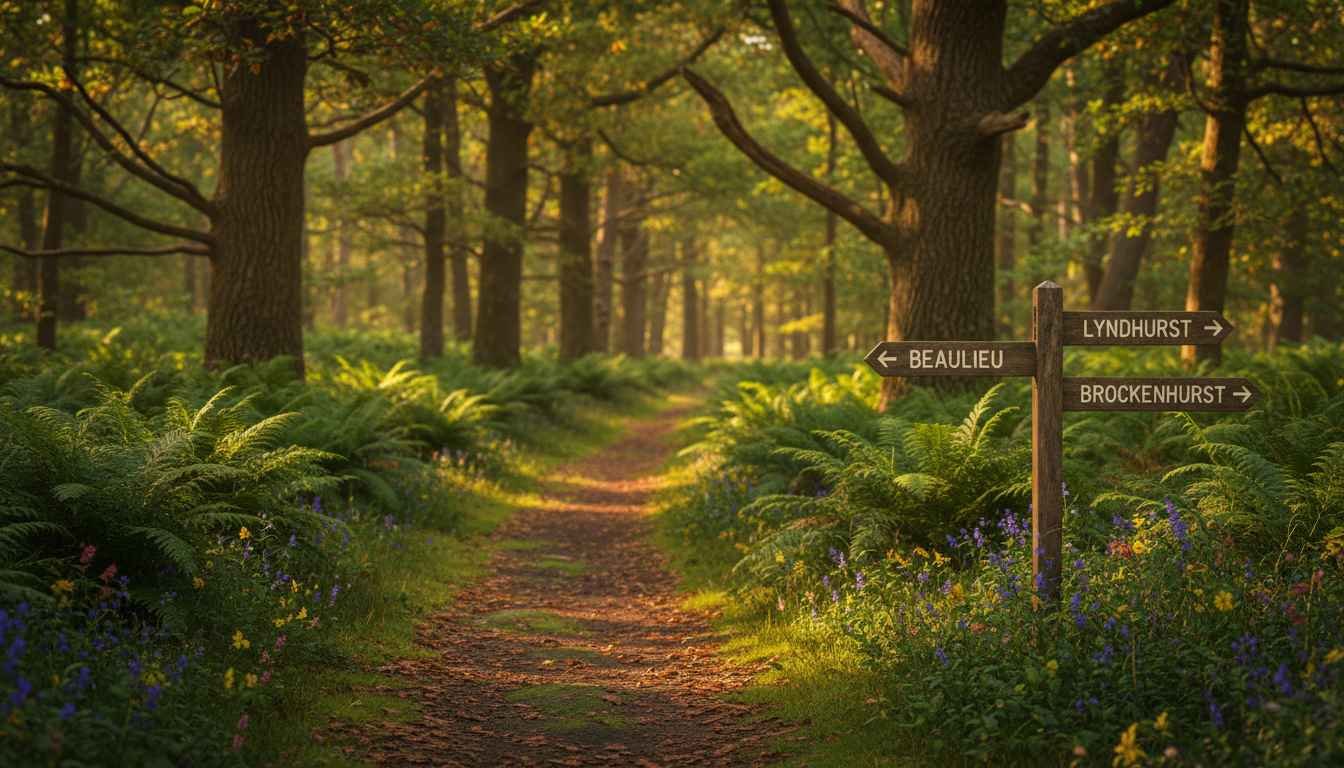
Start in Lyndhurst, often called the capital of the New Forest. It is a practical base as well as a destination: shops, cafes, and places to stay cluster along its main street, and the New Forest Heritage Centre here explains the forest’s history, its commoning traditions, and the wildlife you are likely to see. The centre is a good first stop if you want the walks that follow to make more sense.
Lyndhurst also gives you easy access to the surrounding woodland without needing to drive deep into the forest on your first day. Short waymarked walks leave from car parks around the village, and they are a gentler introduction than the longer heathland routes.
Beaulieu and the National Motor Museum
Beaulieu, on the River Beaulieu, is the area’s standout historic stop. Beaulieu Palace House has been home to the Montagu family for generations, and the grounds combine gardens, a mill, and riverside walks. The National Motor Museum on the same site holds a large collection of cars and motoring exhibits, from early vehicles to Formula 1 cars, and it is the part of the visit that most surprises first-timers.
Allow at least half a day here. The house, gardens, and museum work best unhurried, and the village itself, with its small shops and riverside setting, is worth a wander before you leave.
Bolderwood and the Forest Ponies
The New Forest ponies are the area’s most famous residents, and they really do roam freely across the open forest. The Bolderwood Deer Sanctuary, a viewing platform in woodland near Lyndhurst, is a reliable place to watch deer, particularly in the early morning. Ponies, meanwhile, turn up almost anywhere on the open forest, often beside roads and car parks.
The one rule matters: do not feed or approach the ponies. They are owned, free-roaming animals, not park attractions, and feeding them harms their health and makes them bolder around traffic. Watch from a distance, keep dogs under control near livestock, and enjoy the fact that this is a working landscape, not a zoo.
Rhinefield Ornamental Drive and Exbury Gardens
For scenery, the Rhinefield Ornamental Drive near Brockenhurst is a short, beautiful route through towering trees and ornamental plantings, with places to stop and walk. It is at its best in spring and autumn colour, but the scale of the trees impresses in any season.
Nearby Exbury Gardens, on the Beaulieu River, is a different kind of beauty: landscaped gardens with seasonal displays, woodland walks, and a small steam railway. Together, Rhinefield and Exbury show both sides of the New Forest — the wild woodland and the carefully planted garden — and they pair well on a single day based around Brockenhurst or Beaulieu.
Lymington, Burley, and Brockenhurst
Lymington, on the Solent coast, adds a seaside and sailing dimension to the trip. Its Georgian high street, Saturday market, and marina make it a good base if you want coastal walks and boat-watching alongside forest walks. From Lymington you can also reach the coast path and the marshes, where birdlife is a draw in itself.
Inland, Burley is a small village known for its ponies, thatched cottages, and local shops, while Brockenhurst is the forest’s main rail-connected village and a practical base for car-free visitors. Walking between villages is possible on forest tracks, but check routes and distances first: the forest is bigger than it looks on a map, and paths cross open grazing land rather than pavements.
Practical Tips for Visiting
Cycling is one of the best ways to see the forest, with hire shops in Brockenhurst, Burley, and Lyndhurst and a network of cycle routes on forest tracks. Horse riding is also a traditional way to explore, with local stables offering guided rides. If you drive, use marked car parks and expect ponies, cattle, and pigs on unfenced roads — slow down, especially at dawn and dusk.
Spring and autumn are the classic seasons for colour and comfortable walking, but the forest has a different appeal in every season, from summer heathland to crisp winter woodland. If you enjoy English countryside villages, the places to visit in Stow on the Wold in the Cotswolds make a natural next trip, and walkers may also like the best places to visit in the Lake District for a wilder, hillier contrast.
FAQ
When is the best time to visit the New Forest?
Spring and autumn offer the most comfortable walking weather and the best colour, but the forest is open year-round and each season has its own character.
Can you touch or feed the New Forest ponies?
No. The ponies are free-roaming owned animals. Admire them from a distance and do not feed them, for their health and your safety.
Is the New Forest suitable for families?
Yes. Short waymarked trails, the heritage centre, Beaulieu’s museum and gardens, and the beaches near Lymington all work well for families, with routes to suit different ages.
Final Thoughts
The New Forest rewards visitors who slow down: a village base, a woodland walk, ponies on the open heath, and a historic house or garden in the afternoon. Treat it as a landscape to explore on foot or by bike rather than a checklist of sights, and it becomes one of southern England’s most relaxing short breaks.