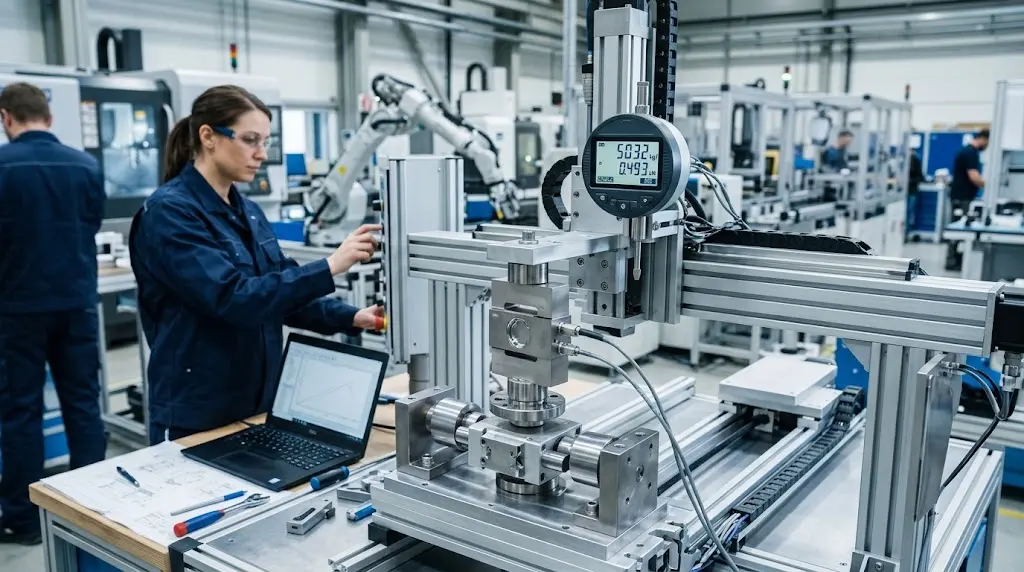
Transcell Technology is best understood as a precision measurement and engineering company rather than a biotechnology company. Its technology portfolio centers on load cells, torque sensors, weighing instruments, instrumentation, and custom force-measurement solutions used across industrial, manufacturing, logistics, agricultural, semiconductor, automotive, and medical-device applications.
What Is Transcell Technology?
Transcell Technology develops and manufactures precision measurement equipment and force-sensing components. According to the company’s official information, its history dates back to 1981, and its product portfolio includes load cells, torque transducers, instrumentation, weighing systems, and related technologies.
The company serves businesses that need accurate measurements of weight, force, tension, pressure-related conditions, or mechanical loads. Its solutions can be incorporated into complete equipment, automated production systems, and specialized industrial applications.
Rather than describing Transcell as a biotechnology developer, it is more accurate to view the company as an engineering and measurement technology provider whose products can contribute to several technology-intensive industries.
How Transcell Technology Supports Modern Industry
Precision measurement is an important part of modern engineering. Machines and automated systems often need reliable information about weight, force, tension, or mechanical stress before they can make decisions or perform an operation.
Transcell’s products can provide this measurement input. Its official product information includes load cells, torque transducers, instrumentation, scales, weighing modules, and related components.
This type of technology can support applications where accurate measurement affects product quality, equipment safety, production efficiency, or automated control.
Key Technology Areas
- Load cells for measuring weight and force
- Torque measurement technologies
- Digital weighing indicators and instrumentation
- Custom force-sensing solutions
- Weighing systems and modules
- OEM engineering and manufacturing support
- Measurement solutions for automated equipment
Transcell and Medical Technology
One reason Transcell may appear relevant to biotechnology or healthcare discussions is its work with medical-device applications. The company’s healthcare materials describe precision load-cell solutions for equipment used in areas such as infusion systems, patient hoists, rehabilitation equipment, prosthetic measurement, and other medical applications.
These applications illustrate an important role for measurement technology in healthcare. Medical equipment frequently needs sensors that can detect weight, force, movement, or mechanical changes accurately enough to support the device’s intended function.
However, this does not make Transcell a biotechnology research company. Its documented role is primarily as a measurement technology and engineering supplier supporting equipment manufacturers and other organizations.
Applications in Semiconductor Manufacturing
Advanced semiconductor manufacturing requires highly controlled production environments and precise equipment. Transcell identifies semiconductor applications among the areas where its force-measurement technologies are used.
According to its applications information, load cells can provide control inputs for robotic handling of fragile wafers, vibration monitoring, fabrication, testing, and packaging-related processes.
In these environments, reliable measurement can contribute to repeatability and process control. Even a relatively small measurement component can therefore become an important part of a larger automated manufacturing system.
Custom Engineering and OEM Solutions
Not every industrial application can be solved with an off-the-shelf sensor. Equipment manufacturers may need a measurement component designed around a specific mechanical structure, operating environment, weight range, or control system.
Transcell provides custom engineering services for these types of requirements. Its official materials describe integrated design and manufacturing capabilities intended to help customers develop solutions for specific force, weight, flow, and measurement requirements.
Why Custom Measurement Matters
A customized measurement solution can be useful when equipment has unusual dimensions, limited installation space, demanding environmental conditions, or specialized accuracy requirements.
For OEMs, integrating the measurement system during equipment development can also make it easier to align sensors, instrumentation, mechanical components, and software or control systems.
Industries Served by Transcell Technology
Transcell’s technology is used across a broad range of industries rather than being limited to a single market.
Agriculture
Measurement technology can support agricultural equipment and processes where accurate weighing, flow monitoring, or load measurement is required. Transcell identifies applications including seeding flow monitoring and livestock or equipment weighing.
Manufacturing
Manufacturing systems can use force and weight measurements for quality control, automated production, equipment monitoring, and process management.
Construction
Load measurement can be important for construction equipment and applications where understanding weight or force contributes to safer and more controlled operations.
Logistics
Weighing and measurement technologies can help logistics operations manage loads, improve record-keeping, and support automated weighing systems.
Medical Devices
Transcell also supports medical-device manufacturers with precision measurement components and engineering solutions. This is one of the areas where its technology intersects most clearly with healthcare innovation.
Test and Measurement
Testing environments depend on repeatable measurements. Force and torque sensors can provide quantitative data for product testing, mechanical analysis, and equipment validation.
Why Precision Measurement Is Important
Modern automated equipment depends on data. Sensors translate physical conditions into measurable signals that other components can use for monitoring or control.
For example, a manufacturing machine may need to know whether a component has reached a particular force threshold. A weighing system may need to determine whether a load falls within an acceptable range. A medical device may require accurate force or weight information to operate as intended.
In each situation, measurement quality can influence the performance of the larger system.
Load Cells and Their Role in Measurement Systems
Load cells are sensors designed to measure force or weight. They are commonly integrated into scales, industrial equipment, automated systems, and specialized measurement applications.
Transcell offers multiple load-cell configurations, including shear-beam, bending-beam, compression, S-type, and other designs. The appropriate configuration depends on factors such as the mechanical arrangement, expected load, environment, and required measurement characteristics.
Choosing the correct sensor is therefore an engineering decision rather than simply a matter of selecting the largest available capacity.
Quality, Standards, and Certifications
Measurement equipment used in commercial and regulated environments often needs to satisfy applicable standards. Transcell publishes certification information covering areas including NTEP, OIML, ISO 9001, ISO 14001, ISO 45001, and VCAP.
For U.S. commercial weighing applications, NTEP certification can be particularly important because weighing equipment used for legal-for-trade purposes must meet applicable requirements.
Buyers should always verify the certification applicable to the specific Transcell product and intended application rather than assuming that every product in a manufacturer’s portfolio carries the same certification.
Transcell Technology and Automation
Automation depends on reliable inputs. A machine cannot respond intelligently to physical conditions if the measurement data entering its control system is inaccurate or inconsistent.
Transcell’s applications include automated production systems, robotic control triggers, load balancing, industrial flow controls, crane and winch measurement, and other applications where force or weight information can influence equipment behavior.
This makes precision sensing an important enabling technology for industrial automation. The sensor itself may be small, but its output can influence much larger mechanical and software systems.
How Transcell Differs From a Biotechnology Company
The distinction between measurement technology and biotechnology is important for anyone researching this topic.
Biotechnology generally involves using biological systems, organisms, cells, or biological processes to develop products, treatments, materials, or research applications. Transcell’s official product and industry information instead focuses on sensors, weighing systems, force measurement, instrumentation, and engineering services.
Its technology can support medical devices and advanced manufacturing, but that is different from directly developing biological therapies, genetic technologies, pharmaceuticals, or laboratory biotechnology platforms.
For this reason, describing Transcell as a precision measurement technology company provides a more accurate representation of its documented business.
What Businesses Should Consider Before Choosing a Transcell Solution
Companies evaluating measurement equipment should begin with the application rather than the product name.
Define the Measurement Requirement
Determine whether the system needs to measure weight, force, torque, tension, or another physical variable.
Determine the Operating Environment
Temperature, moisture, vibration, installation constraints, mechanical loads, and other environmental factors can influence sensor selection.
Check Required Accuracy and Capacity
The sensor should match the application’s expected operating range and measurement requirements. Selecting a component without considering these factors can undermine system performance.
Review Certifications
For regulated or legal-for-trade applications, verify the certification status of the exact product being considered.
Consider Integration
OEMs and equipment manufacturers should evaluate how the sensor, indicator, controller, wiring, mechanical assembly, and software interface will work together.
The Future of Precision Measurement Technology
Industrial technology is becoming increasingly connected. Sensors are moving from isolated measurement components toward systems that contribute to automation, monitoring, diagnostics, and data-driven decision-making.
This trend creates opportunities for measurement technology across manufacturing, healthcare equipment, logistics, agriculture, automotive systems, and other industries.
As automation becomes more sophisticated, accurate physical measurements remain essential. Artificial intelligence and advanced software can analyze information, but the quality of their conclusions still depends partly on the quality of the data entering the system.
For businesses interested in the broader relationship between technology and innovation, our article on technology and human imagination provides additional context.
Final Thoughts
Transcell Technology is better characterized as a precision measurement, sensing, and engineering company than as a biotechnology business. Its documented portfolio covers load cells, torque transducers, weighing equipment, instrumentation, custom engineering, and integrated measurement solutions.
Its work becomes particularly interesting when viewed as enabling technology. Precision sensors can support medical devices, semiconductor manufacturing, automated production, logistics, agriculture, construction, and other industries where accurate physical measurements are essential.
For organizations considering Transcell products, the best approach is to evaluate the exact application, required specifications, operating environment, certifications, integration requirements, and support needs. That application-focused approach provides a more useful picture of where Transcell Technology can contribute to modern engineering and industrial innovation.