Some meals feed you; others take you somewhere. A great Canaanite restaurant does the second. The name points back to the ancient Levant — the eastern Mediterranean lands whose cooks built one of the world’s most generous food cultures — and a meal here is a journey through it: tables crowded with small plates, charcoal smoke, olive oil, lemon, and bread torn straight from the basket.
What follows is a guide to that journey: what Canaanite and Levantine food actually is, the dishes that define it, and how to order and eat so you get the most out of your visit.
What “Canaanite” Cuisine Really Means
“Canaanite” refers to the ancient peoples of the Levant — the coastal lands of today’s Lebanon, Syria, Jordan, Palestine, and Israel. Their modern food descendants share a common table grammar: mezze (small shared plates), grilled meats perfumed with cumin, coriander, and sumac, bulgur and rice pilafs, and desserts soaked in syrup and crushed pistachio.
Because the same dishes cross borders under different names, an authentic Canaanite-style restaurant is less about one country’s flag and more about a philosophy: fresh ingredients, bold but balanced seasoning, and food meant to be shared, not plated for one.
The Dishes That Define the Table
If the menu is unfamiliar, these are the landmarks worth knowing:
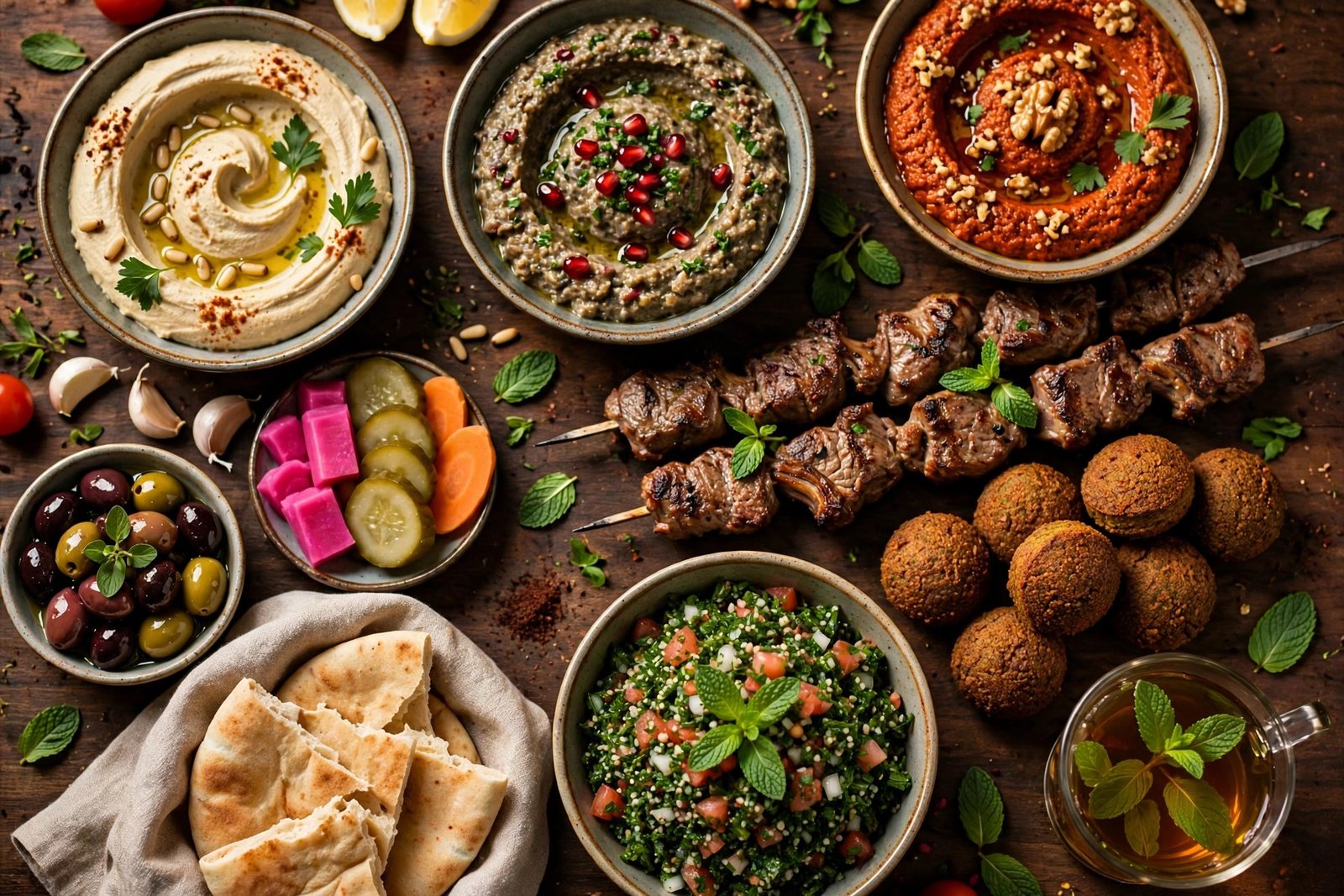
- Hummus and baba ghanoush — chickpea and smoked-eggplant dips, finished with olive oil. The test of a good kitchen is in these two bowls.
- Muhammara — a roasted red pepper and walnut spread with pomegranate molasses; sweet, smoky, and addictive.
- Tabbouleh and fattoush — parsley-heavy and bread-crunch salads that cut through richer dishes with lemon and brightness.
- Falafel — crisp chickpea fritters; order them as a starter or tucked into warm pita.
- Shish kebab and shish tawook — skewered lamb or marinated chicken, grilled over charcoal. The smoky char is the whole point.
- Shawarma — spiced meat shaved off a rotating spit, served in wraps or on platters with garlic sauce (toum).
- Knafeh — the classic finish: warm shredded pastry layered with soft cheese, soaked in syrup, and scattered with pistachios.
How to Order Like You Know What You’re Doing
Middle Eastern dining rewards a particular strategy. Start with three or four mezze for the table — one dip, one salad, one fried item like falafel or kibbeh — plus bread. That alone is often a full meal for two light eaters. If you’re still hungry, add one grilled meat platter to share rather than individual mains; the portions are built for sharing.
Eat with the bread, not just the fork: tear pita and use it to scoop dips and wrap bites of kebab. And save room for mint tea — it’s the traditional full stop at the end of the meal, and it genuinely helps after a rich spread.
Signs of an Authentic Middle Eastern Restaurant
You don’t need a culinary degree to spot the real thing. Look for these:
- Fresh bread, constantly. Pita or markouk arriving warm and puffed is a very good sign.
- A short, confident menu. Kitchens that do twenty mezze well beat kitchens that do sixty dishes adequately.
- Charcoal, not just a grill pan. That smoky edge on kebabs comes from real fire.
- Pickles and olives on the table, unasked. Small hospitality gestures are part of the culture.
- Families eating there. When local Middle Eastern families choose a spot for Friday dinner, trust them.
Naturally Vegetarian-Friendly
One of the quiet strengths of this cuisine: a vegetarian can eat like royalty without a single substitution. Hummus, falafel, tabbouleh, fattoush, lentil soup, stuffed vine leaves, and foul (fava beans) are core dishes, not afterthoughts — so mixed groups of meat-eaters and vegetarians share the same table happily. Vegans should ask about dairy in desserts and whether the falafel is fried in shared oil with meat items.
Final Thoughts
A Canaanite restaurant isn’t selling you dinner so much as an old idea: that a meal is better when the table is crowded, the plates are many, and nobody is in a hurry. Go with people you like, order more mezze than you think you need, and let the meal take its time. If you’re building a list of dining experiences worth seeking out, this cuisine belongs on it — alongside the other memorable restaurant visits that remind us how food connects people across cultures.
FAQ: Canaanite Restaurant Dining
What is Canaanite food?
It’s the shared culinary tradition of the ancient Levant — today’s Lebanon, Syria, Jordan, Palestine, and Israel — centered on mezze, grilled meats, grains, and olive oil.
Is Middle Eastern food very spicy?
Generally no. It’s deeply seasoned rather than hot: cumin, coriander, sumac, and za’atar give warmth and complexity. Heat usually comes from optional chili sauces or fresh chilies on the side.
What should I order on my first visit?
Hummus, falafel, and tabbouleh as mezze, one mixed grill platter to share, warm pita, and knafeh for dessert. That covers the essential flavors in a single meal.