
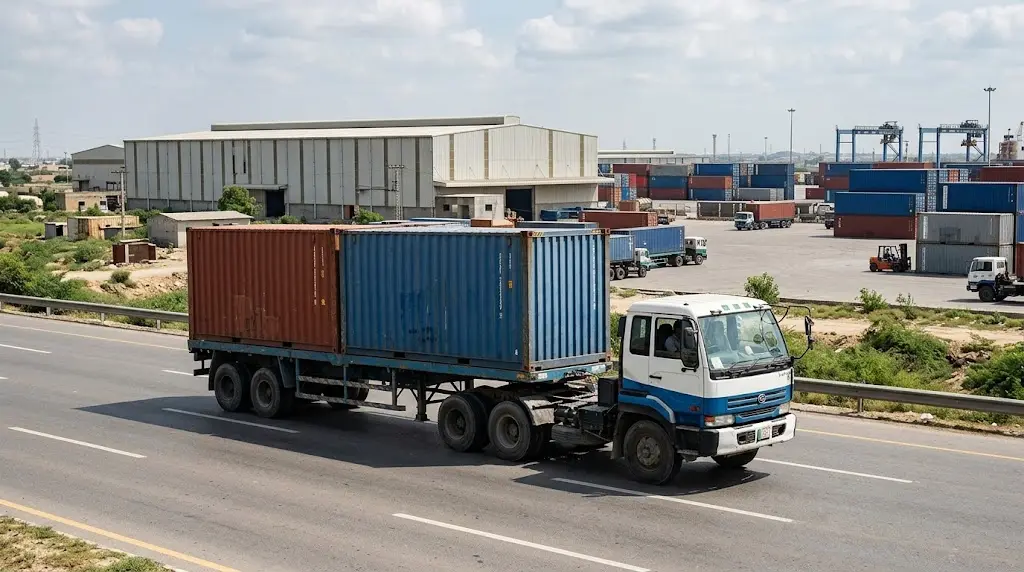
This guide examines YF Logistics, its core services, nationwide network, approach to supply chain management, and the factors businesses should consider when evaluating a logistics partner.
What Is YF Logistics?
YF Logistics is a domestic logistics provider serving businesses across Pakistan. Its current website describes an integrated network covering every province, with capabilities extending from port-side clearance to transportation across national routes and more remote destinations.
The company’s service model combines transportation, customs-related support, warehousing, and supply chain coordination. This approach can help businesses reduce the need to manage separate providers for every stage of cargo movement.
YF Logistics lists its headquarters at Shafi Courts on Mereweather Road in Civil Lines, Karachi, placing the company close to one of Pakistan’s most important commercial and port areas.
YF Logistics Services
Full Haulage
Transportation is a central part of YF Logistics’ offering. The company states that it operates a verified fleet of containers and flatbeds for bulk cargo movement across national routes.
Full-haulage solutions can be particularly important for manufacturers, distributors, importers, and businesses moving substantial quantities of goods between ports, warehouses, factories, and commercial destinations.
Effective haulage depends on more than vehicle availability. Route planning, cargo handling, scheduling, documentation, driver coordination, and communication all influence whether shipments arrive safely and on schedule.
Clearing and Agency Services
Import and export logistics often involve documentation and clearance requirements that can create delays when not handled properly. YF Logistics lists clearing and agency services at Port Qasim and Karachi Port, commonly referred to as KPT.
Professional clearance support can help businesses coordinate documentation and cargo movement between ports and inland destinations. This becomes especially valuable when a shipment involves multiple parties and time-sensitive delivery requirements.
Warehousing
Warehousing is another part of YF Logistics’ supply chain offering. Secure storage allows businesses to position inventory closer to production facilities, distribution networks, or end markets.
Effective warehousing involves more than simply storing products. Inventory organization, stock visibility, handling procedures, dispatch coordination, and security all contribute to the performance of a warehouse operation.
Domestic Supply Chain Management
YF Logistics describes its capabilities as comprehensive domestic supply chain management. This means logistics can be approached as a connected operation rather than a series of unrelated transportation jobs.
For businesses with complex distribution requirements, coordinated logistics can improve visibility and make it easier to identify bottlenecks between transportation, storage, clearance, and final delivery.
YF Logistics’ Nationwide Network
One of the company’s stated strengths is its coverage across Pakistan. YF Logistics describes a network extending across every province and connecting major logistics points with industrial and commercial destinations.
This nationwide approach is important because supply chains frequently involve multiple geographic regions. A manufacturer may receive imported raw materials through Karachi, transport them to a production facility elsewhere in the country, store finished goods at another location, and ultimately distribute them to customers in several cities.
A logistics provider capable of coordinating multiple stages can reduce the complexity involved in managing separate transportation arrangements for each route.
Why Supply Chain Reliability Matters
Logistics performance directly affects business performance. A delayed shipment can interrupt production, create inventory shortages, increase storage costs, or cause a customer delivery to be missed.
Reliable logistics therefore involves several interconnected factors:
- Accurate shipment planning
- Dependable transportation capacity
- Clear documentation
- Effective warehouse coordination
- Shipment visibility
- Communication between stakeholders
- Timely problem resolution
- Safe cargo handling
When these elements work together, businesses have a better opportunity to maintain predictable supply flows and respond quickly when conditions change.
How YF Logistics Supports Business Operations
Connecting Ports With Inland Markets
Pakistan’s ports play a critical role in international trade. Cargo arriving through Karachi Port or Port Qasim often needs to move efficiently into inland industrial and commercial areas.
YF Logistics’ combination of clearing, haulage, and warehousing capabilities is designed to connect these stages and help cargo continue its journey after reaching the port.
Supporting Industrial Supply Chains
Industrial businesses frequently require predictable movement of raw materials, components, finished products, and equipment. Delays at any stage can affect production schedules and customer commitments.
Integrated logistics can help businesses coordinate transportation and storage requirements around their operating schedules.
Improving Operational Visibility
Shipment visibility is increasingly important for businesses managing complex logistics networks. Knowing where cargo is, what stage it has reached, and whether a delivery remains on schedule allows teams to respond before a minor issue becomes a larger disruption.
Reducing Coordination Complexity
Using separate companies for transportation, warehousing, clearance, and other services can create communication gaps. An integrated logistics provider can potentially reduce the number of handoffs businesses need to manage.
What Industries Can Benefit From Logistics Services?
Professional logistics services can support a wide range of industries. The most suitable solution depends on cargo type, route, volume, storage requirements, delivery frequency, and regulatory considerations.
Potential users include:
- Manufacturing companies
- Importers and exporters
- Consumer goods businesses
- Industrial suppliers
- Retail and distribution companies
- Food and beverage businesses
- Construction and infrastructure companies
- Businesses managing large inventories
- Companies moving containerized cargo
YF Logistics and Supply Chain Visibility
Modern logistics increasingly depends on visibility. Businesses need to understand what is happening across their transportation and inventory network rather than waiting until a shipment reaches its destination.
Visibility can help logistics teams identify delays, coordinate receiving operations, manage inventory, and communicate more accurately with customers.
However, businesses evaluating a logistics provider should ask specific questions about how shipment status is communicated, what tracking information is available, how delivery milestones are reported, and how exceptions are handled.
What Makes a Reliable Logistics Partner?
Speed is important, but it should not be considered in isolation. A logistics provider should also demonstrate consistency, communication, safety, and operational capacity.
Transportation Capacity
A reliable provider needs sufficient vehicle and equipment availability for the types of shipments it handles. Businesses should understand what fleet resources are available and whether additional capacity is sourced when demand increases.
Route Knowledge
Knowledge of national transportation routes can help logistics providers plan practical journeys and respond to road, weather, traffic, or operational issues.
Documentation Expertise
Clear and accurate documentation is essential when cargo passes through ports and other regulated points. Errors can create delays and additional costs.
Warehouse Capability
Businesses that require storage should evaluate warehouse security, inventory processes, accessibility, handling procedures, and dispatch coordination.
Communication
Even well-planned shipments can encounter unexpected problems. A logistics partner should have clear communication channels so customers can receive timely information and make decisions when circumstances change.
Questions Businesses Should Ask Before Choosing YF Logistics
Companies considering YF Logistics or another supply chain provider should evaluate the service against their specific operational requirements.
- Which routes and destinations can the provider serve?
- What types of cargo can be handled?
- What transportation equipment is available?
- How are shipments tracked?
- What warehouse facilities are available?
- Which port clearance services are provided?
- How are delays and exceptions communicated?
- What insurance and liability arrangements apply?
- How are delivery milestones documented?
- Can the provider scale capacity as shipment volumes change?
YF Logistics Compared With Other Logistics Models
Businesses have several ways to organize logistics. Some manage transportation internally, while others work with individual carriers or use a third-party logistics provider for several functions.
An integrated provider can be useful when a company wants to coordinate multiple stages through one logistics partner. The alternative may involve separately managing trucking companies, warehouses, clearing agents, and other service providers.
The right model depends on shipment volume, internal expertise, budget, geographic coverage, and how much control the business wants over its logistics operation.
ZenithNote also covers other logistics and supply chain businesses. Readers researching the wider logistics sector can compare this guide with the site’s coverage of Rotom Logistics, Capstone Logistics, and Kilopost Logistics Africa.
Benefits of an Integrated Logistics Approach
An integrated supply chain model can provide several potential advantages when implemented effectively.
- Fewer handoffs: Coordinating several logistics functions through one provider can simplify communication.
- Better coordination: Transportation and warehousing can be planned together instead of independently.
- Improved visibility: Centralized communication can make it easier to monitor shipment progress.
- Scalability: Businesses can adjust logistics requirements as shipment volumes change.
- Operational efficiency: Coordinated planning may reduce unnecessary delays and duplicated administrative work.
Potential Challenges in Modern Logistics
Even experienced logistics companies operate in an environment affected by changing fuel costs, road conditions, customs requirements, weather, demand fluctuations, equipment availability, and other external factors.
Businesses should therefore avoid evaluating logistics performance solely by a promised delivery speed. A stronger evaluation considers reliability across normal and unexpected operating conditions.
Supply chain resilience also requires contingency planning. Businesses should understand how a logistics partner responds when a route becomes unavailable, cargo is delayed, demand suddenly increases, or a vehicle becomes unavailable.
Why Speed and Reliability Must Work Together
Fast transportation is valuable only when it remains dependable. A service that promises rapid delivery but frequently misses schedules can create more problems than a slightly slower service that consistently performs as expected.
For this reason, businesses should evaluate logistics providers using a broader set of performance indicators, including on-time delivery, cargo safety, communication, capacity, responsiveness, and problem resolution.
YF Logistics positions itself around speed, safety, visibility, and nationwide reach. Businesses should compare these stated capabilities with their own requirements and request specific service information before entering a commercial agreement.
How to Build a More Resilient Supply Chain
Businesses can improve logistics resilience by avoiding dependence on a single operational assumption.
- Map the complete supply chain. Identify suppliers, ports, warehouses, transportation routes, and final destinations.
- Identify critical dependencies. Determine which routes, facilities, or suppliers could cause major disruption if unavailable.
- Establish contingency options. Consider alternative routes, storage locations, carriers, or delivery arrangements.
- Improve shipment visibility. Use timely status information to identify problems early.
- Review logistics performance. Track delivery reliability, damage rates, delays, and response times.
- Communicate clearly with logistics partners. Ensure responsibilities and escalation procedures are understood.
- Review the network regularly. Supply chains change as businesses grow, so logistics arrangements should evolve with them.
Is YF Logistics a Good Choice for Businesses?
YF Logistics may be worth considering for businesses looking for a Pakistan-focused logistics provider offering transportation, clearing and agency support, warehousing, and domestic supply chain capabilities.
Its stated nationwide network and combination of logistics services can be particularly relevant to companies that need to move cargo between ports, industrial areas, warehouses, and destinations across multiple provinces.
However, the best logistics partner depends on the business’s specific requirements. Before selecting a provider, companies should compare service coverage, cargo capabilities, pricing, tracking, insurance, delivery performance, warehouse facilities, and customer support.
Frequently Asked Questions
What does YF Logistics do?
YF Logistics provides domestic logistics and supply chain services in Pakistan, including full haulage, clearing and agency services, and warehousing.
Where does YF Logistics operate?
YF Logistics states that its integrated network covers all provinces of Pakistan and connects major logistics routes with destinations throughout the country.
Does YF Logistics provide clearing services?
Yes. The company lists clearing and agency services at Port Qasim and Karachi Port.
Does YF Logistics offer warehousing?
Yes. Warehousing and inventory management are listed among its core logistics capabilities.
What type of transportation does YF Logistics provide?
YF Logistics lists full haulage using containers and flatbeds for bulk cargo movement across national routes.
Why is integrated supply chain management important?
Integrated supply chain management connects transportation, storage, clearance, inventory, and other logistics activities. This can simplify coordination and improve visibility across the movement of goods.
Final Thoughts
YF Logistics represents an integrated approach to domestic logistics in Pakistan, combining haulage, clearing and agency services, warehousing, and supply chain coordination.
For businesses moving commercial cargo across multiple regions, having transportation and related logistics functions coordinated through a single provider can simplify operations and improve supply chain visibility.
Nevertheless, logistics decisions should always be based on the specific requirements of the shipment and business. Companies should evaluate routes, cargo types, delivery expectations, storage needs, documentation requirements, pricing, tracking capabilities, and contingency arrangements before selecting a logistics partner.
As supply chains become increasingly complex, the most valuable logistics providers are those that combine transportation capacity with dependable communication, operational visibility, and the ability to adapt when conditions change.