
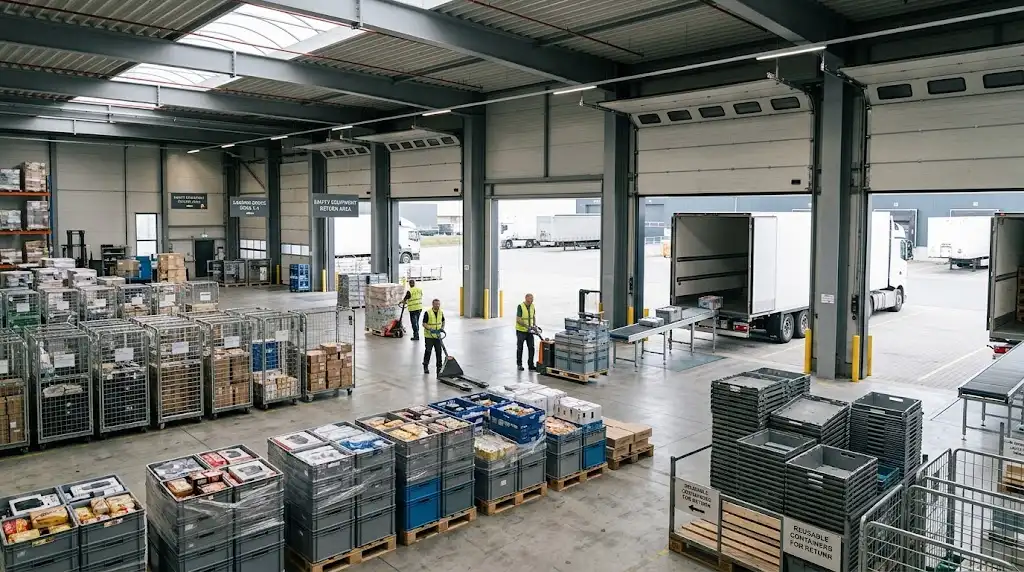
Modern supply chains depend on more than transportation alone. Businesses also need reliable loading equipment, efficient return flows, accurate logistics information, and processes that reduce unnecessary waste. Rotom’s business model addresses several of these requirements through a combination of logistics resources, pooling, rental, transport-related services, and circular logistics solutions.
What Is Rotom Logistics?
Rotom Group is an international provider of logistics resources and load carriers. According to the company’s current information, its operations extend across 11 European countries and involve more than 850 employees. Its stated mission is to help customers optimize their supply chains with sustainable, reliable, and flexible solutions.
The company works with logistics equipment used for transporting, handling, and storing goods. These resources include pallets, roll containers, stackable boxes, and other load carriers that can become an important part of a company’s daily supply-chain operation.
This makes Rotom relevant to businesses that need to coordinate physical logistics assets as well as the movement of products themselves.
Why Load Carriers Matter in Modern Supply Chains
Pallets, containers, crates, and other load carriers may appear simple, but they play an important role in logistics. Goods often move through multiple stages before reaching their destination, including manufacturing, warehousing, distribution centers, transportation networks, and retail locations.
When load carriers are unavailable, damaged, misplaced, or poorly managed, businesses can experience delays and additional operating costs. A structured approach to sourcing, maintaining, transporting, and recovering these resources can therefore support smoother supply-chain operations.
Rotom’s services are built around this part of the logistics ecosystem, helping businesses manage the resources used to move and store products.
Circular logistics focuses on keeping reusable logistics resources in circulation instead of treating them as disposable items after one journey. This can involve collecting, inspecting, repairing, cleaning, redistributing, and reusing pallets, containers, and other transport equipment.
Rotom’s current operations emphasize this circular approach. Its 2Return business unit, for example, specializes in managing, transporting, and recycling reusable packaging materials and logistics carriers. Current company information describes processes involving the return, cleaning, storage, and redistribution of reusable logistics equipment.
The concept can help companies reduce unnecessary consumption of new logistics materials while making better use of assets already circulating within the supply chain.
Key Rotom Logistics Services
Pallet Solutions
Pallets are fundamental to many distribution and warehousing operations. They allow goods to be grouped into standardized loads that can be handled by forklifts and other material-handling equipment.
Rotom supplies and manages pallets as part of its broader logistics-resource offering. Businesses can use these solutions to support warehousing, transportation, and distribution processes.
Roll Containers
Roll containers are another type of logistics carrier used for moving goods through warehouses, stores, distribution networks, and other operational environments.
They can be particularly useful when products need to be moved as organized units without relying exclusively on palletized loads.
Stackable Boxes and Containers
Reusable boxes and stackable containers can help businesses organize smaller products and components during transportation and storage. Their reusable design can also support logistics models that aim to reduce dependence on single-use packaging.
Rental and Pooling
Rotom also provides logistics services such as rental and pooling. Pooling allows logistics assets to circulate between different users and locations rather than remaining permanently assigned to one company or site. The company’s current information identifies rental, pooling, and packaging-recovery services among its logistics offerings.
For businesses with changing demand, these models can provide an alternative to purchasing and maintaining every logistics resource themselves.
How Logistics Pooling Can Improve Asset Utilization
A logistics pool works by creating a shared inventory of reusable assets that can be supplied where they are needed. Instead of each business maintaining a separate stock of equipment for every possible demand situation, pooled resources can circulate through a wider network.
The potential operational advantages include:
- Better utilization of reusable logistics assets
- Greater flexibility when demand changes
- Reduced need for businesses to maintain excess inventory
- More structured return flows
- Opportunities to repair and reuse damaged equipment
- Improved visibility into asset movements
The actual benefits depend on network design, transport distances, asset availability, demand patterns, and the quality of operational management.
Technology and Logistics Visibility
Modern logistics increasingly depends on digital systems that connect operational data with physical supply-chain activities. Rotom’s current technology-related operations include systems integration, logistics dashboards, data analysis, API and EDI connections, and platforms used to manage logistics processes.
Digital visibility can help logistics teams understand where assets are located, monitor movements, identify discrepancies, and make operational decisions using current information.
For example, a logistics coordinator may need to monitor pallet balances, transport assignments, open orders, depot activity, and return flows. Having structured data available can make these processes easier to coordinate.
Why Reverse Logistics Matters
Traditional logistics often focuses on moving products from a supplier toward the customer. Reverse logistics works in the opposite direction by managing returns, reusable packaging, empty containers, damaged assets, or other materials that need to move back through the supply chain.
This is especially important when businesses use reusable pallets, crates, containers, and other load carriers. Without an effective return process, reusable equipment can become stranded at customer locations or accumulate in the wrong parts of a logistics network.
Rotom’s circular logistics activities include coordinating return flows of pallets and other logistics carriers. Current Rotom information describes logistics coordinators working with customers, transporters, and depots to keep these return flows moving efficiently.
Repair, Reuse and Recovery of Logistics Equipment
Reusable logistics equipment eventually requires inspection, maintenance, or repair. Rather than automatically replacing every damaged item, a circular logistics model can identify equipment that can be restored and returned to service.
Repair and recovery can involve activities such as inspecting pallets, sorting reusable equipment, repairing damaged units, cleaning reusable packaging, and redistributing suitable items.
This approach supports the broader objective of keeping logistics resources in productive circulation for longer periods.
Rotom and Supply Chain Efficiency
Supply-chain efficiency is influenced by many factors, including transportation planning, inventory levels, warehouse processes, labor, technology, packaging, and asset availability.
Rotom’s role is concentrated around the logistics resources and processes that support the physical movement of goods. By supplying load carriers and managing services such as rental, pooling, and circular recovery, the company aims to help customers make their logistics operations more efficient and flexible.
For businesses, the practical objective is not simply obtaining pallets or containers. It is making sure the right logistics resources are available at the right place and time while controlling unnecessary costs and avoiding operational disruption.
The Role of Logistics Data and KPIs
Data is increasingly important in supply-chain management. Logistics teams can track measures such as asset availability, transport performance, order status, return volumes, service levels, and discrepancies.
Rotom’s current customer-service and logistics roles specifically reference monitoring pallet positions, inventories, shortages, outstanding balances, KPIs, service levels, and logistics data.
These measurements can help businesses identify bottlenecks and determine where processes need improvement.
How Rotom Supports International Supply Chains
International supply chains require coordination across multiple locations, transport partners, warehouses, suppliers, and customers. A logistics-resource provider operating across multiple European markets can support companies that need consistent access to logistics equipment across geographic regions.
Rotom currently describes itself as operating in 11 European countries, with an international workforce and a network designed to support customers’ supply-chain requirements.
This geographic structure can be relevant for companies that move goods between countries and need logistics carriers or related services in more than one market.
Benefits of a More Circular Logistics Model
A circular logistics strategy can offer several potential operational and environmental benefits when implemented effectively:
- Resource reuse: Existing pallets and containers can remain in circulation rather than being discarded prematurely.
- Asset visibility: Digital tracking and structured administration can help businesses understand where logistics assets are located.
- Operational flexibility: Rental and pooling can provide alternatives to maintaining large privately owned inventories.
- Recovery: Damaged or returned equipment can potentially be repaired, cleaned, or redistributed.
- Supply-chain coordination: Customers, transporters, warehouses, and depots can work from shared logistics information.
These benefits are not automatic. They depend on effective network planning, transport efficiency, asset management, and operational execution.
Who Can Benefit From Logistics Resource Solutions?
Companies with significant transportation, warehousing, manufacturing, retail, or distribution activity may need large quantities of standardized logistics carriers.
Potential users include:
- Manufacturers
- Retail and distribution businesses
- Third-party logistics providers
- Warehousing operators
- Food and beverage supply chains
- Industrial businesses
- E-commerce fulfillment operations
- Companies operating reusable packaging systems
The most appropriate solution depends on factors such as shipment volume, geographic coverage, asset requirements, return flows, and operational complexity.
What to Consider When Choosing a Logistics Partner
Businesses evaluating a logistics-resource provider should look beyond the initial price of pallets or containers. A broader evaluation can include:
- Geographic coverage: Can the provider support the locations where your supply chain operates?
- Asset availability: Are the required pallets, containers, or other load carriers consistently available?
- Return management: Does the provider have processes for recovering reusable equipment?
- Repair capabilities: Can damaged assets be inspected and restored where appropriate?
- Technology: Are tracking, reporting, and logistics-management systems available?
- Service flexibility: Can rental, pooling, purchasing, or other models accommodate changing requirements?
- Sustainability practices: Does the operating model support reuse and resource efficiency?
- Customer support: Can the provider coordinate effectively with warehouses, transporters, and other stakeholders?
Rotom Logistics and the Future of Supply Chains
Supply chains are becoming increasingly focused on efficiency, digital visibility, resource utilization, and sustainability. Logistics carriers sit directly within this transition because pallets, containers, crates, and other reusable assets move continuously between businesses and locations.
Rotom’s current strategy combines traditional logistics-resource supply with rental, pooling, circular recovery, and digital process optimization. Its technology operations also include data analysis, system integrations, dashboards, and process improvement initiatives.
As companies look for ways to reduce waste while maintaining reliable logistics operations, circular management of reusable transport and packaging resources is likely to remain an important part of supply-chain planning.
Frequently Asked Questions
What does Rotom Logistics do?
Rotom Group provides logistics resources and load carriers, including pallets, roll containers, stackable boxes, and related logistics services. Its services include rental, pooling, and circular logistics solutions.
Is Rotom an international logistics company?
Yes. Rotom describes itself as an international provider operating across 11 European countries.
What is circular logistics?
Circular logistics focuses on keeping reusable logistics resources in circulation through activities such as return, inspection, cleaning, repair, redistribution, and reuse.
Does Rotom provide pallets?
Yes. Pallets are among the logistics resources and load carriers supplied and managed by Rotom.
What is logistics pooling?
Logistics pooling involves sharing and circulating reusable logistics assets across a network rather than keeping all equipment permanently assigned to one user or location.
Why is reverse logistics important?
Reverse logistics helps move products, packaging, pallets, containers, and other reusable resources back through the supply chain. Effective return flows can help businesses recover assets and keep reusable equipment in circulation.
Final Thoughts
Rotom Logistics represents a supply-chain model that combines physical logistics resources with services designed around reuse, pooling, rental, recovery, and digital process management. Its portfolio includes pallets, roll containers, stackable boxes, reusable packaging solutions, and related logistics services.
The broader importance of this model is that supply-chain efficiency depends not only on moving finished products but also on managing the equipment used to move and store them. Effective asset management, reverse logistics, data visibility, and circular practices can all contribute to a more coordinated supply chain.
For businesses evaluating logistics partners, the most useful comparison should consider geographic coverage, asset availability, return processes, technology, service flexibility, and the provider’s ability to support the specific requirements of the supply chain.
For related logistics topics, readers can also explore Capstone Logistics in Memphis, TN, Kilopost Logistics Africa, YF Logistics, and Emerald Moving Logistics.
Disclaimer: This article is for general informational purposes and is not a substitute for professional supply-chain, transportation, or business advice. Service availability, geographic coverage, product specifications, and company information can change, so businesses should confirm current details directly with the provider.