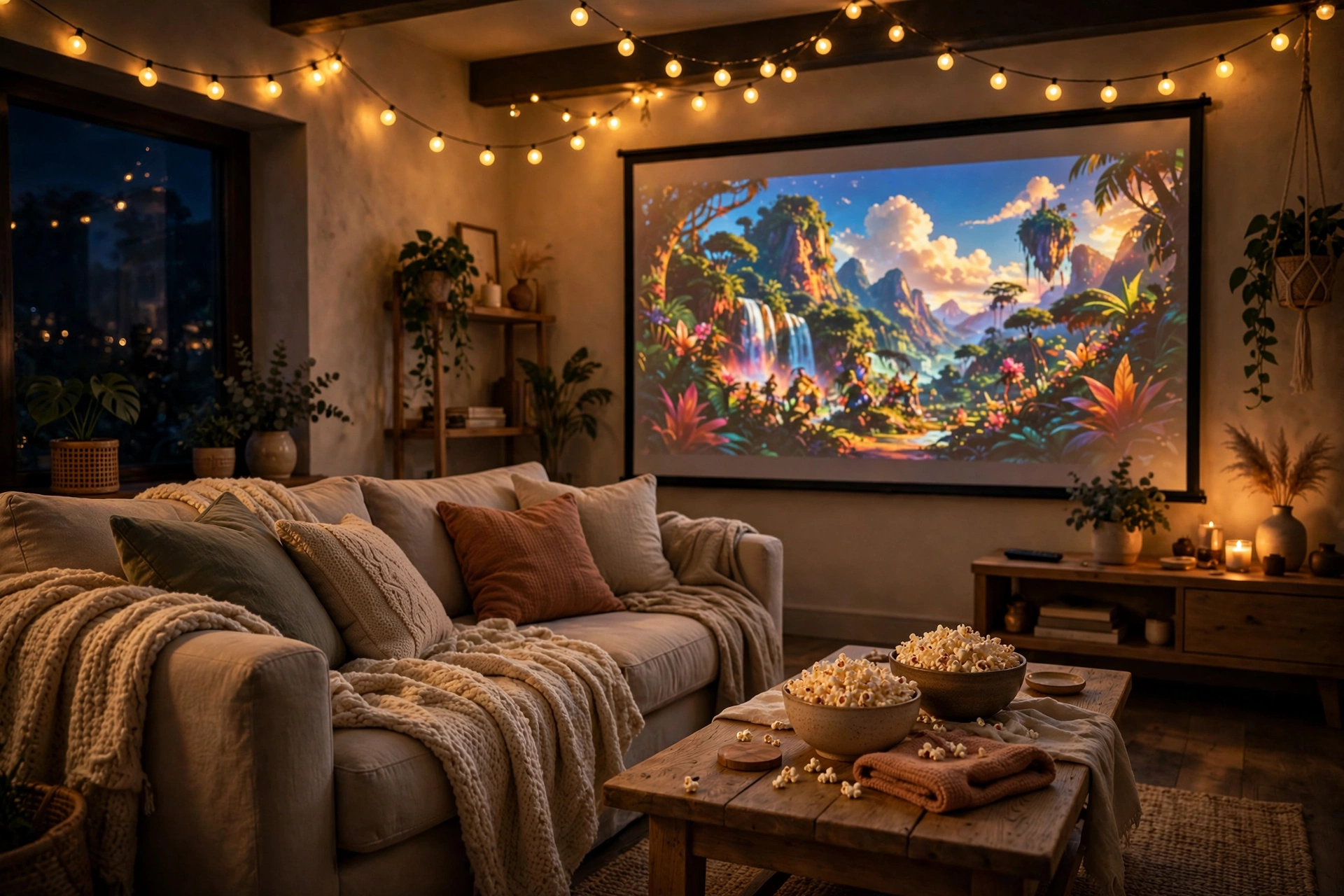
Picture it: the lights are low, the couch is piled with blankets, a bowl of warm popcorn is making its rounds, and the opening credits are about to roll. A great movie night at home costs almost nothing, yet it creates the kind of evening people remember — no overpriced tickets, no sticky theater floors, no strangers talking through the climax. Whether you are planning a cozy date night, a family tradition or a full living-room premiere with friends, this guide covers the setup, the snacks and the little touches that turn “let’s watch something” into an event.
Pick a Theme First
The difference between a forgettable movie night and a great one is intention. A theme gives the evening a shape — it guides the movie choice, the snacks, even the decorations. It does not need to be elaborate: “80s action night,” “cozy animated double feature,” or “horror after dark” are all enough to make the night feel planned rather than accidental.
Themes also solve the hardest problem in advance. Once everyone agrees on “sci-fi night,” the pool of candidates shrinks from ten thousand titles to a manageable shortlist, and nobody feels steamrolled by one person’s pick. Announce the theme when you invite people so they arrive in the right mood — and maybe in costume, if that is your crowd.
Solving the “What Do We Watch?” Problem
Every host knows the forty-five-minute scroll: five people, five streaming apps, zero decisions. Kill it with a system. The simplest is the shortlist vote — each guest nominates one film that fits the theme, everyone votes, majority wins, and the host breaks ties. It takes five minutes and nobody can complain about the outcome.
Other methods that work: the rotating curator (one person picks, no vetoes, the role passes to someone else next time), the genre hat (write genres on slips of paper, draw one, then pick within it), or the double-feature compromise (watch two shorter films so two people get their pick). For recurring movie nights, keep a shared list on a phone notes app where anyone can add candidates between events — by the next night, you already have a menu.
One rule worth enforcing: the movie is chosen before anyone sits down. Momentum dies the moment the group starts browsing.
The Setup: Screen, Sound and Lighting
You do not need a home theater to create a cinema feel — you need three things done well.
**Screen.** A large TV is perfectly fine. If you want to level up, a basic 1080p projector (now affordable) plus a blank white wall or an inexpensive pull-down screen transforms any room. Sit at a distance of roughly 1.5 to 2.5 times the screen’s diagonal for comfortable viewing.
**Sound.** This is the upgrade most people underestimate. Even a modest soundbar dramatically beats TV speakers, and dialogue becomes clearer while action scenes gain real weight. If a soundbar is not in the budget, a Bluetooth speaker placed near the seating works surprisingly well. Keep a second audio option ready for late nights — good headphones or simply lower volume with subtitles on.
**Lighting.** Dim the overheads completely. Bias lighting — a simple LED strip behind the TV — reduces eye strain and makes the picture look richer. A few candles or string lights add warmth without washing out the screen. Close curtains or blinds if there is still daylight; even a little glare flattens the picture.
**Seating.** Arrange so everyone has a clear sightline. Floor cushions, bean bags and ottomans turn limited couch space into plenty of seating. Pile on blankets — the cozier the setup, the longer people stay.
Building the Snack Bar
Snacks are half the experience, and a self-serve snack bar beats a single bowl every time. Set it up on a side table before guests arrive so nobody misses the opening scene refilling popcorn.
**Popcorn, three ways.** Stovetop popcorn in a little oil beats microwave bags on taste and cost. Offer a classic salted-butter batch, a sweet cinnamon-sugar batch, and a savory parmesan-and-herb batch. Serve in individual paper bags or bowls so flavors do not mix.
**Easy finger food.** Keep it to things that do not require a table: sliders or mini wraps, loaded nachos in a sheet pan, a cheese and cracker board, veggie cups with dip. Anything needing a knife and fork breaks the spell.
**Sweet options.** Chocolate bark, cookies, or a simple candy bowl cover the sweet tooth. For theme nights, match the candy to the film — it is a small touch guests notice.
**Drinks.** A big-batch drink (lemonade, iced tea, or a themed mocktail) in a dispenser means nobody is playing bartender all night. Keep water visible too — salty snacks demand it.
Prep everything before showtime. The host should be on the couch when the movie starts, not in the kitchen.
Invitations and Guests
Keep invitations simple but specific: the theme, the movie (or the voting plan), the start time, and what to bring. “Movie night Saturday — horror theme, film picked by vote, 7:30 PM, bring your own blanket” tells people everything they need. A group chat works fine; no formal invites required.
Cap the guest list at what your seating honestly holds. Six comfortable viewers beat twelve cramped ones. Ask one reliable friend to arrive fifteen minutes early — an extra pair of hands for last-minute setup is worth more than any decoration. And set expectations about phones: a lighthearted “phones away during the film” rule, agreed in advance, prevents the mid-movie glow problem without anyone feeling policed.
Theme Night Ideas Worth Repeating
Once the format works, themes keep it fresh for months:
– **Horror after dark.** Dim every light, lean into the atmosphere, and queue up classic horror films that defined the genre. Best with a brave crowd and zero jump-scare spoilers beforehand.
– **Decade night.** Pick a decade — the neon 80s, the grunge 90s — and match the movie, the music playlist before showtime, and even the snacks to the era.
– **Double feature.** Two thematically linked films with an intermission for dessert. Great for franchises, director retrospectives, or “so bad it’s good” marathons.
– **Around the world.** Each month features a different country’s cinema, with snacks to match the film’s origin. An easy way to discover films you would never have picked.
– **Director spotlight.** One filmmaker, two or three of their best, chronological order. You start noticing their signatures by the second film.
Consider alternating with other formats to keep the tradition alive — some groups rotate between movie nights and game nights so the social circle never gets bored of the same routine.
Family Movie Night Tips
Movie night shines as a family ritual, especially with kids. Let the kids take turns choosing the film — ownership makes them invested. Start earlier than you would for adults, and pick runtimes under two hours for younger children. Build a blanket fort together before the movie; the fort is half the fun.
Keep the snack bar kid-friendly but not chaotic: pre-portioned servings prevent the sugar negotiations. And be mindful of balance — a weekly movie night is a lovely tradition, but it helps to keep an eye on overall screen time for kids across the rest of the week so the special night stays special.
Cleanup Without the Pain
End the night right by making cleanup painless. Line snack bowls with paper for instant disposal, keep a trash bag by the snack table so guests tidy as they go, and run the dishwasher or soak the popcorn pot before bed — hardened cheese and butter are tomorrow’s regret. Ten minutes of immediate cleanup beats an hour of morning-after dread, and it means you will actually want to host again next month.
A great movie night is not about expensive gear or perfect planning. It is about a theme, a decided film, a dark room, good sound and snacks within arm’s reach. Get those five things right, and your living room becomes the best theater in town — with better seats, better snacks, and a pause button.
Frequently Asked Questions
**How many people should I invite to a movie night?**
Invite only as many as your seating comfortably holds with clear sightlines — usually four to eight. A smaller group means better sound, better views and easier movie decisions.
**What is the best time to start a movie night?**
For adults, 7:30–8:00 PM works well, allowing time for snacks and settling in before a 8:15–8:30 start. For families with young kids, start by 6:30 PM so the film ends at a reasonable bedtime.
**Do I need a projector for a good movie night?**
No. A large TV with good sound and proper lighting control delivers an excellent experience. A projector is a nice upgrade for bigger groups or outdoor screenings, but it is optional, not essential.