
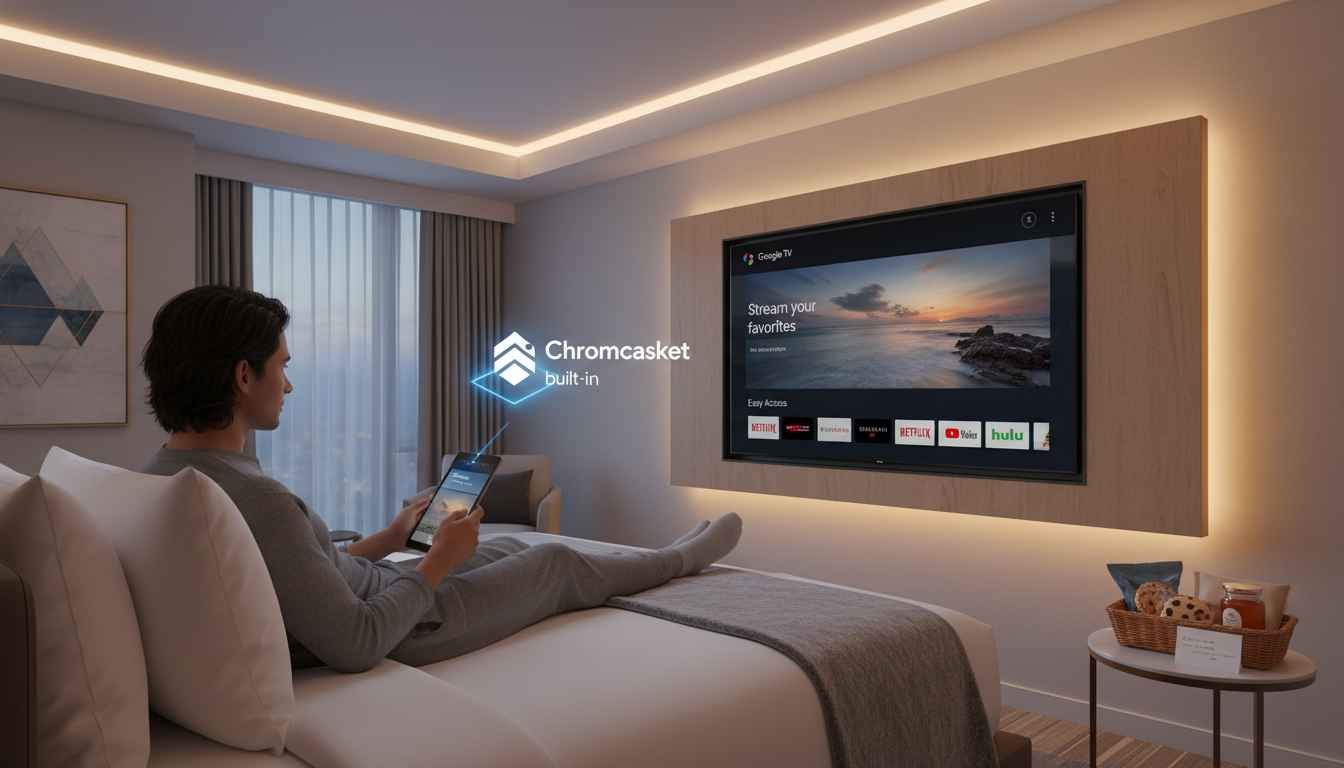
Stop relying on outdated in-room entertainment systems that frustrate guests and eat into your operational efficiency. In today’s hospitality environment, offering seamless, flexible, and personalized streaming options is no longer a luxury – it’s an expectation. Chromecast devices have emerged as a compelling solution, allowing guests to mirror their own content directly onto hotel TVs while enabling staff to manage access and security centrally.
However, not all Chromecast solutions are created equal. For hospitality operations, it’s crucial to balance guest freedom with operational control, compliance, and maintenance simplicity. Choosing the right solution can enhance guest satisfaction, streamline workflows, and even unlock new revenue streams through premium content offerings. Integrating a cloud-based PMS system like Mews can further optimize the deployment, enabling automated room setups and personalized guest experiences.
1. Understand Your Property’s Streaming Needs
The first step in implementing a Chromecast solution is a thorough assessment of your property. Large resorts, boutique hotels, and serviced apartments have differing requirements based on room count, guest tech-savviness, and existing infrastructure. Identify whether your guests primarily stream from mobile devices, laptops, or both. Determine if you require multi-room casting capabilities, guest authentication layers, or content restrictions.
Failing to align technology with property needs can result in underutilized devices, frustrated guests, or excessive IT overhead. Consider performing a pilot test in a few rooms to gauge performance and gather guest feedback before rolling out property-wide.
2. Select the Right Chromecast Hardware
Chromecast comes in several models, including the standard Chromecast, Chromecast with Google TV, and Chromecast Ultra. While the standard Chromecast is cost-effective and easy to deploy, Chromecast with Google TV offers enhanced functionality, such as access to apps directly on the device, a remote for navigation, and 4K support.
In hospitality, durability and manageability matter as much as functionality. Look for devices that are compact, secure, and capable of being remotely monitored and updated. Hardwired power connections and strategically placed units can reduce accidental unplugging or damage.
3. Integrate with a Cloud-Based PMS
For hotels seeking operational efficiency, integrating Chromecast with a cloud-based PMS like Mews allows for automatic room configuration. Upon check-in, guest credentials can be provisioned for streaming, limiting access to certain features until checkout. This automation reduces manual intervention by staff and ensures a consistent guest experience across all rooms.
Additionally, integration enables personalized recommendations. For instance, guests can receive curated content suggestions based on loyalty profiles or previous stays, creating a bespoke entertainment experience without extra manual effort from your team.
4. Ensure Robust Network Infrastructure
Streaming high-definition content requires a reliable and fast Wi-Fi network. Without sufficient bandwidth, guests will experience buffering, lag, and connectivity issues, undermining the purpose of the Chromecast deployment. Consider implementing a dedicated VLAN for in-room streaming devices to isolate traffic from operational or administrative systems.
Bandwidth management and signal strength audits are essential. Hotels with multiple floors or extensive square footage may need additional access points or Wi-Fi extenders to guarantee smooth streaming across all rooms.
5. Prioritize Security and Guest Privacy
Security is critical in hospitality, as Chromecast devices are susceptible to misuse if not properly configured. Enable guest isolation so each room’s device operates independently. Use regular firmware updates and password-protected networks to prevent unauthorized access. If offering public casting or multi-room access, implement monitoring tools to track usage and prevent misuse.
Guest privacy should be non-negotiable. Avoid storing personal credentials or login information on the device. Encourage a clear session reset between guest stays to prevent accidental exposure of personal content.
6. Train Staff and Offer Clear Guest Instructions
Even with intuitive devices like Chromecast, guests may need guidance to connect their devices successfully. Provide easy-to-follow in-room instructions or integrate tutorials through your PMS’s digital concierge platform. Train housekeeping and front desk staff to troubleshoot basic issues quickly, minimizing guest frustration.
Staff training ensures smooth operation and reinforces the property’s commitment to service excellence. Empowering your team with knowledge reduces downtime and increases guest satisfaction metrics.
7. Monitor Usage and Collect Feedback
Once deployed, continuous monitoring is key. Track device uptime, streaming activity, and guest satisfaction metrics. Feedback surveys can identify common pain points, such as connectivity issues or app limitations, guiding future improvements. Regular audits ensure devices remain functional and aligned with evolving guest expectations.
Who Should Avoid This?
While Chromecast offers significant benefits, it is not ideal for every hospitality property. Budget-limited hotels may find the upfront cost prohibitive, especially if devices are deployed across hundreds of rooms. Properties with unreliable Wi-Fi infrastructure may struggle to maintain consistent streaming quality, leading to guest complaints. Additionally, hotels prioritizing minimal tech intervention may prefer traditional entertainment systems, as Chromecast requires ongoing network and device management.
Chromecast also relies on guests having compatible devices and streaming subscriptions. If your clientele is less tech-savvy, you may need additional support or alternative entertainment options to ensure satisfaction.
Conclusion
Implementing the best Chromecast solution for hospitality can transform the guest experience while streamlining operational workflows. By assessing property needs, selecting the right hardware, integrating with a cloud-based PMS like Mews, ensuring network reliability, and prioritizing security and training, hotels can offer a modern, intuitive, and personalized entertainment experience.
However, it’s essential to weigh potential drawbacks. Chromecast requires ongoing management, compatible guest devices, and robust Wi-Fi infrastructure to function effectively. When deployed thoughtfully, it elevates your property’s offering and aligns with the expectations of today’s connected traveler.