
The Market Context
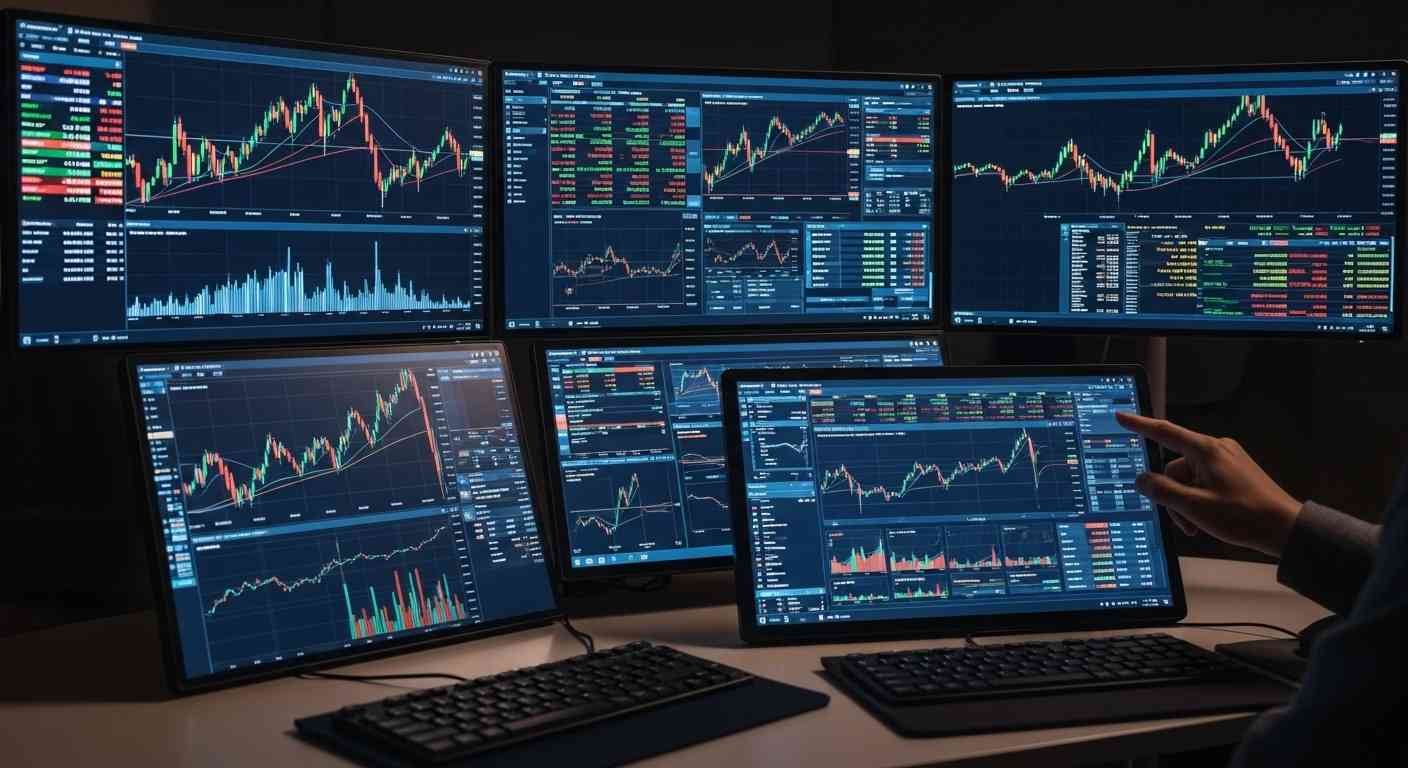
The landscape of retail trading has shifted dramatically over the past decade, driven by increased access to technology and mobile platforms. Brokers are now tasked with providing not only regulatory compliance but also seamless operational efficiency to attract and retain clients. User experience (UX) has emerged as a core differentiator, influencing trader behavior and capital allocation. Modern traders expect platforms that are intuitive, responsive, and capable of executing complex strategies without friction or delay.
Technological advancements have also democratized access to real-time market data, analytical tools, and customizable interfaces. Platforms that fail to adapt risk being sidelined as competitors innovate with AI-assisted charting, low-latency execution, and integrated analytics. The demand for faster trade confirmations and predictive insights has forced brokers to rethink UX as a strategic asset rather than a cosmetic feature. In this context, brokerage infrastructure must operate as both a performance engine and a user-centric experience.
As competition intensifies, the pressure to standardize industry practices has risen, emphasizing transparency, fairness, and execution reliability. Traders are increasingly evaluating brokers not only on fees and spreads but on the operational ecosystem supporting their decisions. This requires a granular analysis of latency, liquidity, risk controls, and interface design. Understanding these factors is essential for any brokerage aiming to establish long-term trust and operational credibility in the retail space.
Regulatory Infrastructure
Regulatory frameworks remain a cornerstone of trust within the trading ecosystem, influencing both operational resilience and user confidence. Licensing requirements vary across jurisdictions, but adherence to recognized financial authorities mitigates counterparty risk and ensures segregation of client funds. Brokers who integrate compliance into their platform architecture create an implicit layer of UX by guaranteeing transaction integrity and fund safety.
Segregation of client funds is particularly critical in minimizing exposure to insolvency risks, providing traders with assurance that deposits are insulated from operational liabilities. Transparent reporting and audit trails further enhance platform credibility, enabling traders to monitor their positions and account health effectively. Brokers that invest in automated compliance tools reduce the burden of manual oversight while maintaining regulatory adherence, a feature increasingly valued by retail participants.
Beyond licensing, regulatory protocols influence product offerings, leverage limits, and risk management structures. Platforms with robust compliance frameworks can expand services without compromising user experience, while those with inadequate oversight may face restrictions or reputational risk. For UX-focused design, regulatory integration must be seamless, ensuring that safeguards do not impede platform fluidity or trade execution speed.
The Latency Equation
Execution speed is a primary metric for evaluating broker performance, particularly in volatile markets where milliseconds can determine profitability. Latency, the time delay between order submission and execution, directly affects slippage and trade outcome predictability. Platforms that leverage co-located servers, direct market access, and optimized routing algorithms provide traders with superior control and efficiency.
Slippage, often a byproduct of latency, erodes profitability and diminishes trust in the trading interface. Brokers that implement real-time monitoring and adaptive execution logic can reduce slippage exposure, enhancing both performance and perceived UX. Additionally, latency considerations extend to mobile and web-based platforms, requiring responsive coding practices, efficient API integration, and continuous load testing to maintain execution integrity.
Latency management also encompasses data refresh rates, quote delivery, and synchronization across devices. Traders expect instantaneous feedback on price movements, order confirmations, and portfolio updates. Platforms that fail to optimize latency risk not only financial inefficiency but also user dissatisfaction, underscoring the strategic importance of low-latency infrastructure as a UX differentiator.
“Institutional-grade execution is no longer exclusive to Wall Street; platforms like Pocket Option are bridging the gap for retail traders through low-latency aggregation.”
User Experience UX Protocols
User experience extends beyond visual design, encompassing workflow efficiency, tool accessibility, and interface adaptability. Brokers integrate advanced charting modules, customizable dashboards, and responsive mobile layouts to meet diverse trader requirements. Interactive elements, such as drag-and-drop order management and real-time notifications, streamline decision-making while reducing operational friction.
Mobile responsiveness has become critical as retail participation increasingly shifts to smartphones and tablets. Platforms that deliver consistent functionality across devices preserve operational reliability and enhance perceived professionalism. Additionally, UX protocols incorporate personalization features, allowing traders to configure alerts, indicators, and layouts according to their individual strategies, improving both retention and engagement.
Data presentation and educational overlays also form part of the UX strategy, enabling traders to contextualize market information without leaving the platform. Platforms that prioritize clarity, intuitiveness, and error minimization reduce cognitive load, ensuring that traders can execute informed decisions quickly. UX, therefore, operates as both a usability metric and a strategic lever for performance optimization.
Risk Management Features
Robust risk management tools are integral to modern trading platforms, shaping both execution safety and trader confidence. Features such as negative balance protection and automatic stop-loss mechanisms safeguard against extreme market fluctuations and operational errors. By integrating these safeguards directly into the UX, brokers reinforce a sense of security while maintaining uninterrupted trading flow.
Stop-loss efficacy depends on precise execution and clear interface signals, requiring brokers to synchronize platform logic with market feeds accurately. Traders benefit from automated alerts and position management options, which reduce manual oversight and allow focus on strategic decision-making. Risk management integration also supports compliance objectives, aligning platform functionality with regulatory expectations.
Advanced risk tools may include margin calculators, exposure analytics, and scenario simulation modules. These instruments empower traders to understand potential outcomes, optimize position sizing, and make data-driven decisions. Embedding these features seamlessly into the user interface reinforces the perception of a sophisticated, institutional-grade platform that prioritizes both safety and efficiency.
Hidden Fees Audit Checklist
Transparency in fee structures is a critical component of both UX and trust. Brokers can implement audit checklists to highlight potential hidden costs, including spread widening, overnight financing, and withdrawal fees. Clear visualization of these charges within the platform minimizes surprise costs and enhances trader confidence.
Effective checklists include real-time reporting of executed trade costs, comparison against advertised spreads, and historical fee analysis. By presenting this information intuitively, platforms enable traders to make informed decisions and maintain strategic clarity. UX improvements that integrate fee transparency directly contribute to both retention and market credibility.
Periodic auditing of hidden fees also allows brokers to optimize their pricing model while aligning with industry benchmarks. Proactive disclosure and interface-driven reporting reduce friction, supporting a trader-centric operational model. A disciplined audit framework is therefore both a compliance and UX strategy, reinforcing the broader objective of seamless trading experience.
Future Outlook
Looking toward 2026, artificial intelligence and automation are poised to redefine brokerage UX. Machine learning-driven trade recommendations, automated portfolio rebalancing, and predictive analytics will become standard expectations for retail platforms. Brokers that integrate AI into their core infrastructure will offer enhanced decision support without compromising execution integrity.
Automation also extends to operational monitoring, compliance verification, and latency optimization, allowing platforms to scale efficiently while maintaining reliability. Retail traders will increasingly evaluate brokers on the sophistication of their automated systems, measuring UX not only in interface design but in actionable insights. The strategic imperative is clear: platforms that combine human-centric UX with advanced automation will set the benchmark for performance and trust in the coming years.
In conclusion, the interplay between regulatory compliance, latency management, risk mitigation, and UX design defines modern brokerage competitiveness. Brokers must continuously invest in infrastructure, transparency, and automation to meet the evolving expectations of retail participants. Those that succeed will position themselves as both technologically advanced and operationally reliable, shaping the next era of trading experience.