
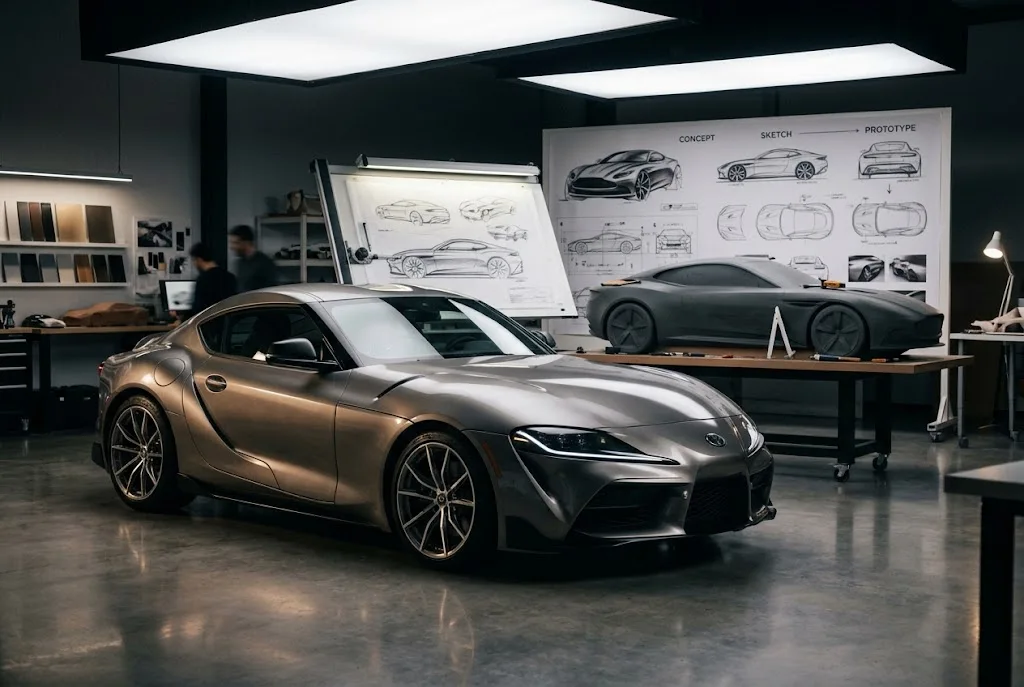
A dream car often begins long before it reaches a showroom. It may start as a sketch on paper, an idea discussed by an engineer, or a bold concept that seems impossible to build. The automotive industry has repeatedly shown that ideas once considered unrealistic can eventually become vehicles people drive every day.
That is the deeper meaning behind the idea that all of those cars were once just a dream in somebody’s head. Every vehicle represents a combination of imagination, engineering, design, manufacturing, and persistence. From early automobiles to modern electric vehicles and advanced driver-assistance systems, the history of cars is also a history of turning ambitious ideas into practical technology.
Every Great Car Starts With an Idea
Before a vehicle becomes a finished product, someone has to imagine what it could be. Designers think about proportions, materials, comfort, aerodynamics, and visual identity. Engineers then consider whether those ideas can be converted into a vehicle that is safe, reliable, efficient, and practical to manufacture.
This process is rarely simple. A concept may look impressive on a computer screen or drawing board but require years of testing and refinement before it can become a production vehicle. Even small changes to a vehicle’s structure, powertrain, suspension, or safety systems can affect performance and manufacturing requirements.
That is why a dream car is more than an attractive design. It represents a problem-solving process in which imagination is gradually transformed into something functional.
From Concept Cars to Production Vehicles
Concept vehicles are one of the clearest examples of how automotive dreams are explored. Automakers use concepts to test design directions, technology ideas, interior layouts, and new approaches to mobility.
Not every concept reaches production, and many never should. Some exist mainly to explore what could be possible. Others introduce ideas that later appear in more practical vehicles.
The journey from concept to production usually involves compromises. A design may need to become easier to manufacture, safer in real-world conditions, more comfortable for passengers, or more affordable for customers. The final vehicle may therefore look different from the original dream while still carrying its central idea.
Technology Has Changed What a Car Can Be
Modern vehicles demonstrate just how far automotive technology has progressed. Cars now use cameras, radar, sensors, computers, and software to provide capabilities that would have seemed futuristic to earlier generations of drivers.
For example, modern driver-assistance systems can provide features such as forward collision warnings, lane-departure warnings, blind-spot warnings, adaptive cruise control, and automatic emergency braking. The National Highway Traffic Safety Administration explains that these technologies are designed to assist drivers by warning them about hazards or, in some situations, taking action to help avoid or reduce a crash. :contentReference[oaicite:0]{index=0}
This progression illustrates an important point: automotive innovation is not limited to horsepower or exterior styling. Improvements in electronics, software, sensors, materials, and safety engineering can fundamentally change the driving experience.
Safety Was Once a Dream Too
Some of the most important automotive innovations are not the features that attract attention in advertisements. Seat belts, airbags, electronic stability systems, crash-avoidance technologies, and improved vehicle structures have transformed expectations for vehicle safety.
Today, consumers can compare vehicle safety information before buying. NHTSA’s 5-Star Safety Ratings provide information about crash protection and rollover safety, while the Insurance Institute for Highway Safety evaluates vehicles for crashworthiness and crash avoidance and mitigation. :contentReference[oaicite:1]{index=1}
These systems are a reminder that a dream car should not only look exciting. It should also protect the people inside it and interact responsibly with the road around it.
The Rise of Electric and Electrified Vehicles
The modern automotive industry is also changing through electrification. Electric and hybrid vehicles have expanded the range of choices available to drivers, while manufacturers continue experimenting with batteries, motors, charging systems, energy management, and new vehicle platforms.
For many drivers, the appeal of an electric vehicle is not simply that it uses a different power source. It can also offer a different approach to vehicle design, software integration, cabin layout, and driving performance.
The transition demonstrates how an idea can move from an alternative concept to an increasingly important part of the automotive market. What matters is not only the technology itself but how effectively engineers turn that technology into something useful for everyday drivers.
Why Dream Cars Still Matter
Dream cars have an important role even when they never become mass-market products. They encourage designers and engineers to question existing assumptions.
A concept that seems impractical today may inspire a feature that becomes normal tomorrow. A radical interior layout may influence future cabin design. A new safety idea may eventually become common equipment. A high-performance powertrain experiment may lead to improvements in vehicles designed for ordinary drivers.
This is why automotive imagination matters. Innovation often begins by asking a question that does not yet have an obvious answer.
The Difference Between a Dream and a Real Car
Turning an idea into a vehicle requires much more than creativity. Engineers must consider structural integrity, crash performance, emissions or energy efficiency, manufacturing costs, reliability, software behavior, customer expectations, and regulations.
A production vehicle must work repeatedly in the real world. It has to handle changing weather, road conditions, temperatures, traffic, maintenance requirements, and thousands of miles of use.
That is why the final stage of automotive innovation is often less glamorous than the original concept. Testing, validation, refinement, and quality control transform an exciting idea into a dependable product.
Choosing a Dream Car in the Real World
For consumers, having a dream car does not necessarily mean choosing the most expensive or powerful model. The right vehicle depends on how it will actually be used.
- Think about purpose: Consider commuting, family use, road trips, performance driving, or off-road travel.
- Evaluate safety: Review independent crash-test results and available safety technologies.
- Consider ownership costs: Fuel, electricity, insurance, maintenance, tires, and depreciation can significantly affect the total cost of ownership.
- Check reliability and service: A dream vehicle is much more enjoyable when routine maintenance and repairs are manageable.
- Test the vehicle: Specifications cannot fully explain how a car feels from the driver’s seat.
Vehicle care also matters after the purchase. A well-maintained car can deliver a better ownership experience and help preserve its performance and reliability over time. For readers interested in automotive maintenance, ZenithNote also covers topics such as professional vehicle care and long-term automotive maintenance.
What the Future of Cars Could Look Like
The next generation of vehicles will likely continue blending physical engineering with software and advanced electronics. Driver-assistance systems are already becoming more capable, although they should not be confused with fully autonomous driving.
NHTSA states that current consumer vehicles still require the driver’s full attention for safe operation, even when advanced assistance features are active. :contentReference[oaicite:2]{index=2}
That distinction is important because the future of mobility will depend not only on what technology can theoretically do but also on how safely and responsibly it can operate in the real world.
Dreaming Is Where Automotive Progress Begins
Looking at a finished vehicle can make its existence seem inevitable. But every car began with decisions made by people who imagined something that did not exist yet.
Some ideas become iconic vehicles. Others become safety systems, powertrain technologies, design details, or engineering lessons. Even failed concepts can contribute to future progress.
The most inspiring part of automotive innovation is therefore not simply the finished car. It is the process of moving from imagination to design, from design to engineering, and from engineering to something real.
All of those cars were once just a dream in somebody’s head. The next vehicle that changes how we think about driving may be nothing more than an idea today.
Final Thoughts
The automobile continues to evolve because people keep imagining better, safer, more efficient, and more exciting ways to move. Every breakthrough begins with a possibility, and every possibility needs someone willing to pursue it.
Whether the dream involves a supercar, an electric vehicle, a safer family car, or an entirely new form of transportation, the principle remains the same: today’s impossible idea can become tomorrow’s everyday reality.