
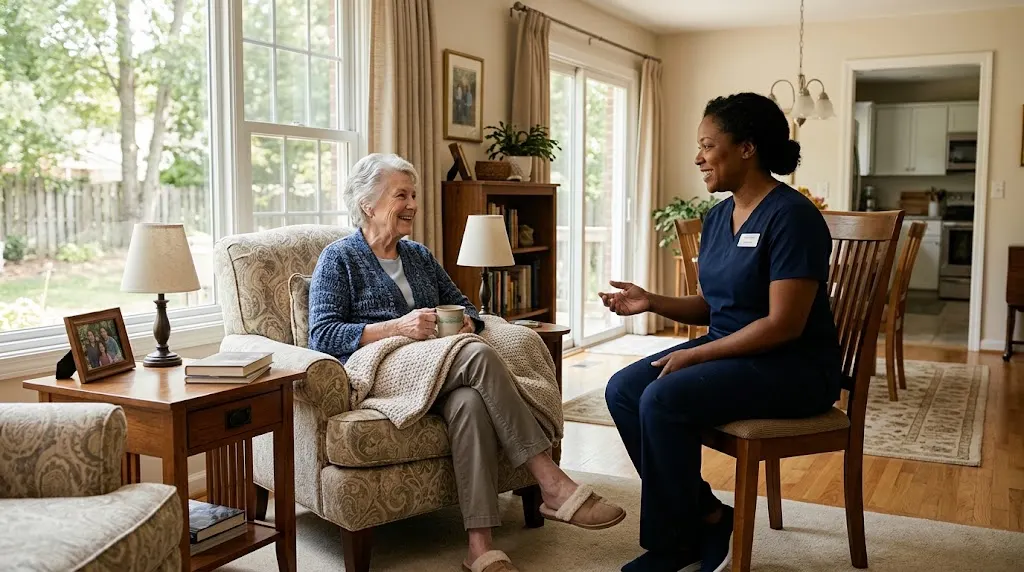
For families researching their options, understanding how home care works, what to evaluate in a provider, and how professional support can complement family caregiving can make the decision much easier.
What Are Home Care Services?
Home care generally refers to supportive services delivered in a person’s residence. Depending on the provider and the individual’s needs, services may focus on personal assistance, everyday activities, companionship, household support, or certain health-related needs.
It is important to distinguish non-medical home care from Medicare-covered home health services. Medicare describes home health as medically necessary services that can include skilled nursing, physical therapy, occupational therapy, speech-language pathology, medical social services, and certain home health aide services when eligibility requirements are met.
By contrast, many private home care arrangements are designed around practical daily support and companionship. The exact services available depend on the agency, caregiver qualifications, care plan, and applicable state requirements.
Why Families Consider Home-Based Care
Home-based care can offer a valuable alternative when someone needs assistance but may not need, or may not want, to move into a residential care setting.
One major advantage is familiarity. Remaining at home allows an individual to continue living around familiar rooms, routines, possessions, and neighborhood surroundings. That continuity can be especially meaningful when a person is adjusting to changes in mobility, independence, or daily responsibilities.
Families may also explore home care because balancing caregiving with employment, parenting, household responsibilities, and personal commitments can become difficult over time. Professional assistance can provide an additional layer of support while allowing family members to remain involved.
For a broader look at why families consider this model, see the advantages of home care services for loved ones.
How Haven Home Care Services Can Fit Into a Care Plan
A useful home care arrangement starts with the person’s actual needs rather than a generic list of services. Someone recovering from a temporary setback may require a different level of support than an older adult who needs ongoing assistance with everyday activities.
A practical care plan may consider:
- Daily routines and personal preferences
- Mobility and safety considerations
- Assistance needed with everyday activities
- Companionship and social interaction
- Family caregiver availability
- Preferred schedules and visit frequency
- Communication with family members and other professionals
- Changes in the person’s needs over time
The goal should be to create appropriate support without unnecessarily taking away the person’s independence. Good home care works alongside the individual and family rather than treating every household as though it has identical needs.
Common Types of Support Families May Need
Personal Assistance
Some individuals need help with everyday personal routines. Depending on the provider and applicable regulations, this may include assistance with activities such as grooming, dressing, bathing, mobility, or other basic daily tasks.
The level of assistance should be determined according to the person’s circumstances and the caregiver’s qualifications. Families should always confirm exactly what a provider can legally and professionally offer before services begin.
Companionship
Care is not always about physical assistance. Loneliness and reduced social interaction can also affect quality of life. Companionship may involve conversation, shared activities, reading, games, walks, or simply having another trusted person present.
Help With Daily Routines
Everyday responsibilities can become challenging when mobility or independence changes. Depending on the service arrangement, caregivers may assist with practical routines that help a person maintain a more organized and comfortable home life.
Respite for Family Caregivers
Family members often provide substantial unpaid care. Even when they are committed to helping, continuous responsibility can become exhausting. Scheduled professional support may give family caregivers time to work, rest, attend appointments, manage other responsibilities, or simply recharge.
The Importance of Personalized Care
One of the strongest principles in home care is personalization. A care plan should recognize that each person’s abilities, preferences, schedule, and household environment are different.
For example, one individual may primarily need companionship and help maintaining a daily routine, while another may require more hands-on assistance with mobility and personal activities. A family caregiver may also need support only during certain hours rather than throughout the day.
Personalization also means respecting preferences. Care should take account of routines, communication styles, cultural considerations, privacy, and the person’s desire to remain as independent as reasonably possible.
What Families Should Look for in a Home Care Provider
Choosing a provider should involve more than comparing a service list or hourly price. Families are trusting caregivers with access to a private home and, often, with an important role in a loved one’s daily life.
Clear Service Information
A reputable provider should explain what it does and does not provide. Ask about available services, schedules, caregiver qualifications, supervision, communication procedures, and any limitations.
Caregiver Screening and Qualifications
Families should ask how caregivers are selected, screened, trained, and supervised. Requirements can vary by role and jurisdiction, so it is useful to request specific information rather than making assumptions.
Communication
Strong communication can make home care considerably easier for everyone involved. Families should understand who they can contact when concerns arise and how changes in a person’s condition or care needs are communicated.
Flexibility
Care needs can change. A provider should be able to explain how schedules, caregivers, and service arrangements can be adjusted when circumstances change.
Respect and Dignity
Perhaps most importantly, care should preserve the person’s dignity. Caregivers should treat clients respectfully, listen to their preferences, protect privacy, and encourage independence wherever appropriate.
Home Care vs. Home Health Care
The terms home care and home health care are sometimes used interchangeably, but they can describe different types of support.
Home health care is generally associated with skilled medical services delivered at home. Medicare states that eligible beneficiaries may receive certain skilled services at home when specific requirements are met, including an order from an appropriate health care provider and care from a Medicare-certified home health agency.
Home care can be broader and may involve non-medical assistance with daily living, companionship, or practical support. Coverage and payment arrangements can differ substantially depending on the type of service.
Families should therefore ask a provider to explain precisely what type of care it offers and whether services are private-pay, insurance-covered, or potentially eligible for another funding source.
Understanding Medicare and Home-Based Services
Payment is an important consideration before starting care. Medicare currently covers certain home health services for eligible beneficiaries, but it does not generally cover long-term custodial care simply because someone needs ongoing assistance with everyday activities.
According to Medicare, covered home health services can include medically necessary part-time or intermittent skilled nursing, physical therapy, occupational therapy, speech-language pathology services, medical social services, and certain home health aide services when the beneficiary meets the applicable requirements.
Medicare also explains that people receiving covered home health services can have rights related to choosing an agency, participating in their care plan, and receiving information about their care.
Families should verify current coverage directly with Medicare, their Medicare Advantage plan, Medicaid program, insurer, or care provider before making financial assumptions.
Questions to Ask Before Starting Services
A short consultation can reveal a great deal about whether a home care provider is appropriate. Consider asking:
- What services do you provide?
- What services are outside your scope?
- How are caregivers screened and trained?
- How are care plans created and updated?
- How do you handle caregiver absences?
- Who should the family contact with concerns?
- How are changes in care needs communicated?
- What are the minimum hours or scheduling requirements?
- What are the total costs and payment terms?
- Which services, if any, may be covered by insurance or public programs?
Getting clear answers before services begin can reduce misunderstandings later and help families make a more confident decision.
Creating a Safer and More Comfortable Home Environment
Professional care is only one part of successful aging or recovery at home. The physical environment matters too.
Families can review potential hazards such as loose rugs, poor lighting, cluttered walkways, inaccessible bathrooms, and frequently used items that are difficult to reach. Depending on the person’s mobility and needs, additional safety equipment or home modifications may also be appropriate.
Safety decisions should be personalized rather than based on assumptions. A health professional, occupational therapist, or other qualified professional may be able to provide recommendations when medical or mobility concerns are involved.
Why Family Involvement Still Matters
Professional caregivers can provide valuable support, but family involvement can remain an important part of a person’s care experience.
Family members often understand personal preferences, routines, history, and communication styles that may take time for a new caregiver to learn. Maintaining open communication between the individual, family, caregiver, and appropriate health professionals can help create a more coordinated experience.
At the same time, family involvement should not automatically mean that relatives must handle every responsibility. A balanced care plan can allow family members to remain emotionally connected while professional caregivers assist with appropriate practical tasks.
Choosing the Right Approach for Your Loved One
There is no single home care arrangement that works for every household. The right choice depends on the individual’s needs, preferences, safety, budget, family availability, and the services a provider can legitimately deliver.
When evaluating Haven Home Care Services or another provider, focus on transparency and fit. Look beyond marketing language and ask practical questions about caregivers, services, communication, scheduling, costs, and care planning.
It can also be helpful to compare home care with other options. Some people may benefit from home-based support, while others may require skilled home health services, assisted living, rehabilitation, or a higher level of care. Medicare provides additional information about nursing home care and related options.
Final Thoughts
Haven Home Care Services reflects an important idea in modern caregiving: support can be delivered in a person’s familiar surroundings while keeping dignity, comfort, and individual needs at the center of the experience.
For families exploring home care, the best decision starts with understanding exactly what help is needed and then finding a provider whose services, caregivers, communication practices, and care approach align with those needs.
Home care should not simply make daily tasks easier. When thoughtfully planned, it can help families create a more supportive environment while allowing loved ones to remain connected to the routines and surroundings that matter to them.
Before selecting a provider, confirm current services, caregiver qualifications, costs, contractual terms, and applicable coverage directly with the agency and relevant health or insurance professionals.