
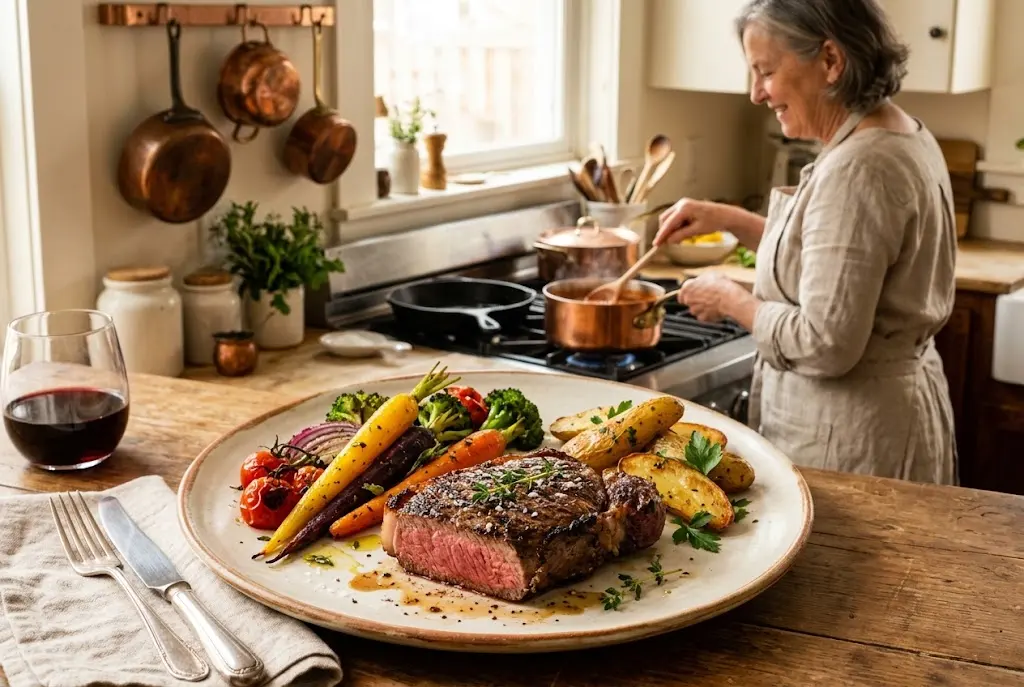
“The only time to eat diet food is while you’re waiting for the steak to cook.” is a humorous quote widely attributed to Julia Child, the American chef, author, and television personality who helped make French cooking more approachable for home cooks.
The line is funny because it turns conventional diet thinking upside down. Instead of treating enjoyable food as something to avoid, it jokes that “diet food” is merely a temporary distraction while the real meal is being prepared.
But there is more to the quote than a love of steak. It raises an interesting question about how we think about food. Does eating well have to mean giving up flavor and enjoyment? Or can nutritious eating and satisfying meals exist together?
A modern interpretation suggests that healthy eating does not need to be built around deprivation. A balanced approach can include nutritious everyday foods while still leaving room for meals that people genuinely enjoy.
What Does the Julia Child Steak Quote Mean?
The humor comes from the contrast between two ideas.
“Diet food” traditionally suggests something light, restrictive, or chosen specifically because a person is trying to lose weight. A steak, on the other hand, represents a hearty and satisfying meal.
Child’s joke reverses the expected relationship between them. Instead of eating the lighter food as the main meal, the joke suggests eating it only while waiting for the steak to finish cooking.
It is obviously an exaggeration rather than serious dietary advice.
The lasting appeal comes from its playful rejection of the idea that enjoying food should automatically make someone feel guilty.
Who Was Julia Child?
Julia Child became one of the most influential figures in American food culture during the second half of the twentieth century.
Through cookbooks and television, she introduced many American home cooks to French culinary techniques and encouraged them to become more confident in the kitchen.
Her approach was practical and enthusiastic. Cooking was something to learn through experience, not something that had to be performed perfectly from the beginning.
That attitude is important when interpreting her food-related quotations. Child’s public image was closely connected with the pleasure of cooking, eating, experimenting, and sharing food.
Why the Quote Is So Memorable
Good humor often takes a familiar idea and gives it an unexpected ending.
People already understand the usual dieting message: choose lighter foods, reduce certain ingredients, and avoid excessive portions. Child’s quotation turns that expectation into a joke by making the “diet food” the thing you eat while waiting for something more satisfying.
The line is short, visual, and easy to imagine. You can picture someone standing in the kitchen, eating a small salad while watching a steak cook on the grill.
That simple mental image is part of what makes the quotation memorable.
What Does “Diet Food” Really Mean?
The expression diet food can be misleading because it makes certain foods sound like they belong exclusively to people following a diet.
In reality, a diet simply refers to the foods and drinks a person regularly consumes. Everyone has a diet, whether they consciously follow a specific eating plan or not.
Some foods are more nutrient-dense than others. Some are higher in calories, sugar, sodium, saturated fat, or other components that people may need to monitor depending on their individual circumstances.
But describing food as simply “good” or “bad” can make nutrition unnecessarily complicated.
A better approach is to look at the overall eating pattern, variety, portions, frequency, and individual nutritional needs.
Does Healthy Eating Have to Be Boring?
No.
Healthy food does not have to mean plain food.
Flavor can come from herbs, spices, garlic, onions, citrus, fresh vegetables, mushrooms, peppers, and many different cooking techniques. Roasting, grilling, sautéing, steaming, and slow cooking can all produce very different flavors from the same basic ingredients.
This is where cooking skills become important.
Someone who knows how to prepare vegetables well is much less likely to think of them as boring “diet food.” The same principle applies to grains, beans, poultry, fish, and other ingredients.
Good cooking can make nutritious food genuinely enjoyable.
Can Steak Be Part of a Balanced Eating Pattern?
For many people, steak can be included in an overall balanced eating pattern.
The important point is that one ingredient does not determine the nutritional quality of an entire diet.
Factors such as portion size, frequency, preparation method, the particular cut, and the foods served alongside the steak all matter.
A meal featuring a moderate portion of steak, vegetables, and another nutrient-rich side is very different from an oversized steak accompanied by several rich side dishes.
People with specific dietary or medical requirements should follow advice from an appropriately qualified healthcare or nutrition professional.
How to Build a More Balanced Steak Dinner
Start With a Reasonable Portion
The amount of food on the plate matters. A satisfying meal does not require an enormous serving of steak.
Add Vegetables
Roasted vegetables, leafy greens, asparagus, peppers, mushrooms, broccoli, tomatoes, or a fresh salad can add color, texture, and nutritional variety.
Choose a Suitable Side
Depending on your preferences, potatoes, beans, whole grains, or other sides can complement a steak meal.
Think About Sauces and Toppings
Butter-heavy sauces and rich toppings can significantly change the overall meal. They can still be enjoyed, but portion and frequency are worth considering.
Pay Attention to How You Cook It
Grilling, broiling, roasting, and pan-searing can produce excellent results without requiring excessive added ingredients.
The Problem With Extreme Diet Culture
One reason Julia Child’s quote continues to resonate is that many people are tired of complicated food rules.
Modern diet culture can encourage people to divide foods into strict categories: clean or unhealthy, allowed or forbidden, good or bad.
This approach can create an unnecessarily negative relationship with eating.
A sustainable approach is usually more flexible. It allows people to make nutritious choices most of the time without believing that one enjoyable meal has ruined everything.
Food does not need to become a moral test.
Healthy Eating Is About Patterns, Not One Meal
One steak dinner does not determine whether someone has a balanced diet.
Likewise, eating one salad does not automatically make an entire eating pattern healthy.
What matters is what a person regularly eats over time.
A varied eating pattern can include vegetables, fruits, whole grains, legumes, protein sources, and other foods that meet individual nutritional needs. It can also include foods chosen primarily because they are enjoyable.
This broader view makes it easier to maintain healthy habits without turning every meal into a source of anxiety.
Why Enjoyment Matters When It Comes to Food
Food has always been about more than nutrition.
People cook for celebrations, prepare family recipes, meet friends for meals, and use food to welcome guests. A meal can become part of a memory because of the people and conversation surrounding it.
That social dimension matters.
As discussed in our article on food as a common ground between people and cultures, sharing food can create opportunities for connection, conversation, and cultural exchange.
Trying to remove all pleasure from eating would ignore an important part of why food matters to people in the first place.
Cooking Skills Are More Valuable Than “Diet Food”
One of the best lessons associated with Julia Child is the value of learning how to cook.
Cooking gives people greater control over what they eat. Instead of depending entirely on packaged foods marketed as “healthy,” you can learn how individual ingredients work together.
You can control seasoning, cooking methods, portion sizes, vegetables, sauces, and other ingredients.
More importantly, cooking gives you variety.
When healthy eating becomes a collection of recipes and techniques rather than a list of restrictions, it can become much easier to maintain.
Why Home Cooking Can Change Your Relationship With Food
Cooking at home also changes how people think about ingredients.
A vegetable is no longer simply “diet food.” It can become a roasted side dish with herbs and garlic. Beans can become a flavorful stew. Whole grains can become part of a satisfying bowl. Fresh ingredients can be combined in countless ways.
This shift is important because it replaces restriction with creativity.
Instead of asking, “What am I not allowed to eat?” you can start asking, “What can I make with these ingredients?”
Moderation Is Different From Deprivation
Moderation does not mean that every food must be eaten in exactly the same amount or frequency.
It means understanding how different foods fit into your overall eating pattern.
A rich steak dinner may be appropriate for one occasion, while a vegetable-focused meal may make more sense on another day. The two choices do not have to compete with each other.
This flexible approach can be easier to maintain than a system based entirely on forbidden foods.
How to Enjoy Food Without Losing Balance
Build Most Meals Around Nutritious Ingredients
Make vegetables, fruits, whole grains, legumes, and appropriate protein sources regular parts of your meals.
Keep Portions in Perspective
Even foods you enjoy can become excessive when portions are consistently very large.
Do Not Treat One Meal as a Failure
An occasional indulgent meal does not need to create guilt or trigger an extreme response.
Learn to Cook Foods You Enjoy
The more cooking techniques you know, the easier it becomes to create meals that are both flavorful and nutritious.
Make Food Social When You Can
Sharing a meal with family or friends can make eating a more meaningful experience rather than simply another task during a busy day.
What the Quote Does Not Mean
It is important not to take the quotation literally.
Julia Child’s humorous statement should not be interpreted as advice to avoid vegetables, ignore nutrition, or eat steak at every meal.
Nor does it mean that “diet food” is inherently bad.
The real target of the joke is the idea that enjoyable food and responsible eating are automatically opposites.
A balanced lifestyle can include both.
Why Julia Child’s Approach Still Feels Modern
Food advice changes constantly, but one principle remains useful: people are more likely to develop sustainable habits when they understand and enjoy what they are doing.
Child encouraged people to enter the kitchen, learn techniques, experiment, and become comfortable with cooking.
That message is especially relevant today, when people have access to an enormous amount of conflicting food information.
Rather than chasing every new diet trend, learning basic cooking skills can provide a more practical foundation.
Food Can Be Both Nourishing and Enjoyable
There is no rule saying that nutritious food has to be unpleasant.
Likewise, enjoying a rich meal does not automatically mean someone has abandoned healthy habits.
The two ideas can coexist.
Good nutrition considers the overall pattern. Good cooking considers flavor and enjoyment. A sustainable lifestyle can make room for both.
Frequently Asked Questions
Who said “The only time to eat diet food is while you’re waiting for the steak to cook”?
The quote is widely attributed to Julia Child. It is associated with her humorous attitude toward food and her appreciation for enjoyable cooking. The precise original context of the quotation is not firmly documented.
Was Julia Child against healthy eating?
No. The quotation is best understood as humor rather than a complete statement of Child’s nutritional philosophy. It makes fun of overly restrictive attitudes toward food.
Can steak be part of healthy eating?
For many people, steak can fit into a balanced eating pattern. Portion size, frequency, preparation, and the foods served alongside it all influence the overall meal.
Does healthy food have to be bland?
No. Herbs, spices, fresh ingredients, and different cooking techniques can make nutritious foods flavorful and satisfying.
What is the main message behind the steak quote?
The joke challenges the idea that healthy eating must mean giving up enjoyable food. A sustainable approach can combine nutritious choices with occasional satisfying meals.
Why is Julia Child famous?
Julia Child helped popularize French cooking techniques among American home cooks through television, cookbooks, and culinary education. Her approachable teaching style made sophisticated cooking feel more accessible.
Final Thoughts
“The only time to eat diet food is while you’re waiting for the steak to cook” remains memorable because it turns a familiar dieting idea into a joke about the pleasure of food.
The quote does not need to be treated as nutritional advice. Its more useful lesson is that healthy eating does not have to mean joyless eating.
Build meals around nutritious foods, learn how to cook them well, pay attention to portions, and leave room for foods you genuinely enjoy.
There is no need to choose between caring about nutrition and loving food. With a balanced approach, both can have a place at the table.