
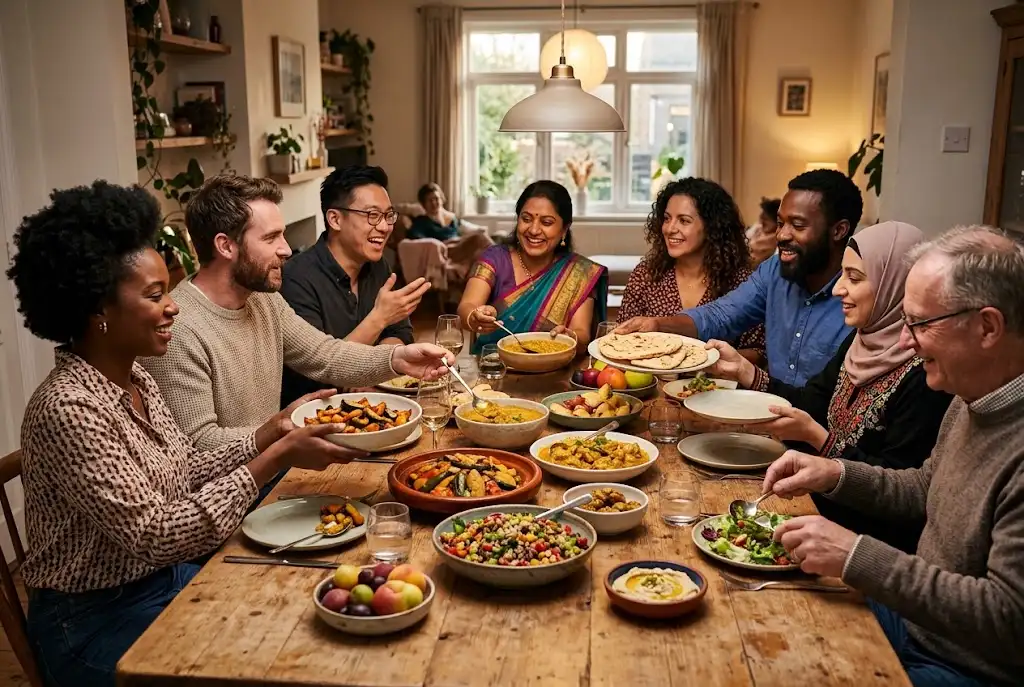
Food Is Our Common Ground, a Universal Experience
“Food is our common ground, a universal experience.” This memorable observation by American chef and food writer James Beard captures something remarkably simple about human life: everyone eats, and food has a unique ability to bring people together. The quotation is attributed to Beard and appears in connection with his 1974 book Beard on Food.
Food is much more than fuel. It can carry memories, express cultural identity, preserve traditions, create friendships, welcome strangers, and turn an ordinary gathering into a meaningful occasion. Even when people disagree about politics, religion, language, or lifestyle, sitting around a table and sharing a meal can create a moment of connection.
That is the deeper meaning behind Beard’s words. Food gives people something they can experience together, regardless of how different their backgrounds may be.
What Does “Food Is Our Common Ground” Mean?
The phrase suggests that eating is one of the experiences shared by virtually every human community. The foods we eat may differ enormously, but the basic act of preparing, serving, sharing, and enjoying food appears across cultures.
A family may gather around a Sunday dinner. Friends may meet for coffee and dessert. Neighbors may exchange homemade dishes. Communities may celebrate holidays through traditional meals. In each situation, food creates an opportunity for people to spend time together.
Food therefore becomes a form of social connection. It provides a reason to gather and a subject that can encourage conversation even between people who have little else in common.
Why Food Is a Universal Human Experience
Food is universal because everyone needs nourishment. But the human relationship with food goes far beyond satisfying hunger.
People cook for celebrations, prepare meals for loved ones, preserve recipes from previous generations, and associate particular dishes with important moments in their lives. Food becomes connected to childhood, family, travel, celebrations, comfort, and identity.
A person might remember a grandmother whenever they smell a particular spice. Someone who moves to another country may cook familiar dishes to maintain a connection with home. Travelers may remember an entire destination through a meal they enjoyed there.
These experiences demonstrate why food can become an emotional language as well as a physical necessity.
Food as a Bridge Between Cultures
One of the most powerful aspects of food is its ability to introduce people to cultures they may not otherwise experience directly.
Trying a traditional dish can lead to questions about the ingredients, cooking methods, history, geography, and customs behind it. A meal can become an informal introduction to another community’s way of life.
For example, someone eating a dish from another country may learn why particular spices are important, how the recipe developed, or when the dish is traditionally served. The experience becomes more than tasting something unfamiliar; it becomes an opportunity for curiosity and cultural appreciation.
Food does not erase cultural differences. Instead, it can make those differences easier to appreciate through a shared human experience.
Meals Create Opportunities for Conversation
A table provides a natural setting for conversation.
People often talk while preparing food, waiting for a meal, eating together, or cleaning up afterward. These ordinary moments can become opportunities to exchange stories, discuss experiences, laugh, and strengthen relationships.
This is one reason restaurants, family kitchens, community gatherings, and food festivals can become important social spaces. The food provides the occasion, but conversation creates the connection.
A shared meal does not guarantee agreement or friendship, but it can create an environment in which people have the opportunity to understand one another.
Food and Family Traditions
Some of the strongest food memories are created at home.
Family recipes are often passed from one generation to another. The written recipe may be simple, but the story surrounding it can be complex. A particular dish may have been prepared for birthdays, holidays, weddings, religious celebrations, or ordinary family dinners.
When younger generations learn these recipes, they are also learning something about their family’s history.
Ingredients can change and cooking techniques can evolve, but the emotional connection may remain. This is one reason people often describe certain foods as “tasting like home.”
Food Can Preserve Cultural Identity
Food is an important part of cultural identity because recipes often reflect geography, history, available ingredients, migration, and local traditions.
A coastal community may develop a cuisine centered around seafood. A region with a particular climate may rely heavily on crops that grow there. Trade and migration can introduce new ingredients and techniques that eventually become part of local cooking.
Over generations, these influences produce distinctive culinary traditions.
Food can therefore serve as a living record of cultural change. A single dish may contain traces of multiple generations of history.
The Emotional Power of Food
Food is closely connected with emotion and memory.
A familiar smell can instantly remind someone of childhood. A favorite dessert can bring back memories of a celebration. A meal prepared by someone we love can provide comfort during a difficult period.
This connection explains why food memories can remain vivid for many years.
Eating is a sensory experience involving taste, smell, texture, appearance, and temperature. Because several senses are involved simultaneously, meals can become strongly associated with particular people and places.
Sharing Food Is an Act of Hospitality
Offering food to another person is one of the simplest forms of hospitality.
When someone says, “Have something to eat,” the invitation can communicate care without requiring a complicated explanation. A host may prepare a meal for a guest, a neighbor may bring food to someone in need, or a friend may share a favorite dish.
The gesture matters even when the food itself is inexpensive.
Hospitality is often about making another person feel welcome, and food provides a practical and meaningful way to do that.
Food Brings People Together During Celebrations
Many celebrations are organized around meals.
Birthdays may include cakes and family dinners. Weddings often involve elaborate meals. Holidays frequently feature traditional dishes that families prepare year after year.
Community festivals can also use food as a way to celebrate local identity and invite people to participate.
These traditions demonstrate how food can turn an event into a shared experience. People may remember the conversation, atmosphere, and people around the table just as much as the food itself.
Food and Friendship
Friendships often develop around casual meals.
People meet for breakfast, lunch, coffee, dinner, or a quick snack. Sharing food gives friends time to talk without the pressure of a formal setting.
Even a simple meal can become memorable when it is connected with good conversation.
This is particularly important in busy modern life. When schedules are crowded, sitting down for a meal can create a deliberate pause in which people can focus on one another rather than on work, notifications, and other distractions.
Food Can Encourage Curiosity
Trying unfamiliar food requires a small act of openness.
You may not know whether you will enjoy a particular ingredient or cooking style. You may encounter combinations that are unfamiliar to you. Yet tasting something new can lead to curiosity about where it came from and how it is prepared.
That curiosity can extend beyond food.
Learning about another cuisine may encourage someone to learn about its language, history, geography, music, or traditions. A meal can therefore become the starting point for a much broader cultural experience.
Food Is Also Connected to Community
Food systems connect individuals to farmers, producers, markets, restaurants, workers, transportation networks, and local businesses.
A meal may seem like a private experience, but producing it often involves an extensive network of people and resources.
Understanding that connection can change the way people think about food. What appears on a plate represents a journey from production and processing to transportation, preparation, and consumption.
Educational food-system materials similarly emphasize that food connects personal health with economic, social, and environmental systems.
Food Can Connect People Across Generations
Food provides one of the easiest ways for older and younger generations to share experiences.
A grandparent can teach a child how to prepare a traditional dish. Parents can introduce children to foods they grew up eating. Young people can then adapt those recipes using new ingredients or techniques.
This creates continuity without requiring traditions to remain frozen in time.
A recipe can survive while changing slightly with each generation. The ingredients may be different, but the act of preparing and sharing the meal remains familiar.
Food and Memory
Some memories are attached to particular meals more strongly than to photographs or objects.
The smell of freshly baked bread can bring back a childhood kitchen. A particular soup can remind someone of being cared for while sick. A street-food dish can recall a memorable trip.
Food becomes a kind of personal archive.
This is why taste memories can be so powerful. They connect sensory experience with people, places, and moments that may otherwise feel distant.
Food Does Not Make Everyone the Same
Calling food a universal experience does not mean everyone eats the same foods or has the same relationship with meals.
Dietary restrictions, allergies, religious practices, economic circumstances, health considerations, cultural traditions, and personal preferences all influence what people eat.
The universality lies in the human importance of food, not in a universal menu.
This distinction matters because respecting differences is part of what makes food such an effective way to connect cultures. Sharing a meal does not require everyone at the table to have identical tastes.
How to Use Food to Build Stronger Connections
Invite Someone to Share a Meal
A simple invitation can create an opportunity for conversation and connection.
Cook a Family Recipe
Preparing an older family recipe can preserve memories while giving younger family members an opportunity to learn about their heritage.
Try Another Culture’s Cuisine
Explore unfamiliar dishes with curiosity and respect. Learning about the background of a dish can make the experience more meaningful.
Ask About Food Traditions
People often enjoy explaining what they ate growing up, which foods are important to their families, and how particular dishes are prepared.
Slow Down During Meals
Whenever possible, put away unnecessary distractions and give the people at the table your attention. The social experience can be as valuable as the food.
Food as a Language Without Words
Food can communicate feelings without requiring a speech.
Cooking for someone can express affection. Preparing a meal for a guest can communicate hospitality. Sharing the last piece of something can demonstrate generosity. Bringing food to someone who is struggling can communicate support.
These gestures work because people understand the emotional meaning behind them.
Food may therefore function as a kind of nonverbal language. It can say, “Welcome,” “Thank you,” “I remember you,” or simply, “Sit down and eat with me.”
Why James Beard’s Quote Still Matters
James Beard’s statement remains relevant because food continues to occupy a unique position between necessity and pleasure.
The quotation is documented in connection with Beard’s Beard on Food, originally published in 1974. A later quotation reference reproduces the line alongside the book attribution, reinforcing its connection to Beard’s writing about food and his readers’ shared experiences.
Modern food culture may look very different from the culinary world Beard knew, but the central idea remains familiar. People still gather around tables, exchange recipes, explore cuisines, celebrate with meals, and use food to express care.
Technology has changed how people discover restaurants and recipes, but it has not removed the fundamental human experience of eating together.
Frequently Asked Questions
Who said “Food is our common ground, a universal experience”?
The quote is attributed to James Beard, the influential American chef, cookbook author, teacher, and food writer. Sources connect the quotation with his book Beard on Food.
What does “food is our common ground” mean?
It means that food provides a shared human experience that can bring people together despite differences in culture, background, language, or personal beliefs.
How does food bring cultures together?
Food introduces people to different ingredients, cooking techniques, traditions, histories, and customs. Sharing and discussing meals can encourage curiosity and cultural understanding.
Why is food important to cultural identity?
Recipes and cooking traditions often reflect a community’s history, geography, available ingredients, family traditions, and cultural values. Passing those traditions between generations helps preserve identity.
Can food really bring people together?
Food cannot eliminate every disagreement, but sharing a meal can create opportunities for conversation, hospitality, cooperation, and meaningful social interaction.
Why are food memories so powerful?
Food involves several senses, especially taste and smell, which can become strongly associated with people, places, and experiences. As a result, particular dishes can trigger vivid memories.
Final Thoughts
“Food is our common ground, a universal experience” remains a powerful reminder that something as ordinary as eating can have extraordinary social meaning.
Food nourishes us, but it also tells stories. It carries culture from one generation to another, introduces us to unfamiliar traditions, creates opportunities for hospitality, and gives friends and families a reason to sit together.
The dishes on our tables may be completely different, but the human experience behind them is remarkably similar. We gather, prepare, share, taste, remember, and connect.
Perhaps that is what James Beard’s words capture so well: food does not require us to be identical in order to share something meaningful. It simply gives us a common table.