
School boards decide what children learn, how tax dollars are spent, and who leads the district — yet most parents never attend a meeting. The Medina City Schools Board of Education in Medina, Ohio, is a typical example of how local school governance works in the United States, and understanding its role is the fastest way for families to have a real voice in local education. This guide explains what the board does, how it is structured, and how you can get involved.
What Is the Medina City Schools Board of Education?
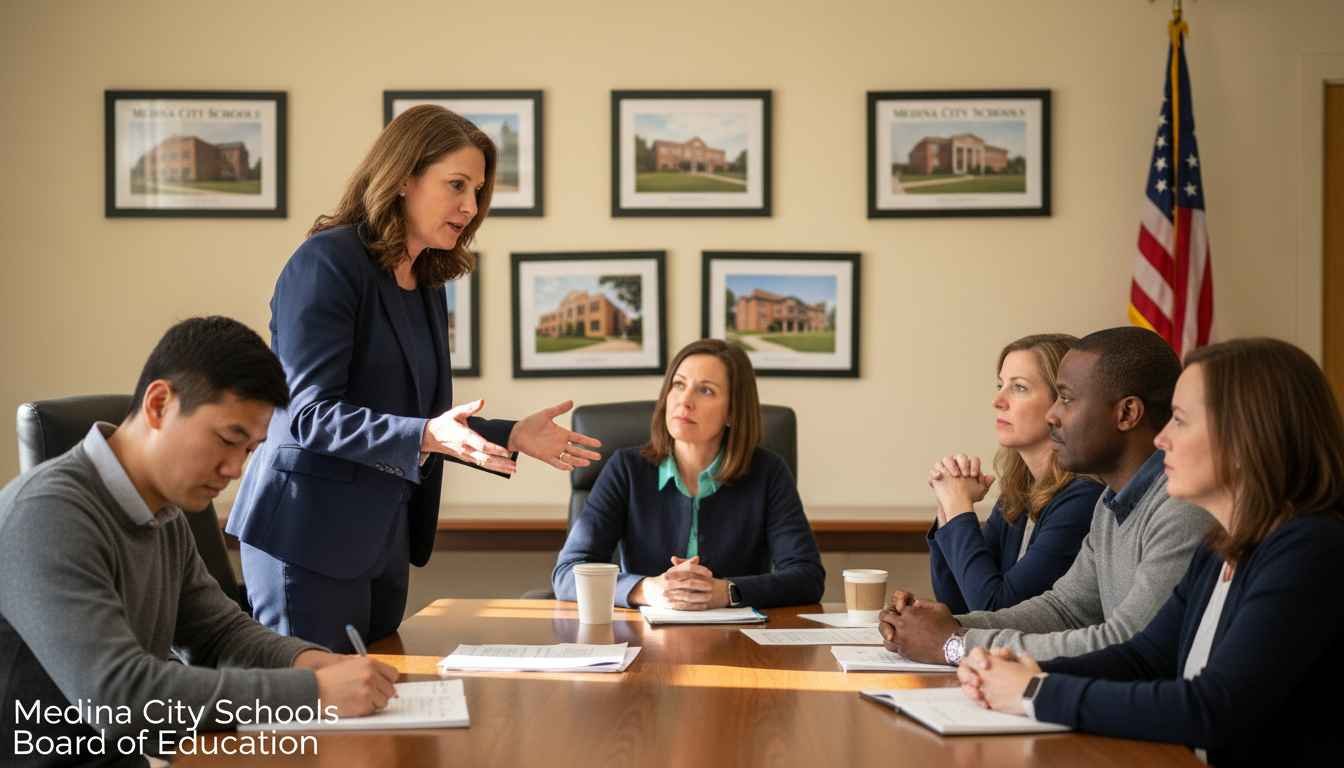
The Medina City Schools Board of Education is the elected governing body for the Medina City School District in Medina, Ohio — a district serving several thousand students across elementary, middle, and high schools. Like school boards across Ohio, it sets district policy, approves budgets, and hires the superintendent who runs the district day to day. If a decision affects your child’s school — from curriculum changes to bus routes — this board almost certainly had a hand in it.
Board Structure: Who Serves and How They Are Chosen
The Medina board is made up of elected members who serve four-year terms, chosen by voters in the district during regular local elections. Terms are typically staggered so the whole board never turns over at once. Members are local residents — often parents, former educators, or business and community leaders — who serve because they are invested in the community’s schools. The board elects its own president and vice president each year to lead meetings.
What the Board Actually Decides
The board’s authority covers the big-picture direction of the district:
- Budget and finance: approving the annual budget, tax levy decisions, and spending on facilities, staff, and programs.
- Policy and curriculum: adopting district policies and approving major curriculum changes, graduation requirements, and academic programs.
- Personnel: hiring and evaluating the superintendent, and approving employment contracts and staffing levels.
- Facilities: decisions on building construction, renovations, and long-term maintenance.
- Compliance: ensuring the district follows federal and Ohio state education law.
Day-to-day operations — running schools, teaching, discipline — belong to the superintendent and building principals. The board governs; it does not manage.
Board Meetings: When and How to Attend
Medina’s board holds regular public meetings, typically on a set monthly schedule published on the district’s website, with agendas posted in advance. Meetings include financial reports, policy votes, staffing updates, and a public-comment period where residents can address the board directly. Attending even one meeting a year gives you a clearer picture of district priorities than any rumour mill — and speaking up during public comment is the most direct way to be heard. Meeting minutes and recordings are usually published online for those who cannot attend.
Understanding School Funding: Where the Money Comes From
One of the board’s hardest jobs is money. Ohio school districts are funded by a mix of local property taxes, state aid, and federal funds. Local levies — voted on by residents — often make up a large share, which is why boards regularly put levies on the ballot and why campaigns around them get heated. State funding formulas attempt to even out differences between wealthy and less-wealthy districts, but the formulas change, and boards must plan around uncertainty. When you hear a board debating “the levy”, this is the conversation: how much to ask taxpayers for, and what it will fund.
Budgets, in turn, drive almost everything else: the number of teachers hired, which buildings get repaired, whether the arts programme survives. Reading the district’s annual budget summary — usually published online — is the single most informative document a parent can open.
Key Issues the Board Wrestles With
School boards everywhere face a familiar set of pressures, and Medina is no exception:
- Funding: balancing taxpayer expectations against the cost of staff, buildings, and programs — in Ohio, state funding formulas and local levies are constant topics.
- Curriculum: decisions on STEM programs, advanced placement offerings, and reading initiatives shape what students learn.
- Staffing: teacher recruitment and retention, especially in hard-to-fill subjects, directly affects class sizes and quality.
- Student wellbeing: mental-health services, school safety, and special-education support are growing agenda items nationwide.
Disagreements are normal — and public. Watching how the board handles them tells you a lot about the district’s direction.
How Parents and Residents Can Get Involved
You do not need to run for office to make a difference. Practical steps include:
- Attend meetings — even occasionally — and read the agendas and minutes.
- Contact board members with specific concerns; email addresses are published on the district site.
- Join parent-teacher groups at your child’s school, which often feed issues up to the board.
- Vote in school-board elections, which are frequently decided by small margins.
- Volunteer for district committees on topics like facilities or curriculum review.
Supporting your child’s learning at home matters too — these science-backed study tips are a good place to start, and understanding how schools plan teaching from year to year (see vertical alignment in education) helps you ask better questions at meetings.
Why It Matters
Board decisions touch everything from your child’s classroom to your property tax bill. The good news is that local school governance is the most accessible level of government there is: meetings are open, members are neighbours, and a single engaged parent can genuinely change a conversation. If you live in the Medina district, knowing how the board works is not civic trivia — it is practical power over your child’s education.