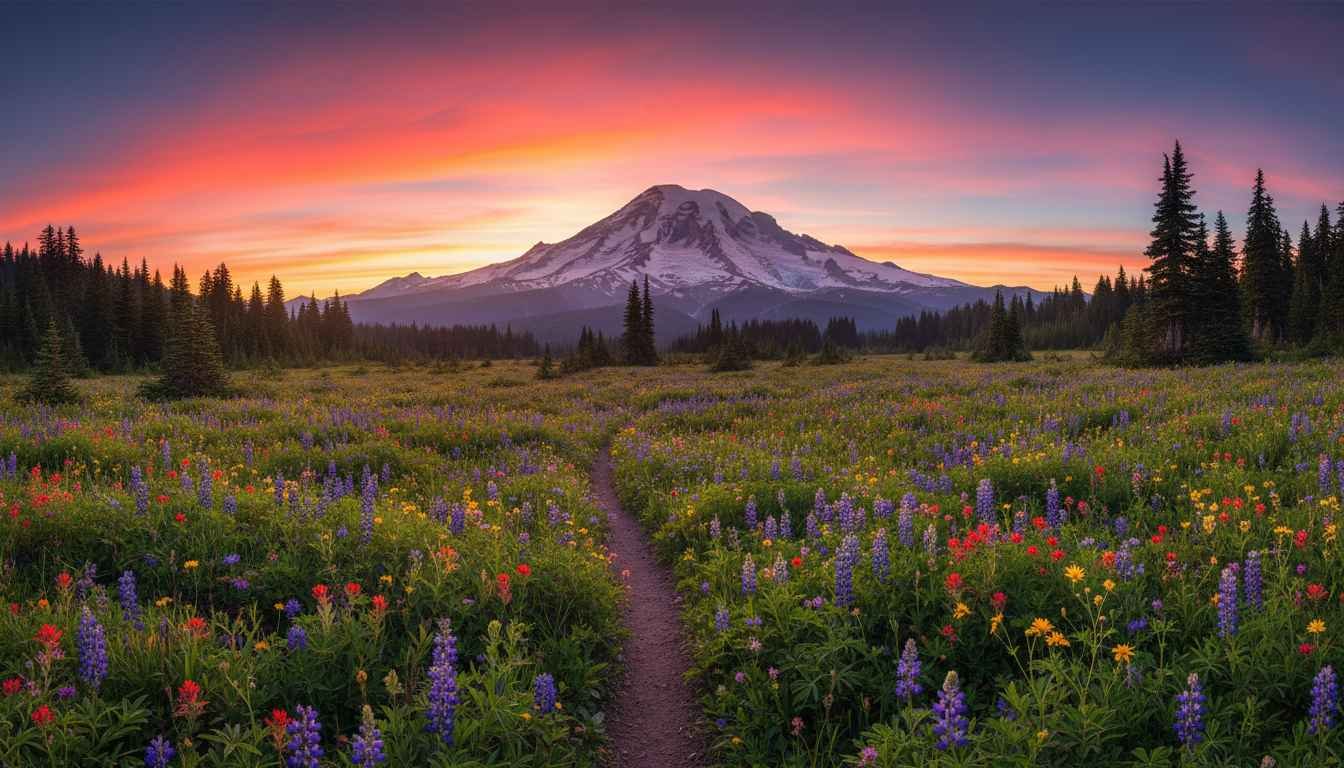
Mount Rainier dominates the skyline of western Washington, its glacier-covered summit rising 14,410 feet above the surrounding valleys. The national park that protects it packs an remarkable range of scenery into a compact area: subalpine meadows, old-growth forest, waterfalls, alpine lakes, and some of the most rewarding day hikes in the Pacific Northwest. Knowing which areas to prioritize makes all the difference, especially since the park’s different regions each have their own character and season.
This guide covers the best places to visit in Mt Rainier, from the famous viewpoints at Paradise and Sunrise to quieter corners like Reflection Lakes and Longmire. Whether you are planning a single day trip or a multi-day stay, these are the areas worth building your visit around.
Paradise
Paradise is the park’s most visited area, and for good reason. Sitting at 5,400 feet on the mountain’s south slope, it offers the closest and most dramatic views of Rainier’s summit, along with the Henry M. Jackson Visitor Center, where exhibits explain the park’s geology, glaciers, and wildlife. Rangers lead programs here through the summer, and it is the best place in the park to get oriented.
The area’s trail network suits every ability level. The Skyline Trail climbs through wildflower meadows toward Panorama Point, delivering sweeping views of the mountain, the Tatoosh Range, and on clear days Mount Adams and Mount St. Helens. Shorter options like the Nisqually Vista and Alta Vista trails give rewarding views without a full-day commitment. Late July and August bring the famous wildflower bloom, when the meadows turn purple, white, and gold. Because Paradise is so popular, arriving before mid-morning is the best way to find parking and enjoy the trails before the crowds.
Sunrise
On the mountain’s northeast side, Sunrise is the highest point in the park reachable by car, at about 6,400 feet. It faces Rainier’s northeastern glaciers and the vast sweep of the Emmons Glacier, the largest glacier in the contiguous United States. The setting feels wilder and more open than Paradise, with broad meadows and big-sky views.
The Sunrise Point overlook, just below the main area, is a classic photo stop. From the Sunrise parking area, the Mount Fremont Lookout trail climbs to a historic fire lookout with a straight-on view of the summit, while the trail to Emmons Vista looks directly across at the glacier. Wildlife is a highlight here: marmots, mountain goats, and black bears are frequently spotted in the meadows. The road to Sunrise opens later than the Paradise road and closes earlier in the fall, so check current conditions before planning a late-season visit.
Reflection Lakes
For the iconic mirror-image photograph of Mount Rainier, head to Reflection Lakes, a pair of small lakes along the road between Paradise and Stevens Canyon. On calm mornings the mountain reflects perfectly in the still water, framed by wildflowers and subalpine firs.
The best reflections appear early, before the wind picks up, so this is a sunrise stop rather than a midday one. A short, easy trail loops around the lakes, making it accessible for families and photographers of all levels. Swimming and wading are not allowed, which keeps the water clear and the reflections pristine. Pair it with a stop at nearby Narada Falls, a short walk from its own parking area, for a classic waterfall view on the same drive.
Longmire
Longmire, near the park’s southwest entrance, is where Mount Rainier National Park began. The historic district holds the Longmire Museum, with exhibits on the park’s early days, and the National Park Inn, a rustic lodge that operates year-round and makes a comfortable base for exploring the area.
The Trail of the Shadows, an easy loop starting near the museum, passes mineral springs, a historic cabin replica, and old-growth forest. Longer trails from Longmire climb into the backcountry, including the route toward Indian Henry’s Hunting Ground. In winter, when the higher roads close, Longmire becomes the park’s main hub, with snowshoeing and cross-country skiing replacing summer hiking.
Tipsoo Lake and Chinook Pass
The area around Chinook Pass, on the park’s east side, is one of Rainier’s most scenic drives. Tipsoo Lake sits right beside the highway, its shoreline dotted with subalpine wildflowers and offering framed views of the mountain. The Naches Peak Loop, an easy 3-mile trail starting at the pass, circles a small peak with constant views of Rainier, alpine lakes, and meadows.
This side of the park sees fewer visitors than Paradise but delivers comparable scenery, and the drive over the pass itself is worth the trip. Like Sunrise, the Chinook Pass road is seasonal, generally open from late spring or early summer through October depending on snow.
Best Time to Visit Mount Rainier
Late July through September is the prime window for most visitors. By then the snow has melted from the high trails, the wildflowers are at their peak, and all park roads are typically open. August offers the most reliable weather, while September brings thinner crowds and the first hints of fall color in the meadows.
June can be lovely at lower elevations but expect snow on higher trails early in the month. October brings autumn color and quiet trails, though storms can close the higher roads with little notice. Winter visits center on Longmire, where the landscape trades wildflowers for deep snow and a completely different kind of beauty.
Where to Stay Near Mt Rainier
Inside the park, the National Park Inn at Longmire stays open year-round, while Paradise Inn operates seasonally and puts you steps from the best trails. Both book up far in advance for summer weekends. The park’s campgrounds, including Cougar Rock and Ohanapecosh, offer a more immersive option for those who plan ahead.
Outside the park, the gateway towns of Ashford (southwest entrance) and Enumclaw (northwest) have cabins, lodges, and vacation rentals. Staying in Ashford keeps you close to Longmire and Paradise, while Enumclaw works well for the Sunrise side.
Tips for Visiting Mt Rainier
The park has used timed-entry reservations for the Paradise and Sunrise corridors during recent summers, so check the National Park Service website for the current year’s requirements before your trip. Weather changes fast at elevation: pack layers, rain gear, and sun protection even on a clear morning. There are no gas stations inside the park, so fuel up before entering. Give wildlife space, especially bears and mountain goats, and store food properly at campgrounds. Finally, build flexibility into your itinerary. The mountain famously hides behind clouds, and visitors who allow an extra day greatly increase their chances of seeing it.
FAQ: Visiting Mt Rainier
How many days do you need in Mt Rainier National Park?
Two to three days is ideal. One day covers Paradise or Sunrise thoroughly, while a second day lets you explore the other side of the mountain, Reflection Lakes, or Longmire. Add a third day for a longer hike or a slower pace.
Is Mt Rainier suitable for families with kids?
Yes. Reflection Lakes, the Trail of the Shadows at Longmire, and the shorter trails at Paradise are all manageable for children. The visitor centers have junior ranger programs, and the wildlife viewing keeps younger hikers engaged.
Can you see the mountain from Seattle?
On clear days Mount Rainier is visible from Seattle, about 60 miles to the northwest, but the park itself is roughly a two-hour drive from the city, making it a feasible but full day trip.
Final Thoughts
The best places to visit in Mt Rainier each show a different side of the mountain, from the flower-filled meadows of Paradise to the high, open country at Sunrise. Pick one area as your base, give yourself time for the weather to cooperate, and you will understand why this single peak has drawn travelers for more than a century.