
Ireland’s west coast is where the Emerald Isle lives up to every postcard you’ve seen — and then exceeds it. Along the Wild Atlantic Way, one of the world’s longest defined coastal driving routes, sheer cliffs drop into the ocean, ancient stone forts cling to windswept islands, and small towns pulse with live traditional music long after midnight. The west is wilder and more Gaelic than Dublin’s polished east, and it rewards travelers who slow down. If you’re searching for the west coast of Ireland places to visit, start with these essential stops, which work whether you have a long weekend or a full week to wander.
Cliffs of Moher
Rising up to 214 meters above the Atlantic, the Cliffs of Moher stretch for eight kilometers along the County Clare coastline and remain Ireland’s single most visited natural attraction. Arrive early or stay late to walk the cliff path from Doolin in softer light and thinner crowds, when the rock faces glow and seabirds wheel below the trail. The visitor center is built into the hillside to preserve the landscape, and its exhibits explain the cliffs’ 320-million-year geology. On a clear day you can see the Aran Islands, Galway Bay, and as far as the mountains of Connemara. For a wider Irish itinerary, pair this stop with our roundup of the best places in Ireland to visit.
Galway City
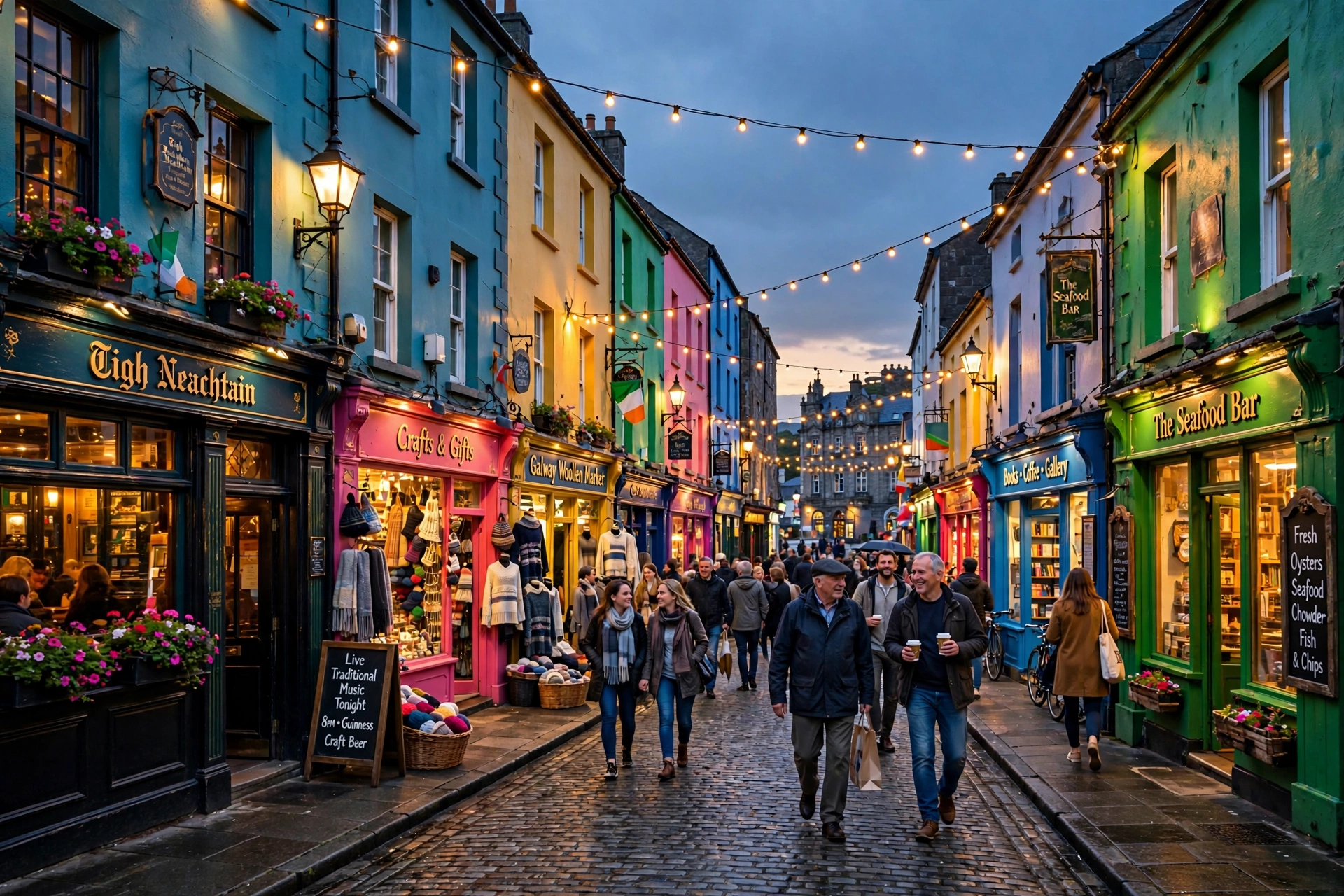
Galway is the beating cultural heart of the west — compact, walkable, and impossible to rush. Spend your time on Shop Street and the Latin Quarter, where buskers line the pedestrian lanes, traditional sessions spill out of historic pubs, and the Spanish Arch overlooks the River Corrib. The Saturday market in Church Lane is ideal for Irish crafts and local food, while the city’s restaurants serve some of the country’s best seafood. Galway makes a perfect base: it’s within easy reach of Connemara, the Burren, and the Aran Islands.
Aran Islands
A short ferry ride from Doolin or Rossaveel brings you to Inishmore, Inishmaan, and Inisheer — three limestone islands where Irish (Gaelic) is still the everyday language. Rent a bicycle on Inishmore and ride out to Dún Aonghasa, a Bronze Age fort perched on a 100-meter cliff edge with nothing between you and the Atlantic. The Wormhole, a rectangular natural rock pool on the island’s shore, is one of Ireland’s most photographed natural features. Many day-trippers skip the smaller islands, but Inisheer has a charming shipwreck beach and a slower pace worth an overnight stay.
The Burren
Just south of Galway Bay, the Burren looks like a moonscape dropped into County Clare — 250 square kilometers of cracked limestone pavement where rare orchids bloom in the rock cracks each spring. It holds more than seventy wedge tombs, including the 5,800-year-old Poulnabrone dolmen. Walk the Burren Way or take a guided geology walk to understand how this harsh terrain supports both Arctic and Mediterranean plants side by side. Stop in Lisdoonvarna or a village café nearby for a taste of the region before continuing along the coast.
Ring of Kerry
On the Iveragh Peninsula in County Kerry, the 179-kilometer Ring of Kerry drive loops past some of Ireland’s grandest scenery. Drive clockwise to avoid the tour-bus flow, and make key stops at the Gap of Dunloe, Muckross House and Gardens in Killarney National Park, and the Skellig Ring viewpoint, from which the Skellig Michael monastic island is visible on clear days. The charming towns of Kenmare and Sneem are worth lingering in. Allow a full day, and don’t rush the viewpoints — weather changes fast, and a clearing after rain often brings the most dramatic light.
Dingle Peninsula
Dingle Town is one of Ireland’s loveliest small towns, with a working fishing harbor, colorful shopfronts, and a famous concentration of traditional pubs. The Slea Head Drive, a 30-mile loop from the town, packs an extraordinary density of sights into a short drive: Dunbeg Fort, the Gallarus Oratory (a 1,200-year-old dry-stone church), beehive huts, and Coumeenoole Beach with its views of the Blasket Islands. Dingle is also Ireland’s seafood capital in miniature — try the local crab and chowder.
Connemara and Kylemore Abbey
North of Galway, Connemara is Ireland’s wild frontier: boglands, mirror-still lakes, and the Twelve Bens mountain range under enormous skies. Connemara National Park near Letterfrack offers well-marked trails from easy walks to the Diamond Hill climb. Kylemore Abbey, a neo-Gothic castle turned Benedictine monastery, sits on the shore of Lough Pollacapall with a restored Victorian walled garden — it draws the crowds, so arrive at opening time for a peaceful visit. Roundstone and Clifden are characterful villages for an overnight stop.
Practical Tips for Traveling Ireland’s West Coast
A few practical notes make the trip smoother. Rent a car if you can — public transport reaches the main towns but not the cliff viewpoints and peninsulas; drive on the left and expect narrow roads. Book accommodation in summer well ahead, especially in Dingle and Doolin. Pack for four seasons in one day: waterproofs, layers, and sturdy shoes are essential whatever the forecast says. Leave room in your itinerary for detours — the west coast rewards spontaneity, whether that’s a beach you spot from the road or a music session a local recommends. If you’re planning a wider European trip around scenic coastal views and cultural sites, our guide to places to visit in Santorini offers another perspective on island travel. And those continuing north of the border will find our top ten places to visit in Northern Ireland useful for extending the journey.
Conclusion
The west coast of Ireland isn’t a checklist — it’s a landscape that asks you to slow down. Pick three or four of these destinations, give yourself time between stops, and let the weather and the music set the pace. You’ll leave understanding why the Irish call this coastline the real heart of the country.