
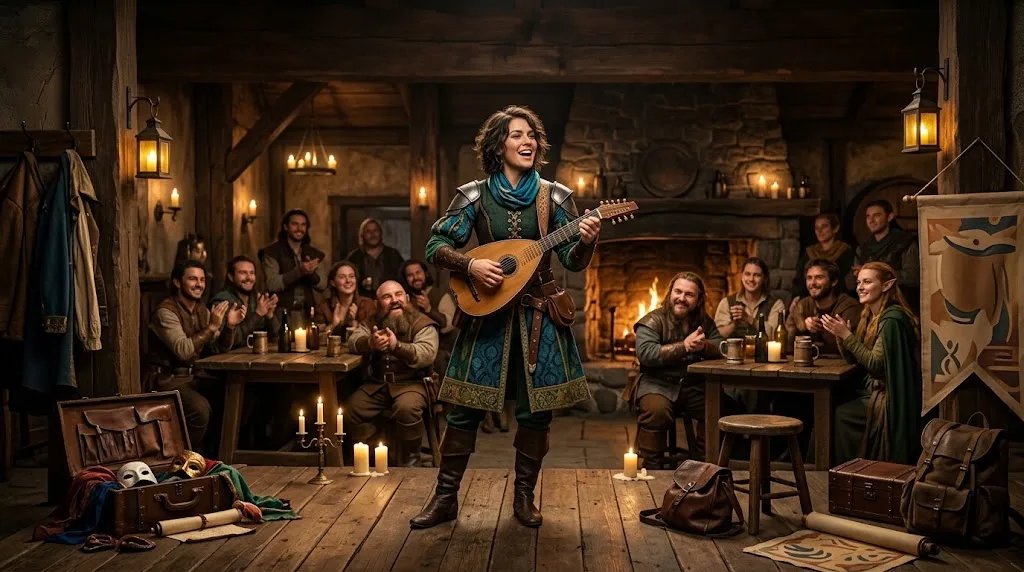
More than a simple description of a character’s former occupation, the Entertainer background gives you a natural reason to travel, meet people, perform in unfamiliar places, and build a reputation. It can work especially well for charismatic characters, but its flexibility also makes it useful for many different classes and character concepts.
What Is the Entertainer Background in 5e?
In D&D 5e, the Entertainer is a character background built around performance and life in front of an audience. Your character may have earned a living through music, dance, acting, comedy, storytelling, juggling, or another performance discipline.
The background is particularly useful for players who want their character to have a strong connection to entertainment, traveling performances, theaters, taverns, festivals, carnivals, or other social settings.
An Entertainer can therefore be much more than a character who simply plays an instrument. You can create a performer whose art is central to their personality, history, relationships, ambitions, and reason for becoming an adventurer.
Entertainer 5e Proficiencies
The classic 5e Entertainer background provides two important skill proficiencies:
- Acrobatics
- Performance
It also provides proficiency with a disguise kit and one type of musical instrument. These proficiencies reinforce the background’s focus on physical performance, stagecraft, music, and entertaining an audience.
Acrobatics
Acrobatics can represent the physical side of an entertainer’s career. A dancer, tumbler, circus performer, or stage acrobat may naturally rely on this skill.
Beyond performance, Acrobatics can become useful during adventures. It can support situations involving balance, maintaining footing, or performing physically demanding movements where the Dungeon Master calls for an appropriate check.
Performance
Performance is the defining skill of the Entertainer background. It represents your character’s ability to captivate an audience through music, acting, storytelling, dance, comedy, or another form of artistic expression.
This proficiency can also create excellent roleplaying opportunities. A character with strong Performance skills can entertain a tavern crowd, impress an important guest, earn attention at a festival, or establish a reputation in a new settlement.
Entertainer 5e Tool Proficiencies
The classic Entertainer background includes proficiency with a disguise kit and one musical instrument.
The musical instrument gives your character a specific artistic specialty. You might choose a lute, flute, drum, lyre, or another instrument that fits the character’s story and campaign setting.
The disguise kit can also add another layer to roleplaying. An actor, traveling performer, comedian, spy-like stage personality, or theatrical adventurer may find creative uses for costumes and disguises.
Entertainer 5e Starting Equipment
The classic version of the Entertainer background includes equipment that reflects a performer’s lifestyle. This includes a musical instrument of your choice, the favor of an admirer, costume clothes, and a pouch containing gold.
These items are more than simple inventory choices. They can become useful storytelling tools during a campaign.
The Musical Instrument
Your instrument can become one of your character’s signature possessions. Instead of treating it as ordinary equipment, consider giving it a history.
Perhaps it was given to your character by a mentor. Maybe it belonged to a former member of your troupe. It could even represent the first major success of your character’s performing career.
The Favor of an Admirer
The favor of an admirer is another opportunity for roleplaying. It could represent an old relationship, an emotional connection, or an unusual story from your character’s time on the road.
Ask yourself who the admirer was and why the character kept the item. The answer can create a memorable NPC or even provide a future adventure hook.
Costume Clothes
Costume clothes reinforce the character’s identity as a performer. They can also help distinguish your character visually from the rest of the adventuring party.
Entertainer Routines in 5e
One of the most useful parts of the Entertainer background is its flexibility. Your character can specialize in one or more entertainment routines that define what they actually do on stage.
The classic Entertainer background presents a range of possible specialties, including:
- Actor
- Dancer
- Fire-eater
- Jester
- Juggler
- Instrumentalist
- Poet
- Singer
- Storyteller
- Tumbler
You can choose routines that fit your character rather than simply selecting an option because it sounds mechanically useful.
Actor
An actor can make an excellent Entertainer for a character who specializes in dramatic performances, impersonation, theater, or character work.
Dancer
A dancer can emphasize movement, rhythm, physical expression, and stage presence. This concept can work especially well for agile characters.
Jester
A jester can bring comedy, satire, jokes, and mischief into the campaign. This type of Entertainer can easily become the party member who breaks tension during difficult moments.
Juggler
A juggler gives you a visually distinctive performance style. Balls, knives, unusual objects, or improvised props can all become part of the character’s performance identity, subject to the campaign’s rules and tone.
Instrumentalist
An instrumentalist is ideal for players who want music to be central to their character’s history. The instrument can become a recognizable part of the character’s identity.
Poet or Storyteller
Poets and storytellers can create characters whose primary talent is language rather than physical performance. They can preserve legends, entertain crowds, spread rumors, or use stories to influence social situations.
What Is By Popular Demand in 5e?
By Popular Demand is the signature background feature associated with the classic Entertainer. It gives the character a practical connection to places where performers are welcomed.
The basic idea is simple: your character can usually find somewhere to perform, such as an inn, tavern, theater, circus, or noble court. In exchange for performing, the character can receive modest or comfortable lodging and food depending on the venue.
This feature can be particularly useful for roleplaying because it gives the Dungeon Master an easy way to connect the character’s performance career with the wider campaign world.
How By Popular Demand Can Shape a Campaign
By Popular Demand does not have to be treated only as a way to avoid paying for an inn. It can become a recurring narrative tool.
Your character might perform in a crowded tavern and hear a rumor from the audience. A theater owner might introduce the party to an influential NPC. A noble household might request a private performance. A traveling troupe might recognize the character from a previous town.
These situations can turn a simple background feature into a source of quests, relationships, information, and unexpected complications.
Best Classes for an Entertainer 5e Character
The Entertainer background can work with many D&D classes. You do not have to play a Bard simply because the character is a performer.
Bard
The Bard is the most obvious thematic match. A Bard already combines performance, social interaction, creativity, and adventuring, making the Entertainer background a natural fit.
Rogue
A Rogue with an Entertainer background can be an actor, juggler, stage performer, acrobat, or traveling trickster. The disguise kit can also fit naturally into a character built around deception or infiltration.
Monk
A Monk could have developed a performance style based on dance, acrobatics, martial demonstrations, or disciplined movement.
Fighter
A Fighter could have worked as a gladiatorial performer or combat entertainer before becoming an adventurer. This creates an interesting contrast between public spectacle and serious battlefield experience.
Wizard or Sorcerer
A spellcaster can turn magical talent into a performance career. Illusions, dramatic effects, theatrical presentations, and magical demonstrations can all contribute to an entertaining character concept.
Entertainer 5e Character Ideas
The best Entertainer characters usually have a clear reason for performing and a personal history connected to their craft.
The Traveling Musician
This character travels from settlement to settlement, performing music and collecting stories along the way. Their adventuring career may simply be an extension of their desire to see new places.
The Former Theater Star
A once-famous actor could leave the stage after a scandal, rivalry, failed production, or personal tragedy. Adventuring then becomes a completely new chapter.
The Circus Acrobat
This character grew up traveling with a circus or performance troupe. They may be comfortable around crowds but unfamiliar with ordinary settled life.
The Traveling Storyteller
A storyteller can use tales and legends as a way to connect with people. Their performances might also give them access to rumors and local history.
The Comedic Jester
A jester can use humor to disarm tense situations, entertain allies, and annoy enemies. The character can be funny without becoming one-dimensional by giving them a serious motivation beneath the jokes.
How to Roleplay an Entertainer
Performance should influence more than your character’s occupation. Think about how being an entertainer affects the way the character behaves when they are not on stage.
- Does your character enjoy being the center of attention?
- Are they comfortable speaking to strangers?
- Do they become nervous before a performance?
- Do they collect stories from every town they visit?
- Do they have rivals from their former troupe?
- Do they want fame, artistic recognition, money, or simply the joy of performing?
- Does the character consider adventuring another form of performance?
These questions help transform the background from a list of proficiencies into an actual personality.
Using the Entertainer Background Outside Combat
The Entertainer background is particularly valuable in social encounters. Performance can provide opportunities for gathering attention, establishing credibility, creating distractions, or simply building relationships with NPCs.
The character’s previous career can also give the Dungeon Master useful material for worldbuilding. A former troupe, admirer, rival, theater owner, noble patron, or fellow performer can appear almost anywhere in the campaign.
Entertainer vs. Bard: What’s the Difference?
The Entertainer is a background, while Bard is a character class. They describe different aspects of a character.
Your background explains something about your character’s history and previous life. Your class explains the character’s adventuring abilities and progression.
That means an Entertainer does not have to be a Bard. A Fighter, Rogue, Monk, Wizard, Sorcerer, or another class can have an Entertainer background if the concept fits the character.
Tips for Building a Strong Entertainer 5e Character
- Choose a clear performance specialty. Decide what your character is actually known for.
- Create a performance history. Give the character a troupe, mentor, venue, or hometown connection.
- Give the instrument meaning. Turn it into a memorable part of the character’s story.
- Develop relationships. Admirers, rivals, former employers, and fellow performers can become useful NPCs.
- Use By Popular Demand creatively. Let performances create information, contacts, opportunities, and complications.
- Do not rely entirely on comedy. A performer can be dramatic, serious, mysterious, inspiring, or even intimidating.
- Connect performance to the character’s goals. Fame, artistic achievement, financial security, revenge, freedom, or preserving a tradition can all provide motivation.
Why the Entertainer Background Remains Popular
The Entertainer background gives players a simple but flexible way to build a character with an established social identity. It naturally encourages interaction with taverns, theaters, festivals, noble courts, traveling groups, and other places where stories and performances matter.
It also gives Dungeon Masters plenty of material for developing side characters and adventures. A performer can have a past almost anywhere in the campaign world, making it easy to introduce old contacts, rivals, fans, mentors, and unresolved problems.
For players who enjoy roleplaying, the background can be especially rewarding because the character’s profession does not have to disappear once the adventure begins. Performing can remain part of the character’s identity throughout the campaign.
Frequently Asked Questions About Entertainer 5e
What is the Entertainer background in 5e?
The Entertainer is a D&D character background centered on performance. It represents a character who earned a living entertaining audiences through activities such as music, acting, dance, comedy, storytelling, or similar performance.
What skills does Entertainer 5e give you?
The classic 5e Entertainer background provides proficiency in Acrobatics and Performance.
What tools does the Entertainer background provide?
The classic version provides proficiency with a disguise kit and one type of musical instrument.
Is Entertainer good for a Bard?
Yes. Bard and Entertainer are a natural thematic combination because both emphasize performance and social interaction. However, the background is not limited to Bards.
Can a Rogue be an Entertainer?
Yes. A Rogue can easily have an Entertainer background, particularly if the character is an actor, acrobat, juggler, stage performer, or traveling trickster.
What is By Popular Demand?
By Popular Demand is the classic Entertainer background feature that allows a performer to find places where they can perform and, in suitable circumstances, receive lodging and food in exchange for their performance.
What are good Entertainer routines?
Possible routines include acting, dancing, fire-eating, juggling, instrumental music, poetry, singing, storytelling, and tumbling. The best choice is the one that fits your character’s personality and history.
Final Thoughts on Entertainer 5e
The Entertainer 5e background is more than a collection of proficiencies and starting equipment. It provides a foundation for a character who understands audiences, performance, travel, reputation, and social interaction.
Whether you build a charismatic Bard, an acrobatic Rogue, a theatrical Wizard, a traveling musician, or a former circus performer, the background gives you plenty of opportunities to create a distinctive adventurer.
The strongest Entertainer characters are those whose performance history continues to matter after the campaign begins. Give your character meaningful relationships, a memorable specialty, a reason to perform, and a personal ambition, and the Entertainer background can become one of the most useful storytelling tools in your character sheet.
For readers interested in entertainment-related topics across ZenithNote, related coverage includes entertainer experiences, entertainment experiences, and broader perspectives on the world of entertainment.